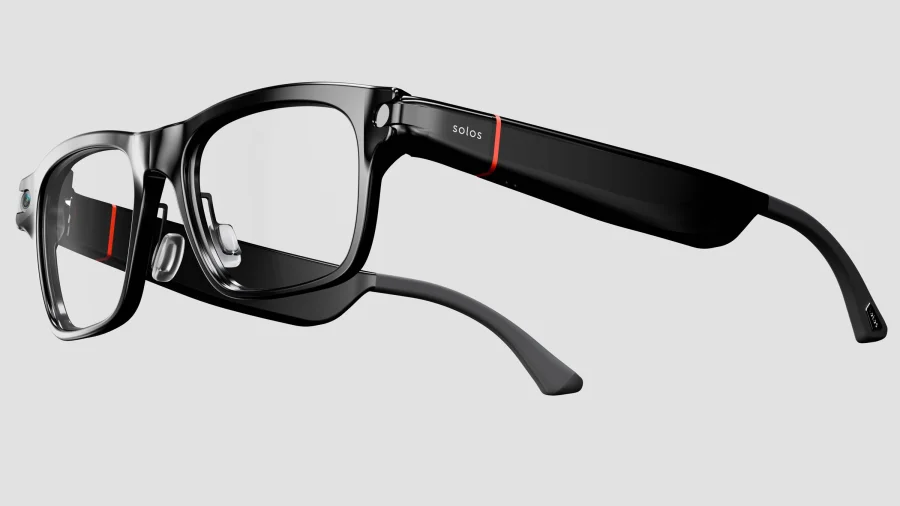
Smart glasses have long faced a fundamental trust problem: when the camera is always on your face, who knows if it’s always recording you? Solos, the company behind the AirGo V2 smart glasses, is attempting to solve that with a surprisingly low-tech solution — a physical clip-on privacy shield that covers the camera lens.
What the Solos Privacy Shield Actually Does
The accessory is a small, detachable cover that snaps over the camera module on the AirGo V2 frames. When attached, it physically blocks the lens, making it impossible for the camera to capture any image or video. The idea is simple: if you’re not using the camera, you cover it. When you need it, you pop it off.
This is not a software toggle or a digital shutter. It is a mechanical barrier — the kind of privacy guarantee that software alone cannot provide. For users worried about accidental recordings or being perceived as creepy, this offers a clear, visible signal: the camera is off.
Why a Physical Cover Matters for Public Trust
The biggest hurdle for camera-equipped smart glasses is not technology — it is social acceptance. From the early days of Google Glass, the “glasshole” label stuck because people could never be sure if they were being recorded. Even today, with Ray-Ban Meta glasses selling well, the discomfort remains.
Solos’ privacy shield directly addresses that discomfort. By giving the wearer a way to physically disable the camera, it also gives bystanders a visual cue that they are not being filmed. This could be the difference between a wearable that feels intrusive and one that feels respectful.
The Double-Edged Sword: Does It Undermine the Product?
Here is the tension: if the camera is covered most of the time, what is the point of having a camera on your glasses? The AirGo V2 is designed for hands-free photo capture, video calls, and AI-powered visual assistance. If the privacy shield becomes the default state, the core functionality of the device is effectively disabled.
This is the double-edged sword. The shield solves a social problem but potentially creates a usability one. Users may find themselves constantly clipping and unclipping the cover, which could become tedious. The very feature that makes the glasses socially acceptable might also make them less useful in practice.
How Solos’ Approach Differs from Meta and Others
Meta’s Ray-Ban smart glasses rely on a small LED indicator light to show when the camera is recording. But a light can be missed, ignored, or even hacked. Solos is betting that a physical cover offers a stronger privacy guarantee — one that is visible, tactile, and impossible to override through software.
This is a notable differentiator. While Meta focuses on seamless integration and style, Solos is leaning into privacy as a core feature. For privacy-conscious consumers, this could be a deciding factor. For the industry, it sets a new benchmark for what “privacy by design” looks like in wearables.
Who Is This For? The Target User
The privacy shield is likely aimed at two groups: early adopters who are sensitive to social stigma, and professionals who need to use smart glasses in environments where cameras are prohibited or frowned upon — such as offices, factories, or private meetings. For these users, the ability to visibly disable the camera is not a gimmick; it is a necessity.
It also appeals to the growing number of people who want the convenience of a wearable assistant without the anxiety of being watched. The shield offers a psychological safety net: you know the camera is off because you can see it is covered.
Risks and Balanced View: Not a Perfect Solution
Critics may argue that a clip-on cover is a band-aid solution. It can be lost, forgotten, or simply not used. It also does nothing to address concerns about audio recording or data transmission. Furthermore, if the cover is off, the same privacy concerns remain — the shield only works when it is on.
There is also the question of durability. A small clip-on accessory is easy to misplace. And if the cover is not securely attached, it could fall off during use, potentially damaging the camera lens or the glasses themselves.
The Broader Trend: Privacy as a Selling Point in Wearables
Solos is not alone in this thinking. The broader wearable industry is waking up to the fact that privacy is a feature, not an afterthought. From Apple’s privacy labels to Google’s on-device processing, the trend is clear: consumers want control over their data and their devices.
Smart glasses, in particular, need this kind of innovation because they are worn on the face — the most socially visible part of the body. A privacy shield is a small but meaningful step toward making these devices feel less like surveillance tools and more like helpful accessories.
What This Means for the Smart Glasses Market
If Solos’ privacy shield proves popular, it could pressure other manufacturers to offer similar solutions. Meta, for instance, may need to rethink its reliance on LED indicators alone. The market is still young, and consumer trust is fragile. A single privacy scandal could set the industry back years.
By addressing the trust issue head-on, Solos is positioning itself as the privacy-first option in a crowded field. Whether that translates to sales remains to be seen, but the strategy is clear: win over the skeptics by giving them control.
Practical Guidance for Potential Buyers
If you are considering the Solos AirGo V2, ask yourself how often you will actually use the camera. If the answer is “rarely,” the privacy shield is a no-brainer. If you plan to use the camera frequently, consider whether the clip-on cover will be a convenience or an annoyance.
Also, check if the shield is included in the box or sold separately. If it is an add-on, factor that into the total cost. And remember: the shield only covers the camera — it does not address microphone or data privacy.
Future Outlook: Where Does Solos Go From Here?
Solos could expand the privacy concept to include a microphone mute switch or a physical data disconnect button. The company might also explore magnetic or sliding covers that are easier to use than a clip-on. The next logical step is a fully modular privacy system that lets users control exactly what their glasses are capturing at any moment.
For now, the privacy shield is a smart, if imperfect, answer to a real problem. It shows that Solos is listening to consumer concerns — and that is a good sign for the future of smart glasses.
Our Take
The Solos privacy shield is a refreshingly honest solution to a problem that the industry has mostly tried to ignore. It acknowledges that smart glasses cameras make people uncomfortable, and it gives users a way to opt out — physically, visibly, and without compromise. That said, it also highlights the fundamental tension in camera-equipped wearables: the more you protect privacy, the less you can use the camera. Solos has chosen to let the user decide, and that is the right call. The real test will be whether consumers find the trade-off worth it.
Frequently Asked Questions
What is the Solos privacy shield for smart glasses?
It is a small clip-on cover that physically blocks the camera lens on Solos AirGo V2 smart glasses, ensuring no video or image can be captured when it is attached.
Does the privacy shield affect audio or other sensors?
No. The shield only covers the camera lens. Microphones and other sensors remain active unless separately disabled through software settings.
Is the privacy shield included with the Solos AirGo V2?
It is currently offered as an optional accessory. Buyers should check the product listing to confirm whether it is bundled or sold separately.
Can the privacy shield be used with other smart glasses?
No. The shield is specifically designed for the Solos AirGo V2 camera module and is not compatible with other brands like Ray-Ban Meta or Oakley Meta.