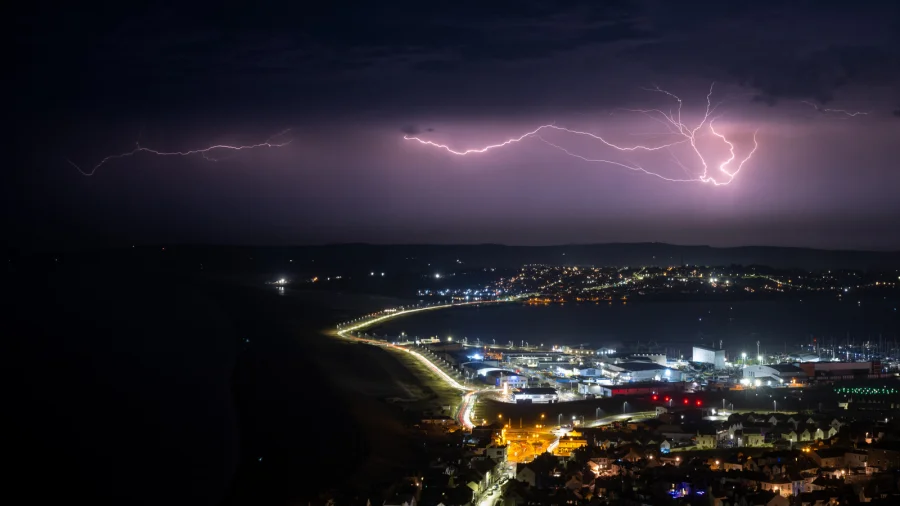
The sky darkens. Thunder rumbles. And your first instinct might be to grab your phone or check your laptop. But in that moment, every device plugged into a wall outlet is at risk — not just from a direct hit, but from the invisible surge that travels through your home's wiring in a split second.
Why Lightning Doesn't Need to Strike Your House to Destroy Your Tech
A lightning strike can hit a power line blocks away and still send a massive voltage spike through your home's electrical system. This surge travels through power outlets, cable lines, phone lines, and ethernet cables. Anything connected is vulnerable — even if the device is switched off but still plugged in.
The Only Method That Actually Works
Experts agree: the only way to guarantee your electronics survive a lightning storm is to unplug them completely. Not just the power cord — disconnect everything. That means ethernet cables, HDMI cables, coaxial cables from cable TV or antenna, and phone lines. A surge can enter through any of these paths.
Why Surge Protectors Are Not Enough
A standard power strip surge protector is designed to handle small, everyday voltage spikes. It is not built to absorb the massive energy of a lightning strike. A direct or nearby strike can overwhelm a surge protector instantly, leaving your devices unprotected. Some high-end surge protectors offer better protection, but no consumer-grade device can guarantee safety against lightning.
What Happens When Lightning Hits Your Home
If lightning strikes your house directly, the electrical surge can travel through wiring, plumbing, and even the ground. Electronics plugged into any outlet can be fried. Appliances like refrigerators, washing machines, and HVAC systems are also at risk. The damage is often instantaneous and irreversible.
What Experts Recommend for Real Protection
Safety authorities including the National Weather Service and the Lightning Protection Institute advise a layered approach. First, unplug sensitive electronics when a storm is forecast. Second, install a whole-house surge protector at your main electrical panel. This device can absorb larger surges before they reach your outlets. Third, use point-of-use surge protectors for individual devices as a backup.
How to Know When a Storm Is Coming
Check weather radar apps or local forecasts. If thunderstorms are predicted, unplug your most valuable electronics before the storm arrives. Do not wait until you hear thunder — lightning can strike from a storm that is still miles away. A good rule: if you can hear thunder, you are close enough to be at risk.
What About Laptops and Phones?
Laptops and phones that are running on battery and not plugged into a charger are safe. But if they are connected to a power source, they are vulnerable. The same applies to any device with a charging cable — including tablets, smartwatches, and wireless earbuds cases.
What to Do After a Storm Passes
Do not plug devices back in immediately. Wait until the storm has completely passed and there is no lightning in the area. Check for any signs of damage — burnt smells, tripped circuit breakers, or non-functional outlets. If you suspect a surge, have an electrician inspect your home's wiring before reconnecting expensive electronics.
Risks and Common Misconceptions
Many people believe that turning off a power strip or flipping a switch protects their devices. It does not. The surge can bypass the switch and still reach connected equipment. Another misconception is that lightning rods protect electronics — they protect the structure from fire, not the devices inside. Unplugging remains the only foolproof method.
Wider Trend: Growing Vulnerability in Modern Homes
As homes become more connected with smart devices, security systems, and home automation, the number of entry points for surges increases. Every smart plug, camera, thermostat, and sensor is a potential path for lightning damage. Protecting your tech is no longer just about the computer and TV — it is about the entire ecosystem of connected devices.
Practical Steps You Can Take Today
Identify your most valuable electronics — computer, TV, gaming console, router, external hard drives. Make a habit of unplugging them when storms are in the forecast. Consider buying a whole-house surge protector and having it installed by a licensed electrician. Keep a list of what is plugged in so you can quickly disconnect when needed.
Future Outlook: Better Protection on the Horizon
Newer smart power strips and home energy management systems are beginning to offer more advanced surge detection and automatic disconnection. However, these technologies are still emerging and not yet a substitute for manual unplugging. Until then, the oldest advice remains the best: when thunder roars, unplug your gear.
Our Take
This is not a story about expensive gadgets or complex technology. It is about a simple, often overlooked habit that can save thousands of rupees and years of irreplaceable data. In a country where thunderstorms are common during monsoon season, the risk is real and recurring. The solution is cheap, easy, and requires no special equipment — just the discipline to unplug before the storm hits.
Frequently Asked Questions
Can a surge protector protect my devices from lightning?
No. Standard surge protectors are designed for small voltage spikes, not the massive energy of a lightning strike. They can reduce the risk from nearby strikes but offer no guarantee. Unplugging is the only sure protection.
Do I need to unplug my TV during every thunderstorm?
Yes, if the storm is close enough that you can hear thunder. Lightning can strike from miles away, and the surge can travel through power lines. Unplugging the TV and any connected cables is the safest practice.
Is it safe to use electronics during a thunderstorm if they are on battery power?
Yes, as long as the device is not plugged into a wall outlet. Laptops, phones, and tablets running on battery are safe. But if they are charging, they are connected to the grid and vulnerable.
What about whole-house surge protectors — do they work?
Whole-house surge protectors installed at the main electrical panel can absorb larger surges and provide a second layer of defense. They are recommended by electricians but still cannot guarantee protection against a direct lightning strike. Unplugging remains the best option.