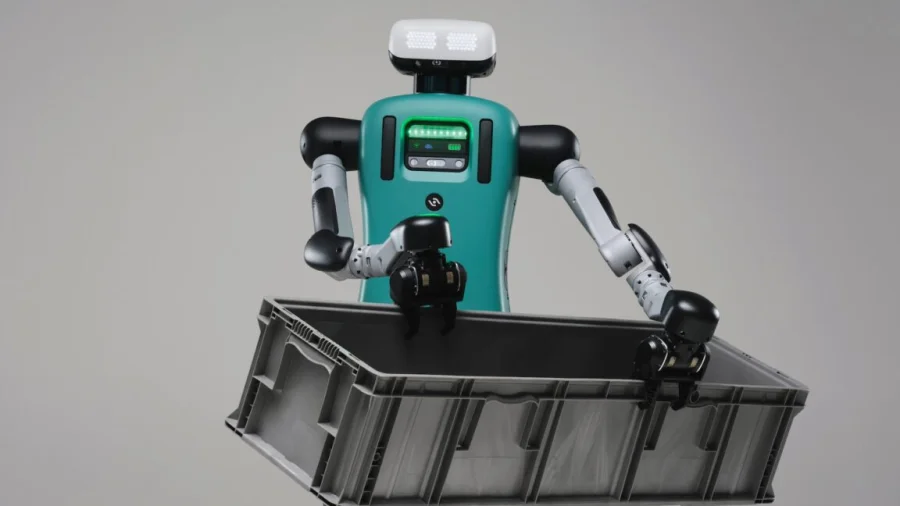
The sight of a robotaxi gliding through city streets without a driver, or a drone silently dropping a package at your doorstep, no longer feels like science fiction. But the next frontier—general-purpose robots that can help in offices, factories, and even homes—is closer than many realize. And it is modern artificial intelligence that is finally making this possible.
From point A to point B: The autonomy leap
Fifteen years ago, getting a robot to navigate from one point to another was considered a major achievement. Today, AI-powered perception and decision-making allow robots to understand complex environments, avoid obstacles, and adapt to changing conditions in real time. Matt Malchano, a vice president in the robotics industry, recalls leading a team focused on basic autonomy back then. "The goal was just to get a robot to navigate from point A to point B," he said. Now, the ambition is far greater: robots that can perform tasks, interact with humans, and make decisions on their own.
Why safety is the biggest hurdle for autonomous robot workers
Before autonomous robots can roam freely in workplaces or homes, they must prove they can operate safely around humans. Unlike factory floors where robots are isolated in cages, general-purpose robots will share spaces with people—sometimes in unpredictable environments. This requires advanced sensors, real-time hazard detection, and fail-safe mechanisms. Researchers are developing safety standards and certification processes to ensure these machines do not pose risks to humans.
The timeline: How we got here
The journey toward autonomous robots began decades ago with industrial arms and simple mobile robots. The breakthrough came with the rise of deep learning and computer vision, which gave robots the ability to "see" and understand their surroundings. In recent years, startups and tech giants have poured billions into developing general-purpose robots, inspired by the success of autonomous vehicles and delivery drones. The COVID-19 pandemic also accelerated interest in robots for cleaning, disinfection, and contactless services.
Who will benefit from AI-powered robot helpers?
Workplaces stand to gain the most initially. Warehouses, hospitals, and offices could use autonomous robots for tasks like carrying supplies, cleaning, or assisting with inventory. For homes, the vision is more ambitious: robots that can cook, clean, or care for the elderly. But cost and reliability remain barriers. "The technology is advancing fast, but we are still years away from affordable home robots that can handle the messiness of daily life," said one industry analyst.
What experts and regulators are saying
Regulators are beginning to draft guidelines for autonomous robots in public and private spaces. The focus is on risk assessment, transparency, and accountability. Matt Malchano emphasized that safety must be built into the design from the start, not added as an afterthought. "We need to ensure these systems are predictable and trustworthy before they enter homes," he said. Industry groups are also working on interoperability standards so robots from different manufacturers can operate safely together.
Why this shift matters beyond the tech industry
The rise of autonomous robot workers could reshape the labor market, raising questions about job displacement, retraining, and economic inequality. While some jobs may be automated, new roles in robot maintenance, supervision, and AI training are likely to emerge. The broader societal impact will depend on how quickly adoption happens and whether the benefits are distributed equitably.
Confirmed facts vs what remains unclear
Confirmed: AI has significantly improved robot perception and navigation. Autonomous robotaxis and delivery drones are already operational in limited areas. Safety is the primary concern for regulators and developers.
Unclear: The exact timeline for widespread home adoption. The cost of general-purpose robots. The long-term impact on employment. Whether safety standards will be uniform across countries.
Company moat: What gives robotics startups an edge
In the robotics space, competitive advantage comes from proprietary AI models, sensor integration, and real-world data. Companies that can collect large datasets from deployed robots—learning from every interaction—build a powerful moat. Partnerships with manufacturers and logistics firms also provide distribution and testing grounds. Startups with strong safety certifications and regulatory approvals will have a head start.
Risks and balanced view
Critics warn that autonomous robots could be hacked, malfunction, or be used for surveillance. There are also concerns about privacy, especially in homes. Some experts argue that the technology is being overhyped and that truly general-purpose robots remain decades away. "We are still in the early stages," said one researcher. "The gap between a demo and a reliable product is enormous."
The wider trend: AI everywhere
This push for autonomous robots is part of a larger trend of embedding AI into physical systems. From self-driving cars to smart factories, AI is moving from screens into the real world. The convergence of cheaper sensors, faster processors, and better algorithms is accelerating this shift. The question is no longer if robots will become autonomous, but when and how safely.
What you should know as a consumer or worker
If you work in logistics, healthcare, or manufacturing, you may encounter autonomous robots in the next few years. For homeowners, the wait will be longer. Stay informed about safety certifications and company track records. If you are considering investing in robotics startups, focus on those with proven safety protocols and real-world deployments.
What happens next
In the next five years, expect to see more autonomous robots in controlled environments like warehouses and hospitals. Home robots will likely remain limited to simple tasks like vacuuming or lawn mowing. The real breakthrough will come when AI can handle the unpredictability of human spaces—a challenge that researchers are actively tackling.
Our take
This story is not just about technology; it is about trust. For autonomous robots to become part of our daily lives, they must earn our confidence through consistent, safe, and transparent behavior. The progress in AI is real, but the road from lab to living room is long. The companies and regulators that prioritize safety over speed will ultimately win.
Frequently Asked Questions
What are autonomous robot workers?
Autonomous robot workers are machines powered by AI that can perform tasks in workplaces or homes without direct human control. They use sensors, cameras, and algorithms to navigate and interact with their environment.
How safe are AI-powered robots for homes?
Safety is still being tested. Current home robots are limited to simple tasks. For general-purpose robots to enter homes, they must pass rigorous safety certifications and demonstrate reliable behavior around humans, especially children and pets.
When will autonomous robots be common in workplaces?
Autonomous robots are already used in some warehouses and hospitals. Wider adoption in offices and retail is expected within the next 3 to 7 years, depending on cost reductions and safety approvals.
Will autonomous robots replace human jobs?
Some repetitive or dangerous jobs may be automated, but new roles in robot supervision, maintenance, and AI training will emerge. The net effect on employment is uncertain and will vary by industry.