The Cauvery water dispute has once again erupted into a full-blown political confrontation in Tamil Nadu, with DMK president M K Stalin delivering a blistering attack on Chief Minister Vijay. The former chief minister's sharp words signal a deepening rift not just between the two states, but within Tamil Nadu's political landscape over how to handle the decades-old river dispute.
Stalin's sharp jibe at Vijay's Karnataka outreach
In a strongly worded statement, Stalin alleged that Vijay stands "isolated" on the Cauvery issue after attempting to engage Karnataka despite widespread opposition. The DMK chief said leaders of political parties and farmers' organisations had advised the chief minister against pursuing talks with Karnataka on the contentious Mekedatu project.
Taking a personal swipe at Vijay, Stalin remarked that the chief minister ignored those warnings and instead sent emissaries to Karnataka, "perhaps thinking he could bring the Cauvery river back with him." The sarcastic comment underscores the deep frustration within opposition ranks over the government's approach.
Why the Mekedatu project remains a flashpoint
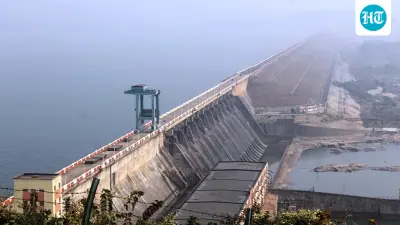
The Mekedatu project, proposed by Karnataka to build a reservoir across the Cauvery river, has long been a source of tension between the two states. Tamil Nadu has consistently opposed the project, arguing that it would affect the state's water share and violate the final award of the Cauvery Water Disputes Tribunal.
For Tamil Nadu's farming community, the Cauvery is not just a river but a lifeline. Any perceived softening of the state's position on Mekedatu triggers immediate political and public backlash, making the issue a high-stakes test for any chief minister.
How the Cauvery dispute reached this point
The Cauvery water-sharing conflict dates back over a century, with the current legal framework rooted in the 2007 final award of the Cauvery Water Disputes Tribunal, later modified by the Supreme Court in 2018. The Mekedatu project has been a recurring point of contention, with Karnataka pushing for its approval while Tamil Nadu maintains firm opposition.
Stalin's attack suggests that Vijay's recent outreach to Karnataka, including sending emissaries, has been perceived as a departure from the state's traditionally united stance on the issue. The DMK chief's demand for an all-party meeting reflects a desire to restore a consensus-based approach.
What this means for Tamil Nadu's farmers and public
For millions of farmers in the Cauvery delta region, every political move on the river dispute carries direct consequences. Water releases from Karnataka determine cropping patterns, livelihoods, and the economic health of entire districts. The political messaging around the dispute shapes public confidence in the state government's ability to protect its interests.
The public is watching closely. Any sign of division within Tamil Nadu's political leadership on the Cauvery issue weakens the state's bargaining position, a concern that Stalin's statement taps into directly.
Official response and political reactions
As of now, there has been no official response from Chief Minister Vijay or his office to Stalin's allegations. The DMK chief's statement, however, has set the stage for a heated political exchange in the coming days.
Political observers note that Stalin's attack serves multiple purposes: it positions the DMK as the guardian of Tamil Nadu's water interests, pressures the ruling party to adopt a harder line, and keeps the Cauvery issue alive in the public consciousness ahead of future electoral battles.
Reading between the lines of Stalin's statement
The sarcasm in Stalin's remark about bringing "the Cauvery river back" is a deliberate rhetorical device. It paints Vijay's outreach as naive and ineffective, suggesting that the chief minister's diplomatic efforts are unlikely to yield tangible results for the state.
Beyond the political point-scoring, the statement reveals a genuine strategic disagreement. Stalin appears to advocate for a collective, consensus-driven approach through an all-party meeting, while Vijay's actions suggest a preference for direct bilateral engagement with Karnataka.
What is confirmed vs what remains unclear
What is confirmed is that Stalin has publicly attacked Vijay over the Cauvery issue and demanded an all-party meeting. It is also confirmed that the DMK chief claims political leaders and farmers' organisations advised against talks with Karnataka.
What remains unclear is the exact nature and outcome of Vijay's outreach to Karnataka. The specific details of any emissaries sent, the content of discussions, and whether any progress was made have not been officially disclosed. These aspects remain subject to political interpretation and ongoing developments.
The political stakes behind the Cauvery confrontation
The Cauvery dispute has historically been a unifying issue in Tamil Nadu politics, with parties across the spectrum projecting a united front against Karnataka. Stalin's attack suggests he believes Vijay's approach risks breaking that unity.
For Vijay, the challenge is to demonstrate that his engagement with Karnataka can yield results without appearing to compromise Tamil Nadu's position. For Stalin, the opportunity is to consolidate opposition support by positioning the DMK as the more assertive defender of the state's water rights.
Risks and the need for a balanced approach
While Stalin's criticism resonates with many who favour a hardline stance, there are risks in escalating political rhetoric on a complex inter-state water dispute. Legal experts point out that the Cauvery issue ultimately requires judicial and negotiated solutions, not just political posturing.
Supporters of Vijay's outreach argue that direct dialogue with Karnataka could help de-escalate tensions and create space for practical cooperation. Critics, however, worry that any perceived concession could set a dangerous precedent for Tamil Nadu's water claims.
A familiar pattern in Tamil Nadu politics
The current confrontation follows a well-established pattern in Tamil Nadu, where the Cauvery issue periodically resurfaces as a major political flashpoint. Every chief minister has faced pressure to adopt a tough stance, and opposition parties have consistently used the issue to challenge the ruling government.
What makes this moment notable is the direct and personal nature of Stalin's attack on Vijay, signalling that the Cauvery issue is set to dominate the state's political discourse in the near term.
What should the public and stakeholders watch for
For farmers and citizens, the key development to monitor is whether Vijay heeds Stalin's call for an all-party meeting. Such a meeting would signal a return to consensus politics on the issue. The response from Karnataka and the central government will also be crucial in determining the next phase of the dispute.
Stakeholders should also track any official statements from the Tamil Nadu government clarifying its position on Mekedatu and future engagement with Karnataka. Transparency on these matters will be essential to maintaining public trust.
What happens next in the Cauvery standoff
The immediate question is whether Vijay will respond to Stalin's demand for an all-party meeting. If he does, it could defuse political tensions and present a united Tamil Nadu front. If he does not, the confrontation is likely to intensify.
Beyond the political manoeuvring, the underlying legal and technical aspects of the Cauvery dispute remain unresolved. The future of the Mekedatu project, water-sharing arrangements, and the broader relationship between Tamil Nadu and Karnataka will continue to evolve, shaped by both political will and judicial processes.
Our Take
The Cauvery dispute is never just about water; it is about identity, livelihoods, and political survival. Stalin's sharp attack on Vijay reflects the high emotional and political stakes attached to the issue in Tamil Nadu. While the sarcasm makes for compelling headlines, the underlying demand for a unified state position is a legitimate concern.
At the same time, the public deserves clarity on what Vijay's outreach to Karnataka actually involved. If the chief minister has a strategy that could yield results, he should articulate it transparently. If not, the criticism from the opposition will only grow louder. The Cauvery issue demands statesmanship, not just political point-scoring, and the coming weeks will test whether Tamil Nadu's leadership can rise to that challenge.
Frequently Asked Questions
Why did Stalin attack CM Vijay on the Cauvery issue?
Stalin accused Vijay of being "isolated" on the Cauvery dispute after the chief minister sent emissaries to Karnataka despite widespread opposition. He urged Vijay to convene an all-party meeting to build a unified state position on the Mekedatu project.
What is the Mekedatu project and why does Tamil Nadu oppose it?
Mekedatu is a proposed reservoir project by Karnataka across the Cauvery river. Tamil Nadu opposes it, arguing it would affect the state's water share and violate the Cauvery Water Disputes Tribunal's final award.
What did Stalin mean by "bringing the Cauvery river back"?
Stalin used the phrase sarcastically to mock Vijay's outreach to Karnataka, suggesting that sending emissaries would not yield any tangible results for Tamil Nadu's water interests.
What is the current status of the Cauvery water dispute?
The dispute remains unresolved, with legal frameworks from the tribunal and Supreme Court governing water sharing. The Mekedatu project continues to be a major point of contention between Tamil Nadu and Karnataka.