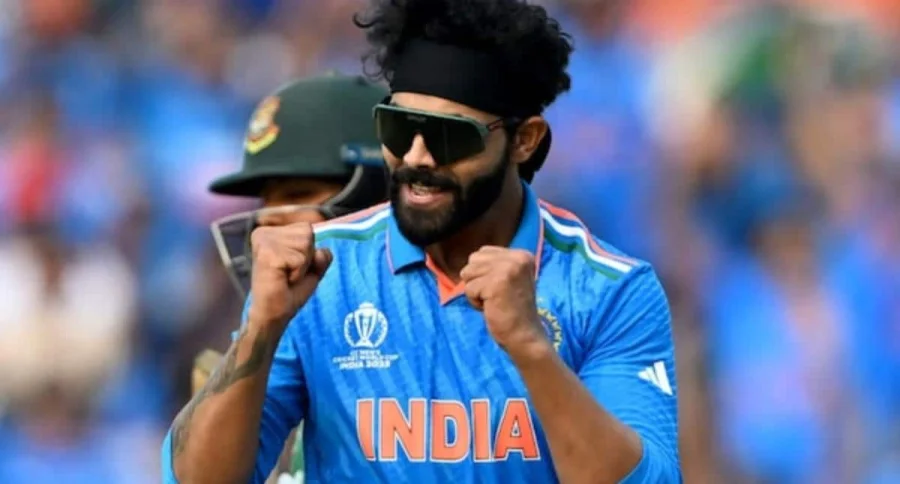
If you've followed cricket over the years, you've probably noticed that some legendary players have the title 'Sir' before their names. Australian great Sir Don Bradman and former England captain Sir Alastair Cook are among the most famous examples. But when Indian fans hear 'Sir Jadeja' — the affectionate nickname for Ravindra Jadeja — many wonder: is it official? And more importantly, can any Indian cricketer ever truly be called 'Sir'?
What Does the 'Sir' Title Actually Mean in Cricket?
The 'Sir' title is not a cricket award. It is a Knighthood — one of the highest honours conferred by the British monarchy. It is awarded by the reigning British monarch (currently King Charles III) on the advice of the UK government, typically for exceptional achievements in various fields, including sports.
In cricket, a knighthood is usually given for "services to cricket" or "services to sport." It is a civilian honour, not a sporting trophy. This distinction is crucial for understanding why Indian cricketers cannot receive it.
Why No Indian Cricketer Has Ever Been Knighted
The simple answer: Indian cricketers are citizens of the Republic of India, which is a sovereign nation independent of the British Crown. Knighthoods are honours of the British honours system, and they are generally reserved for citizens of Commonwealth realms that recognise the British monarch as their head of state.
India is a republic and does not confer or accept British titles of nobility or knighthood. The Indian Constitution prohibits its citizens from accepting foreign titles without government permission. As a result, even the greatest Indian cricketers — Sachin Tendulkar, Kapil Dev, Sunil Gavaskar, Virat Kohli — cannot be knighted.
The Four Non-British Cricketers Who Were Knighted
Only four cricketers from outside the United Kingdom have ever received a knighthood. All were from Commonwealth realms that recognise the British monarch as their head of state:
Sir Don Bradman (Australia): Knighted in 1949 for his services to cricket. Australia is a Commonwealth realm with the British monarch as its head of state.
Sir Garfield Sobers (West Indies/Barbados): Knighted in 1975 for his services to cricket. Barbados was then a Commonwealth realm.
Sir Vivian Richards (West Indies/Antigua and Barbuda): Knighted in 1999 for his services to cricket. Antigua and Barbuda is a Commonwealth realm.
Sir Everton Weekes (West Indies/Barbados): Knighted in 1995 for his services to cricket. He was from Barbados.
These four players were citizens of countries that still have the British monarch as their head of state, making them eligible for knighthoods.
What About 'Sir Jadeja'? The Story Behind the Nickname
Ravindra Jadeja is popularly called 'Sir Jadeja' by fans and teammates, but this is purely a nickname. It originated from his all-round performances and a sense of affectionate humour among Indian cricket fans. It is not an official title.
Similarly, other Indian cricketers have been given playful 'Sir' prefixes by fans — like 'Sir' Ravindra Jadeja or 'Sir' Axar Patel — but these are informal and carry no legal or official weight.
How Indian Cricketers Are Honoured Instead
India has its own system of national honours for cricketers. The most prestigious include:
Padma Shri, Padma Bhushan, Padma Vibhushan: India's highest civilian awards, given for exceptional service in various fields including sports. Sachin Tendulkar received the Padma Shri in 1999 and the Padma Vibhushan in 2008.
Rajiv Gandhi Khel Ratna: India's highest sporting honour. Virat Kohli, MS Dhoni, and many others have received it.
Arjuna Award: For consistent outstanding performance in sports.
These honours are conferred by the President of India, not the British monarch.
Could an Indian Cricketer Ever Be Knighted?
Theoretically, if an Indian cricketer were to take up British citizenship or if India were to rejoin the Commonwealth realm (which is highly unlikely), they could become eligible. But under current constitutional and legal frameworks, it is impossible.
Some Indian-origin cricketers who play for England — like Sir Alastair Cook (born in England) — have been knighted because they are British citizens. But no cricketer who represents India has ever received a knighthood.
Confirmed Facts vs What Remains Unclear
Confirmed: The 'Sir' title is a British knighthood awarded by the UK monarchy. No Indian cricketer has ever been knighted. Only four non-British cricketers have been knighted, all from Commonwealth realms. 'Sir Jadeja' is a nickname.
Unclear: Whether any Indian cricketer has ever formally applied for or been considered for a knighthood. The Indian government's policy on accepting foreign titles is clear, but individual cases are not publicly documented.
Why This Matters for Cricket Fans
For Indian cricket fans, the 'Sir' title is a source of curiosity and sometimes confusion. Understanding the difference between a British honour and a fan nickname helps clarify why legends like Sachin Tendulkar are called 'Master Blaster' but never 'Sir Sachin'.
It also highlights the unique position of cricket as a sport that spans both Commonwealth realms and republics, each with its own system of honours.
Wider Trend: Cricket Honours Across the World
Different countries honour their cricketers differently. England uses the British honours system (knighthoods, CBEs, OBEs, MBEs). Australia has the Order of Australia. India uses the Padma awards and Khel Ratna. The West Indies, being a collection of nations, has a mix of systems.
This diversity reflects cricket's global nature and the different cultural and political contexts in which the sport is played.
Practical Guidance for Fans
If you hear 'Sir' before a cricketer's name, check their nationality. If they are English, Australian (pre-1980s), or from certain Caribbean nations, it might be a real knighthood. If they are Indian, it is almost certainly a nickname.
For fans who want to honour Indian cricketers, refer to their official Indian honours — Padma Shri, Khel Ratna, etc. — which carry immense prestige within India.
Future Outlook
Unless India changes its constitutional position on foreign titles, no Indian cricketer will ever be knighted. The 'Sir' title will remain exclusive to players from Commonwealth realms and the UK.
However, as cricket grows globally, other nations may develop their own equivalent honours. For now, the 'Sir' title remains a uniquely British — and limited — honour in the cricket world.
Our Take
The 'Sir' title in cricket is a fascinating intersection of sport, history, and politics. It is not a measure of a player's greatness — Sir Don Bradman and Sachin Tendulkar are both legends, but only one has a knighthood. The honour reflects a player's nationality and the political system of their country, not their skill or contribution to the game.
For Indian fans, the affectionate 'Sir Jadeja' nickname is perhaps more meaningful than any official title — it comes from the heart of the fans, not from a monarchy.
Frequently Asked Questions
Can Indian cricketers get the 'Sir' title?
No. Indian cricketers are citizens of the Republic of India, which does not confer or accept British knighthoods. The Indian Constitution prohibits citizens from accepting foreign titles without government permission.
Why is Ravindra Jadeja called 'Sir Jadeja'?
'Sir Jadeja' is a fan-given nickname, not an official title. It originated from his all-round performances and affectionate humour among Indian cricket fans.
Which non-British cricketers have been knighted?
Only four: Sir Don Bradman (Australia), Sir Garfield Sobers (West Indies/Barbados), Sir Vivian Richards (West Indies/Antigua and Barbuda), and Sir Everton Weekes (West Indies/Barbados). All were from Commonwealth realms that recognise the British monarch as head of state.
What honours do Indian cricketers receive instead of knighthoods?
Indian cricketers receive national honours like the Padma Shri, Padma Bhushan, Padma Vibhushan, Rajiv Gandhi Khel Ratna, and Arjuna Award, conferred by the President of India.