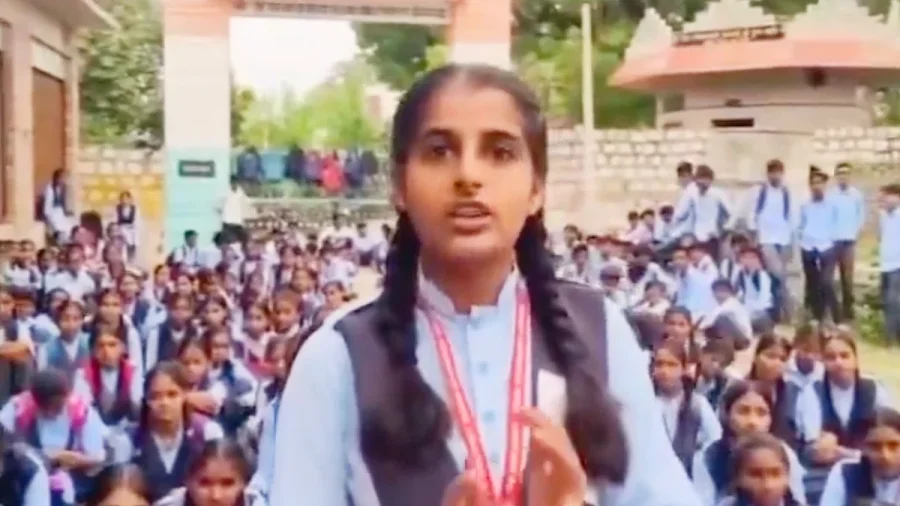
The sight is striking: schoolchildren in crisp uniforms, some barely teenagers, standing outside their schools with placards and raised voices. From Beed in Maharashtra to Barmer in Rajasthan, students are no longer waiting quietly for change — they are demanding it on the streets.
Why Students Are Protesting Across Multiple States
Videos flooding social media show students in uniform demanding an adequate number of teachers, better-quality teaching, regular classes, and basic facilities such as drinking water. The message is consistent, but the scale is what has caught attention.
The protests are not confined to one region. Reports indicate students in Bihar, Uttar Pradesh, and Jharkhand have also joined, making this a multi-state student movement rather than an isolated incident.
The Gen Alpha Spark Behind the Movement
What makes this wave different is who is leading it. These are Gen Alpha students — born between 2010 and 2025 — who have grown up with smartphones and social media as natural extensions of their lives.
Observers note that the current protests appear inspired by recent Gen Z demonstrations that led to the resignation of Dharmendra Pradhan as education minister. The playbook is similar: organised, visible, and amplified through social media.
How the Protests Spread From Beed to Barmer
The movement appears to be proving infectious. What may have started as local grievances in one school has quickly become a template for students elsewhere.
Videos show a pattern: students in uniform, gathered peacefully outside school premises, listing their demands clearly. The visual uniformity of the protests suggests coordination, though the exact nature of that coordination remains unclear.
What Students Are Actually Asking For
The demands are strikingly basic for a country that aspires to be a global education hub. Students are asking for teachers who actually teach, classrooms that are functional, and drinking water that is safe.
These are not extravagant demands. They are the fundamentals of a functioning school system — and the fact that students feel compelled to protest for them speaks to a deeper systemic gap.
Education Authorities Yet to Respond Officially
As of now, there has been no confirmed official response from education departments or school authorities regarding the protests. The silence is notable, especially given the speed at which the movement appears to be spreading.
Officials in the affected states have not issued statements addressing the students' demands, leaving parents and observers uncertain about the next steps.
What This Movement Says About Student Awareness
There is a deeper story here beyond the immediate demands. A generation that was expected to be passive recipients of education is now actively shaping the conversation about what schools should provide.
Analysts believe this reflects a broader shift: students today are more informed, more connected, and less willing to accept substandard conditions silently. The protests are as much about rights as they are about facilities.
Confirmed Facts vs What Remains Unclear
What is verified: videos show students in uniform protesting outside schools in multiple states, with demands centred on teachers, teaching quality, and basic infrastructure.
What remains unclear: the exact number of schools affected, whether the protests are coordinated by any organisation, and how education authorities plan to respond. All of this is still developing.
Why This Movement Could Gain More Momentum
The conditions that sparked these protests — teacher shortages, irregular classes, poor infrastructure — are not unique to Beed or Barmer. They exist in varying degrees across India's school system.
If students in other states see their peers getting attention through protest, the movement could expand further. Social media makes it easy for one school's struggle to become a national template.
Risks and Concerns Emerging From the Protests
While the demands are reasonable, there are concerns about the sustainability of student-led protests. Schoolchildren are not typically equipped to navigate prolonged confrontations with authorities.
There is also the question of whether the protests could disrupt academic schedules — the very thing students are asking to improve. Balancing protest with continued attendance will be a challenge.
The Bigger Pattern: Students Finding Their Voice
This movement fits into a wider trend of student activism in India. From Gen Z to Gen Alpha, young people are increasingly using social media to organise and amplify their grievances.
The resignation of the education minister following Gen Z protests appears to have demonstrated that student voices can lead to tangible outcomes. That lesson has not been lost on younger students.
What Parents and Students Should Do Now
For parents, the immediate step is to engage with school management and local education officials to understand how demands are being addressed. Dialogue is more sustainable than prolonged protest.
For students, documenting grievances through proper channels — parent-teacher meetings, written complaints, and local education offices — can complement street protests with institutional pressure.
What Happens Next in This Student Movement
The coming weeks will determine whether this becomes a sustained movement or a momentary outburst. Much depends on how education authorities respond to the demands.
If officials engage constructively, the protests could lead to meaningful improvements in school facilities. If they ignore the demands, the movement could grow larger and more organised.
Our Take
There is something significant about schoolchildren demanding the basics of education — teachers, classes, and water — in a country that celebrates its demographic dividend. These protests are not just about facilities; they are about dignity and the right to a functional education.
The fact that students from Beed to Barmer are finding common cause suggests that the problems in India's schools are not regional anomalies but systemic failures. The question now is whether the system will listen to the voices of its youngest stakeholders.
Frequently Asked Questions
Why are school students protesting from Beed to Barmer?
Students are demanding better teaching standards, more teachers, regular classes, and basic facilities like drinking water. The protests have spread across Maharashtra, Rajasthan, Bihar, Uttar Pradesh, and Jharkhand.
Who is leading the student protests?
The protests are being led by Gen Alpha students, born between 2010 and 2025, who appear inspired by recent Gen Z protests that led to the resignation of the education minister.
What are the main demands of the protesting students?
The core demands include an adequate number of teachers, better-quality teaching, regular classes, and basic infrastructure such as drinking water facilities.
Have education authorities responded to the protests?
As of now, there has been no confirmed official response from education departments or school authorities. The situation is still developing.