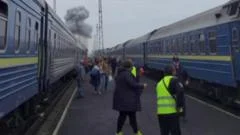
The timing could not have been more alarming. A Russian strike hit a stationary Ukrainian locomotive near the Polish border, reportedly just moments after former UK Prime Minister Boris Johnson and a delegation of senior European officials had left the station. The attack, which Johnson himself condemned in stark terms, raises urgent questions about the safety of foreign dignitaries traveling through Ukraine's western corridors — and about Russia's targeting calculus.
A Narrow Escape on the Polish Border
According to Johnson's public statement, the strike occurred "this morning" on a stationary Ukrainian locomotive near the Polish border. The former UK PM, who has been a vocal supporter of Ukraine since the 2022 invasion, was traveling with top European officials. All members of the delegation are reported to have departed the station before the strike. No immediate reports of casualties among the delegation or station staff have been confirmed.
Why This Strike Matters Beyond the Headlines
Western Ukraine, particularly the corridor near the Polish border, has been considered a relatively safer route for diplomatic and humanitarian travel. A strike this close to NATO territory — and this soon after a high-profile visit — signals that Russia either has extraordinary intelligence reach or is deliberately sending a message. For Ukrainian civilians, it reinforces that no region is truly beyond the reach of Russian missiles. For European officials, it forces a hard look at security protocols that may have been taken for granted.
How the Situation Unfolded
Boris Johnson and European officials were reportedly at the station as part of a visit to western Ukraine. The delegation departed, and shortly afterward, a Russian strike hit a stationary locomotive at or near the same location. Johnson described the attack in a statement, expressing disbelief at the "warped logic" behind targeting a stationary train. The exact time gap between the delegation's departure and the strike has not been independently verified. Ukrainian railway authorities have not yet issued a detailed statement on the damage or potential injuries.
Who Is Affected — and What It Means for Them
Ukrainian railway workers, who have kept the country's transport network running under constant threat, are once again on the front line of a war that has no clear front. Passengers who rely on rail to move between cities and borders face renewed uncertainty. For the international diplomatic community, the strike is a stark reminder that even brief visits to Ukraine carry inherent risk. For ordinary Ukrainians, it is another day of living under the shadow of Russian attacks that can strike anywhere, at any time.
Johnson's Response and the Official Silence
Boris Johnson did not mince words. "I don't know what warped logic drove Putin to blow up a stationary Ukrainian locomotive on the Polish border this morning," he said in his statement. The Kremlin has not commented on the strike. Ukrainian officials have not yet released a formal response. NATO and EU representatives have also remained silent so far, though the incident is likely to be raised in upcoming diplomatic discussions.
What We Know vs. What Remains Unclear
Confirmed: A Russian strike hit a stationary Ukrainian locomotive near the Polish border. Boris Johnson and European officials were at the station earlier and had departed before the strike. Johnson publicly condemned the attack.
Unclear: The exact time gap between the delegation's departure and the strike. Whether there were any casualties or injuries. The extent of damage to the locomotive and surrounding infrastructure. Whether the strike was deliberately timed to coincide with the visit or was a coincidental targeting of rail infrastructure.
Risks and the Broader Security Picture
This incident highlights a dangerous pattern: Russia's willingness to strike targets in western Ukraine, near NATO borders. While the delegation escaped unharmed, the strike raises concerns about the safety of future diplomatic missions. It also risks escalating tensions between Russia and NATO, particularly Poland, which shares a border with the affected region. Critics may argue that Western officials are taking unnecessary risks by traveling to Ukraine, while supporters will contend that such visits are essential to showing solidarity.
A Pattern of Targeting Ukraine's Rail Network
Russia has repeatedly targeted Ukraine's railway infrastructure throughout the war, aiming to disrupt military logistics and civilian mobility. Strikes on locomotives, stations, and tracks have become a grim routine. This attack, however, stands out because of its proximity to a high-level diplomatic visit. It suggests that Russia either has real-time intelligence on movements in the region or is indiscriminately targeting rail assets regardless of who might be nearby.
What Readers Should Take Away
For Ukrainians, this is another reminder that the war can touch any region. For international observers, it underscores the fragility of security assumptions in western Ukraine. For policymakers, it raises urgent questions about protecting diplomatic visits and civilian infrastructure. Travelers to the region should remain vigilant and follow official advisories. The incident also serves as a reminder that the war's risks are not confined to the front lines.
What Could Happen Next
Ukrainian authorities are likely to investigate the strike and assess damage. Western governments may review security protocols for officials traveling to Ukraine. Russia may continue targeting rail infrastructure, potentially escalating tensions with NATO. The incident could also feature in upcoming international discussions about military support for Ukraine and the safety of diplomatic missions.
Our Take
This strike is more than a close call — it is a signal. Whether by design or coincidence, Russia has demonstrated that even the most carefully planned diplomatic visits are not immune to its reach. The international community must weigh the value of showing solidarity with Ukraine against the very real risks involved. For Ukraine, the attack is a painful reminder that the war is not confined to any single region. The world should take note.
Frequently Asked Questions
Was Boris Johnson injured in the strike?
No. Johnson and the European officials had reportedly left the station before the strike occurred. No injuries among the delegation have been reported.
Where exactly did the strike happen?
The strike hit a stationary Ukrainian locomotive near the Polish border, according to Boris Johnson's statement. The exact location has not been independently confirmed.
Did Russia intentionally target the train because of the visit?
There is no confirmed evidence that Russia deliberately timed the strike to coincide with the delegation's visit. The attack may have been part of ongoing targeting of Ukraine's rail infrastructure. The timing, however, has raised suspicions.
What is the significance of the Polish border location?
The Polish border area is a key route for Western officials and supplies entering Ukraine. A strike so close to NATO territory raises the risk of escalation and highlights the vulnerability of this corridor.