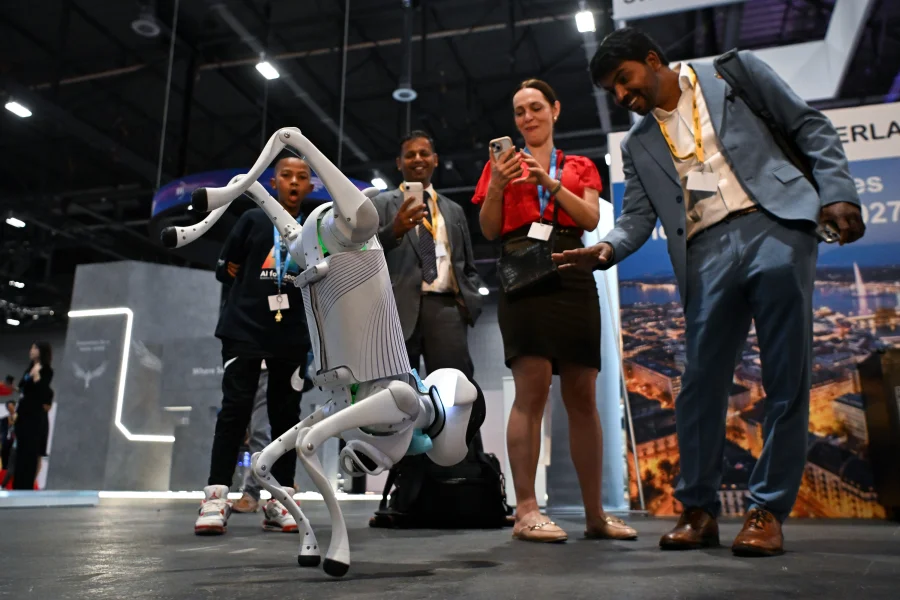
Geneva’s Palexpo convention center felt less like a diplomatic hall and more like a tech expo on steroids. Robot dogs trotted past Teslas, rescue helicopters hovered overhead, and live coding sessions drew crowds of curious onlookers. But beneath the spectacle, the UN’s AI for Good summit was wrestling with a question that grows more urgent by the day: Can global governance catch up before the technology races beyond anyone’s control?
Silicon Valley Meets the Diplomatic Corridors
The summit, organized by the International Telecommunication Union (ITU), brought together tech giants, startups, researchers, and policymakers. The mood was a mix of excitement and anxiety. On one hand, demos showed AI-powered drones delivering medical supplies and robots assisting in disaster response. On the other, speakers warned that the same technology could be weaponized or used to deepen inequality.
Why the Governance Gap Is Growing
The core tension was clear: AI development is moving at breakneck speed, while international agreements take years to negotiate. “We are in a race between technology and governance,” one panelist said, “and governance is losing.” The summit highlighted how voluntary guidelines and ethical pledges are no match for the commercial and military incentives driving AI forward.
From Robot Dogs to Rescue Helicopters: A Timeline of the Summit
The event spanned several days, with each session blending demo and debate. Day one focused on autonomous vehicles, with Tesla showcasing its latest self-driving tech. Day two featured robotics, including Boston Dynamics’ robot dogs used in search-and-rescue simulations. By day three, the conversation had shifted to the ethics of autonomous weapons and the need for a global treaty.
Who Is Affected by This AI Governance Gap?
It’s not just tech executives and diplomats who should care. Ordinary citizens—from workers whose jobs may be automated to patients relying on AI-driven healthcare—are directly impacted. Without clear rules, there’s no guarantee that AI will be developed safely or equitably. The summit made clear that the stakes are universal, even if the decision-making remains elite.
UN Officials and Tech Leaders Speak Out
ITU Secretary-General Doreen Bogdan-Martin opened the summit with a call for “inclusive and responsible AI.” Elon Musk, appearing via video link, warned that AI could become “the biggest existential threat to humanity” if not regulated properly. But critics noted that such warnings often come from the very people building the technology, raising questions about sincerity and self-interest.
What the Summit Really Revealed About AI’s Trajectory
Beyond the flashy demos, the summit exposed a deeper truth: the AI industry is not waiting for permission. Companies are deploying tools at scale, often with minimal oversight. The UN’s role, for now, is largely advisory. The summit served as a reminder that global governance is still in its infancy, while AI is already in its adolescence.
Confirmed Facts vs What Remains Unclear
Confirmed: The UN AI for Good summit took place in Geneva, featuring robot dogs, Teslas, and rescue helicopters. Discussions centered on AI governance, ethics, and safety. No binding agreements were reached. Unclear: Whether future summits will lead to enforceable treaties. The effectiveness of voluntary guidelines remains unproven. Speculation about specific AI risks was not backed by concrete evidence at the event.
Why This Summit Matters Beyond the Tech Demos
The event was not just a showcase; it was a signal. The presence of robot dogs and Teslas was a deliberate choice to make AI tangible. But the real story is the governance vacuum. As one attendee put it, “We’re building the future, but we haven’t agreed on the rules of the road.”
Risks and Concerns Emerging from the Summit
Critics pointed out that the summit lacked representation from the Global South, where AI’s impact could be most disruptive. Others worried that tech companies were using such events to shape regulation in their favor. The risk of “ethics washing”—where companies appear responsible without making real changes—was a recurring theme.
The Broader Pattern: AI Governance Is a Global Challenge
The UN summit is part of a larger trend. From the EU’s AI Act to the US executive order on AI, governments are scrambling to catch up. But the pace is uneven, and coordination is weak. The summit highlighted that without a unified global framework, AI regulation will remain fragmented and ineffective.
What You Should Know About AI Governance
For readers wondering what this means for them: stay informed. AI is not a distant future—it’s already in your phone, your car, your workplace. Understanding the debate around governance helps you ask better questions about safety, privacy, and fairness. If you’re a student or professional, consider following organizations like the ITU or the AI Now Institute for updates.
What Could Happen Next
The summit ended with a call for a global AI treaty, but no timeline was set. Future meetings may focus on specific sectors like healthcare or autonomous weapons. The real test will be whether governments can move from talk to action before the next crisis forces their hand.
Our Take
The UN AI for Good summit was a vivid reminder that technology moves faster than policy. The robot dogs and Teslas were impressive, but they also served as a metaphor: we are surrounded by advanced AI, yet still debating the basics of how to control it. The summit was a necessary conversation, but it’s only the beginning. The real work lies ahead—and it cannot be left to tech companies alone.
Frequently Asked Questions
What was the UN AI for Good summit about?
The summit, organized by the ITU, brought together tech leaders, researchers, and policymakers to discuss AI’s potential and risks. It featured demos of robot dogs, Teslas, and rescue helicopters, but the main focus was on the urgent need for global AI governance.
Why are robot dogs and Teslas relevant to AI governance?
They represent the tangible reality of AI—autonomous systems that are already being deployed. Their presence at the summit was meant to make abstract AI concepts concrete and highlight the gap between innovation and regulation.
Did the summit result in any binding agreements?
No. The summit was a discussion forum, not a negotiating body. No binding treaties or commitments were made, though participants called for future action on a global AI framework.
How can I stay updated on AI governance developments?
Follow organizations like the International Telecommunication Union (ITU), the AI Now Institute, and reputable tech publications. The EU’s AI Act and US executive orders are also key developments to watch.