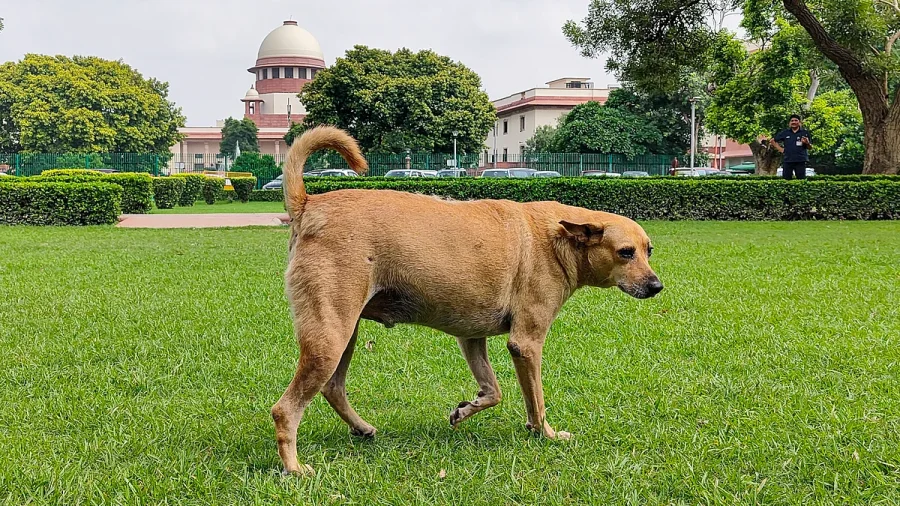
For millions of Indians living in neighbourhoods where stray dogs are a daily reality, the fear of an attack is not abstract — it is a constant, visceral concern. Now, the Supreme Court has delivered a landmark ruling that directly addresses this fear, declaring that the right to life with dignity inherently includes the right to live without the threat of dog attacks. In a decision that could reshape how urban India manages its stray animal population, the court has firmly upheld its earlier order barring the return of sterilised and vaccinated strays to their original locations.
Supreme Court Refuses to Modify Stray Dog Relocation Order
On Tuesday, a bench comprising Justices Vikram Nath, Sandeep Mehta, and N.V. Anjaria dismissed all petitions seeking a reconsideration of its earlier directions on the relocation and sterilisation of stray dogs. The court made it unequivocally clear: dogs that have been removed from public places, sterilised, and vaccinated cannot be released back to the same spots from which they were taken. This ruling effectively closes the door on any attempt to reverse the court's previous stance, which had sparked debate among animal rights activists and resident welfare associations alike.
Why This Matters Right Now
This judgment is not just a legal technicality — it has immediate, real-world consequences for communities across India. In cities like Delhi, Mumbai, Bengaluru, and countless smaller towns, the presence of aggressive stray dogs has led to injuries, fear, and even fatalities, particularly among children and the elderly. The court's ruling provides a legal framework that prioritises public safety while still mandating sterilisation and vaccination, striking a balance that many felt was previously missing. For residents who have long demanded action, this is a significant validation of their concerns. For animal welfare groups, it reinforces the importance of the Animal Birth Control Programme, even as the court acknowledged its implementation remains "patchy."
How the Supreme Court's Stray Dog Ruling Unfolded
The case stems from earlier Supreme Court orders that laid down standard operating procedures (SOPs) for managing stray dogs, framed by the Animal Welfare Board of India. These SOPs required that stray dogs be sterilised and vaccinated, but also stipulated that they should not be returned to their original locations after the procedure. Several petitions were filed challenging this aspect of the order, arguing that it was impractical or inhumane. However, the bench of Justices Nath, Mehta, and Anjaria rejected these arguments, holding that the right to life with dignity — guaranteed under Article 21 of the Constitution — must include the right to live without the constant threat of dog attacks.
Who Is Affected and What Officials Are Saying
The ruling directly impacts municipal corporations, resident welfare associations, and animal welfare organisations across the country. The court has directed all states and Union Territories to strengthen their infrastructure for managing stray dogs, specifically calling out the "patchy" implementation of the Animal Birth Control Programme. This means local bodies will now be under greater pressure to ensure that sterilisation and vaccination drives are carried out effectively, and that relocated dogs are housed in proper facilities rather than being released back into the same neighbourhoods. While official reactions are still emerging, the judgment is expected to be welcomed by resident groups who have long complained about the failure of authorities to address the stray dog menace.
What We Know So Far — and What Remains Unclear
What is clear is the Supreme Court's firm stance: the right to life includes freedom from dog attacks, and the earlier order barring the return of relocated strays stands. The court has also mandated better infrastructure for stray dog management. What remains unclear is how quickly states and municipalities will comply with this directive. The court itself noted that implementation of the Animal Birth Control Programme has been uneven, raising questions about whether local bodies have the resources and political will to scale up their efforts. Additionally, the practical logistics of housing sterilised dogs in shelters or alternative locations — and the costs involved — remain significant challenges that the judgment does not fully address.
Risks, Concerns, and the Balanced View
While the ruling is a victory for public safety advocates, it also raises concerns among animal rights groups. Some argue that relocating sterilised dogs to unfamiliar environments can be stressful for the animals and may not be sustainable in the long term. Others worry that the judgment could be misinterpreted as a license for municipalities to cull stray dogs, though the court has consistently emphasised sterilisation and vaccination as the primary methods of population control. The balanced view is that the court has attempted to reconcile two competing rights: the right of citizens to safety and the right of animals to humane treatment. The success of this approach will depend entirely on how effectively the Animal Birth Control Programme is implemented — a task that has proven difficult so far.
Why Similar Trends or Concerns Are Growing
The stray dog issue is not new, but it has become increasingly urgent in recent years. Rapid urbanisation, inadequate waste management, and a lack of coordinated sterilisation drives have led to a surge in stray dog populations in many Indian cities. At the same time, social media has amplified reports of dog attacks, creating greater public pressure on authorities to act. The Supreme Court's ruling reflects a broader judicial trend of interpreting fundamental rights in a more expansive manner, linking the right to life with tangible, everyday safety concerns. This judgment could set a precedent for how courts address other public safety issues that intersect with animal welfare.
- The court noted that the Animal Birth Control Programme's implementation remains "patchy" across states.
- States and Union Territories have been directed to strengthen infrastructure for managing stray dogs.
- The ruling applies to all sterilised and vaccinated dogs removed from public places.
"The right to life with dignity includes the right to live without the threat of dog attacks." — Supreme Court of India, Bench of Justices Vikram Nath, Sandeep Mehta, and N.V. Anjaria
What Residents, RWAs, and Local Bodies Should Know Now
For residents and resident welfare associations, this ruling provides a clear legal basis to demand action from municipal authorities. If stray dogs in your area have been sterilised and vaccinated but are being returned to the same location, you can now cite this Supreme Court order to insist on their relocation to appropriate facilities. For local bodies, the message is equally clear: the court expects you to ramp up sterilisation drives and create proper infrastructure for housing stray dogs. Failure to do so could invite judicial scrutiny. Animal welfare groups, meanwhile, should focus on ensuring that relocation is done humanely and that shelters meet basic standards of care.
What Could Happen Next
In the coming months, states and Union Territories are expected to submit compliance reports to the Supreme Court detailing their plans for strengthening stray dog management infrastructure. The court may also issue further directions if implementation remains inadequate. There is also the possibility of new petitions challenging the practical feasibility of the ruling, particularly regarding the availability of land and funds for shelters. However, the core legal principle — that the right to life includes freedom from dog attacks — is now firmly established, and any future litigation will likely focus on implementation rather than the validity of the order itself.
Our Take: Why This Story Matters Beyond One Incident
This judgment is significant not just for the stray dog debate, but for what it says about the evolving interpretation of fundamental rights in India. By linking the right to life with the freedom from dog attacks, the Supreme Court has acknowledged that safety in public spaces is a basic entitlement of every citizen. At the same time, the court has not abandoned the principle of animal welfare — sterilisation and vaccination remain mandatory. The real test, however, lies in execution. India's track record with the Animal Birth Control Programme has been inconsistent at best. Without sustained political will and adequate funding, even the most progressive judicial order can remain a paper promise. For now, this ruling gives residents a powerful tool to hold authorities accountable — and that alone marks a significant shift.
FAQs
What did the Supreme Court rule about stray dogs?
The Supreme Court ruled that the right to life with dignity includes the right to live without the threat of dog attacks. It upheld its earlier order that sterilised and vaccinated stray dogs cannot be returned to their original locations after removal.
Can stray dogs be relocated after sterilisation under the new Supreme Court order?
Yes, but they cannot be released back to the same location from which they were removed. The court has directed that they must be housed in appropriate facilities, and states must strengthen infrastructure for managing stray dogs.
What is the Animal Birth Control Programme, and why did the court call its implementation 'patchy'?
The Animal Birth Control Programme is a government initiative to sterilise and vaccinate stray dogs to control their population humanely. The Supreme Court observed that its implementation across states has been uneven and inadequate, leading to persistent stray dog problems.
Does this Supreme Court ruling allow municipalities to cull stray dogs?
No. The court has consistently emphasised sterilisation and vaccination as the primary methods for managing stray dog populations. The ruling does not authorise culling; it focuses on humane population control and public safety through relocation and better infrastructure.