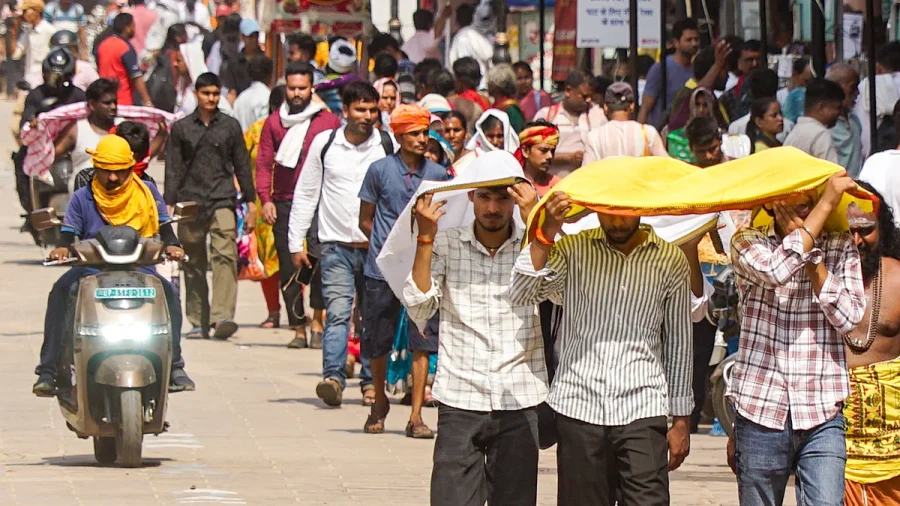
The streets of Banda fell silent on Friday, not because of a holiday, but because the heat had become too dangerous to bear. As the mercury touched a staggering 47.6 degrees Celsius, the India Meteorological Department (IMD) issued a red alert for 10 districts across Uttar Pradesh, warning of "severe" to "very severe" heatwave conditions that could turn deadly. For millions of people, the question is no longer about comfort — it's about survival.
What the IMD Red Alert Means for 10 Districts in Uttar Pradesh
The red alert is the highest level of warning issued by the IMD. It signals that extreme heat is not just likely — it is happening now, and the risk to life is serious. The districts under this red alert include Banda, Chitrakoot, Kaushambi, Prayagraj, Fatehpur, Pratapgarh, Mirzapur, Varanasi, Bhadohi, and Jaunpur. In these areas, temperatures are expected to remain dangerously high throughout the day, with little to no relief at night. The IMD has urged residents to take immediate precautions, avoid stepping out during peak afternoon hours, and stay hydrated.
Why This Matters Right Now
This is not just a weather update. It is a public health emergency. When temperatures cross 45°C, the human body struggles to cool itself. Heatstroke, dehydration, and organ failure become real risks, especially for the elderly, children, and those who work outdoors. Hospitals in affected districts are already reporting a surge in heat-related cases. For daily wage laborers, farmers, and street vendors, the choice between earning a livelihood and staying safe has become brutally difficult. The red alert is a stark reminder that climate change is no longer a distant threat — it is here, and it is deadly.
How the Heatwave Crisis Unfolded Across Uttar Pradesh
The heatwave began building earlier this week, with temperatures climbing steadily across the state. By Friday, Banda had become the epicenter, recording 47.6°C — one of the highest temperatures in the country. The IMD responded by escalating warnings. While 10 districts are under a red alert, an orange alert has been issued for 34 districts, including major cities like Meerut, Ghaziabad, Agra, and Mathura. A yellow alert covers 17 districts, including the state capital Lucknow, Ayodhya, and Barabanki. This three-tier alert system reflects the severity and spread of the heatwave.
Who Is Most at Risk and What Officials Are Saying
The most vulnerable populations are those without access to cooling — the poor, the homeless, and outdoor workers. The IMD has advised people to avoid direct sun exposure between 12 PM and 4 PM, wear light cotton clothing, and drink plenty of water. Local administrations have been asked to set up cooling centers and ensure that hospitals are prepared for a potential surge in heatstroke cases. Officials have also warned that the heatwave could worsen in the coming days, with no immediate relief in sight.
What We Know So Far — and What Remains Unclear
What we know: Banda recorded 47.6°C on Friday. The IMD has issued a red alert for 10 districts and orange alerts for 34 others. Hospitals are reporting an increase in heat-related illnesses. The heatwave is expected to continue for at least the next 48 hours.
What remains unclear: The full extent of the health impact is still unknown. Officials have not yet released official casualty figures. It is also unclear how long this extreme weather pattern will persist, and whether the situation will escalate further before relief arrives.
Risks, Concerns, and the Balanced View
The immediate risk is clear: heatstroke, dehydration, and death. But there are deeper concerns. Power grids are under immense strain as air conditioners and fans run non-stop, leading to potential blackouts. Water shortages are becoming acute in several districts. Farmers are watching their crops wither in the fields. Critics argue that while the IMD's alerts are timely, the state's preparedness for extreme heat events remains inadequate. Long-term solutions — like urban greening, heat action plans, and better housing — are still a work in progress.
Why Heatwaves Are Becoming More Frequent and Severe
This is not an isolated event. Across India, heatwaves are becoming more frequent, more intense, and longer-lasting. Climate scientists point to rising global temperatures as the primary driver. Urbanization, deforestation, and the heat island effect are making cities even hotter. For Uttar Pradesh, a state with a large population and significant agricultural dependence, the consequences are particularly severe. The pattern is clear: what was once a rare extreme weather event is now becoming an annual crisis.
- Banda recorded 47.6°C, making it one of the hottest places in India on Friday.
- The IMD has issued a red alert for 10 districts, orange for 34, and yellow for 17.
- Hospitals are reporting a surge in heatstroke and dehydration cases.
- Outdoor workers, the elderly, and children are at the highest risk.
"Severe to very severe heatwave conditions are likely over many parts of Uttar Pradesh. People are advised to take precautions and avoid heat exposure." — India Meteorological Department (IMD)
What Residents Should Do Right Now to Stay Safe
If you live in or near the affected districts, here is what you need to do: Stay indoors during the hottest part of the day, between 12 PM and 4 PM. Drink water regularly, even if you don't feel thirsty. Avoid tea, coffee, and alcohol, as they can dehydrate you. Wear loose, light-colored cotton clothing. Use a wet cloth on your head and neck if you must go outside. Check on elderly neighbors and relatives. If you feel dizzy, nauseous, or have a rapid heartbeat, move to a cool place and seek medical help immediately.
What Could Happen Next
The IMD has warned that the heatwave is likely to persist for at least the next 48 to 72 hours. There is a possibility that more districts could be placed under a red alert if temperatures continue to rise. Relief may come in the form of a western disturbance, but that is not expected for several days. In the meantime, the state government is expected to ramp up its response, including opening more cooling centers and issuing public health advisories. The long-term outlook is concerning: without significant climate adaptation measures, heatwaves like this will become more common.
Our Take: Why This Heatwave Story Matters Beyond One Day
This is not just about Banda hitting 47.6°C. It is a warning signal for the entire country. Every heatwave is a test of our public health systems, our infrastructure, and our ability to protect the most vulnerable. The red alert in Uttar Pradesh is a reminder that climate change is not a future problem — it is a present-day crisis that is already claiming lives. The question is not whether we will face more heatwaves, but whether we will be ready for them. The answer, so far, is not reassuring.
FAQs
What does a red alert for heatwave mean in Uttar Pradesh?
A red alert is the highest warning level issued by the IMD. It indicates that severe to very severe heatwave conditions are occurring and pose a serious risk to health. Residents in red alert districts are advised to take extreme precautions, avoid going outside during peak heat hours, and stay hydrated.
Which districts in UP are under a red alert for heatwave?
The 10 districts under a red alert are Banda, Chitrakoot, Kaushambi, Prayagraj, Fatehpur, Pratapgarh, Mirzapur, Varanasi, Bhadohi, and Jaunpur. An orange alert has been issued for 34 other districts, including Meerut, Ghaziabad, and Agra.
How can I protect myself and my family during a severe heatwave?
Stay indoors between 12 PM and 4 PM. Drink plenty of water, even if you are not thirsty. Wear light, loose cotton clothing. Avoid strenuous outdoor activity. Use fans, cool showers, or wet cloths to lower body temperature. Check on elderly family members and neighbors regularly.
What are the early signs of heatstroke and when should I seek medical help?
Early signs include dizziness, headache, nausea, rapid heartbeat, confusion, and hot, dry skin. If you or someone near you shows these symptoms, move to a cool place immediately, apply cool water to the skin, and seek medical help without delay. Heatstroke can be fatal if not treated promptly.