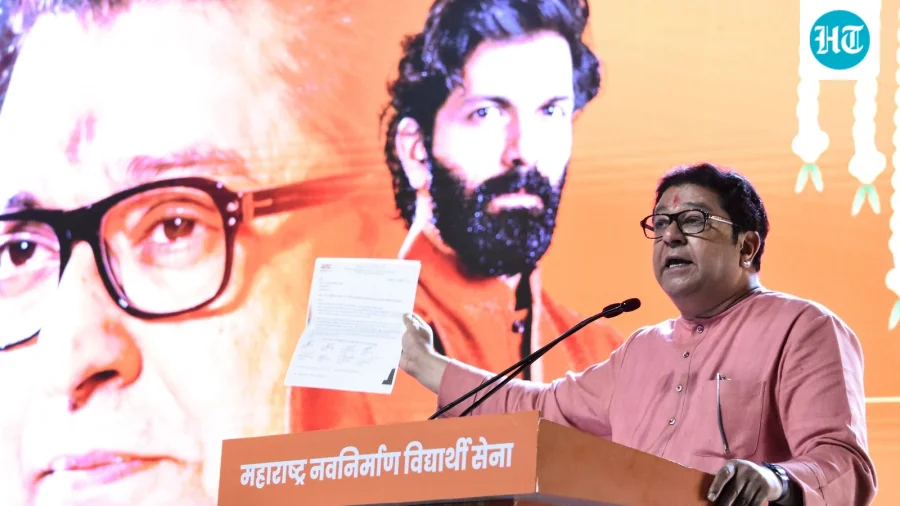
The political pot in Maharashtra just got a fresh stir. Raj Thackeray, chief of the Maharashtra Navnirman Sena (MNS), has aimed a pointed question at two of Bollywood’s most visible Modi supporters — Vivek Oberoi and R Madhavan. His message was simple but loaded: if India is thriving under PM Modi, why do you choose to live in Dubai?
A Direct Question to Two Actors
Speaking at a public event, Thackeray did not mince words. He accused the two actors of hypocrisy — praising the Prime Minister on one hand while choosing to base themselves in the UAE on the other. He also took a dig at their film choices, referring to what he called "government-sponsored films."
The MNS chief’s remarks were aimed at what he perceives as a contradiction between their public image and personal choices.
Why This Remark Strikes a Chord
This is not just a throwaway political jibe. It touches a raw nerve in Indian public discourse — the question of who gets to call themselves a patriot. When celebrities endorse a political ideology but live abroad, it creates a perception gap that opposition leaders are quick to exploit.
For the average citizen, the question resonates on a simpler level: if you believe in the nation’s growth story, why not be part of its daily life?
The Backdrop of Celebrity-Politics Ties
Vivek Oberoi and R Madhavan have been vocal about their admiration for PM Modi. Both have appeared at events celebrating government initiatives. Their proximity to the ruling dispensation has been a talking point for years.
Thackeray’s comment adds a new layer to this ongoing narrative, framing their support as performative rather than rooted in lived experience.
What This Means for the Actors’ Image
For Oberoi and Madhavan, the immediate impact is reputational. The charge of being "distant patriots" can stick, especially in an era where social media amplifies every political statement. Their silence so far has only fuelled further speculation.
For their fans, the controversy forces a re-evaluation of how they view celebrity endorsements — as genuine conviction or calculated branding.
Political Reactions and the Road Ahead
Thackeray’s statement has predictably split opinions. Supporters see it as a bold call-out of hypocrisy. Critics view it as a distraction from larger issues, or worse, a divisive tactic ahead of elections.
No official response has come from the actors or the BJP so far. Political observers expect counter-statements or a strategic silence to let the storm pass.
Beyond the Headlines: The Deeper Question
Strip away the politics, and the core issue remains: should residency define patriotism? The debate is not unique to India. Across the world, celebrities and business leaders face similar scrutiny when they advocate for a country they do not live in.
Thackeray has effectively turned a personal choice into a public test of loyalty — and that is a conversation that will not fade quickly.
Confirmed Facts vs What Remains Unclear
Confirmed: Raj Thackeray criticised Vivek Oberoi and R Madhavan for supporting PM Modi while living in Dubai. He also referenced their work in films he described as "government-sponsored."
Unclear: The exact context and full transcript of his speech are not fully verified. Whether the actors will respond, and whether this escalates into a larger political row, remains to be seen.
Risks and Balanced View
While Thackeray’s supporters cheer the attack, there are valid counterpoints. Critics argue that living abroad does not diminish one’s love for the country. Many Indians abroad contribute significantly to the economy through remittances and soft power.
Others point out that Thackeray himself has had a complex relationship with nationalism, making his moral high ground questionable to some.
The Pattern of Celebrity Scrutiny in India
This is not the first time actors have been targeted for their political affiliations. From Deepika Padukone to Akshay Kumar, Bollywood stars have frequently found themselves in the crosshairs of political rhetoric. The pattern is clear: in India’s hyper-polarised climate, a celebrity’s personal life is never truly personal.
What Should Readers Watch For
For those following the story, the key is to watch for three things: an official response from the actors, any counter-attack from BJP leaders defending them, and whether Thackeray escalates his rhetoric in future rallies.
Social media will remain the battleground, but the real test is whether this translates into electoral or political capital for the MNS.
Future Outlook
Expect this controversy to simmer for a few more days. If the actors respond, it could escalate into a full-blown war of words. If they stay silent, Thackeray will likely claim victory and move on to the next target.
Either way, the question he raised — about where one chooses to live and what that says about one’s loyalties — is unlikely to disappear from public discourse anytime soon.
Our Take
Raj Thackeray has done what he does best — grabbed the spotlight with a provocative statement. But beneath the rhetoric lies a legitimate question about the optics of celebrity patriotism. In an era of global mobility, where talent and wealth flow across borders, the definition of "being Indian" is evolving. Thackeray’s framing is simplistic, but it resonates because it taps into a genuine public sentiment. The actors may dismiss it as political noise, but the question will linger in the minds of many.
Frequently Asked Questions
Why did Raj Thackeray target Vivek Oberoi and R Madhavan?
Raj Thackeray criticised the actors for supporting PM Modi and acting in "government-sponsored films" while choosing to live in Dubai, questioning the consistency of their patriotic stance.
Did Vivek Oberoi or R Madhavan respond to Raj Thackeray?
As of now, neither actor has issued a public response to the MNS chief’s remarks.
What does "government-sponsored films" mean in this context?
Raj Thackeray used the term to describe films that appear to promote the government’s agenda or image, implying the actors benefit from such projects while living abroad.
Is this controversy likely to impact the actors' careers?
While reputational damage is possible in the short term, the long-term impact depends on public reaction and whether the issue gains sustained traction in political and social media circles.