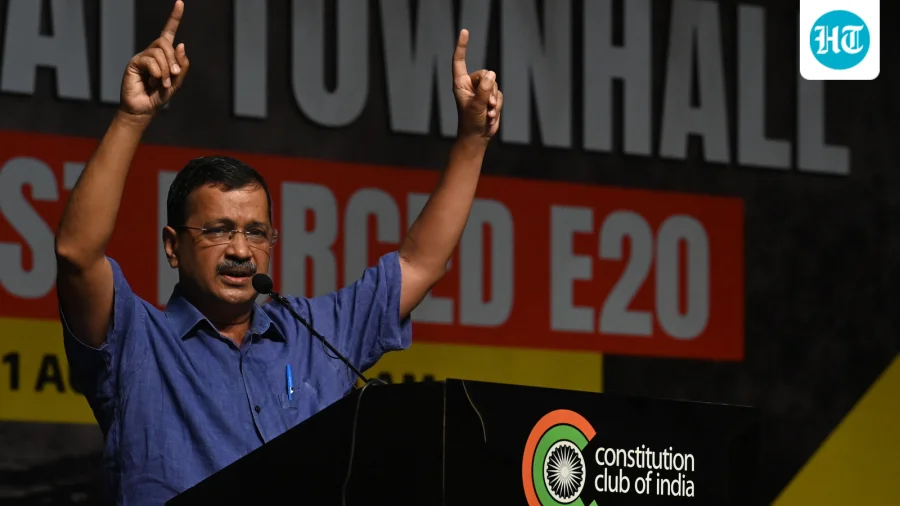
Delhi Chief Minister Arvind Kejriwal has announced a march to the Prime Minister's residence on August 4 at 12 pm, vowing to bring along "100 who don't fear jail" to press the AAP's concerns over the Centre's E20 fuel-blending policy. The declaration escalates a political confrontation that has been building for weeks.
AAP's latest salvo in the E20 fuel policy battle
The scheduled march represents the newest chapter in the Aam Aadmi Party's sustained criticism of the central government's ethanol blending program. The E20 policy mandates a 20% ethanol mix in petrol, a target the Centre has been pushing as part of its green energy transition agenda.
Kejriwal's framing — emphasizing volunteers unafraid of arrest — signals that the AAP intends to treat this as a high-stakes political standoff rather than a routine demonstration.
Why the E20 blending policy has become a flashpoint
The E20 program, while positioned as environmentally progressive, has drawn criticism from various quarters. Concerns range from potential food security implications — since ethanol is largely derived from sugarcane — to questions about vehicle compatibility and fuel efficiency impacts.
For the AAP, the issue has become a vehicle to challenge the Centre's policy decisions. The party has consistently argued that the fuel-blending push lacks adequate consultation with states and fails to account for regional agricultural realities.
From policy disagreement to political mobilization
The march announcement follows a pattern of escalating rhetoric from the AAP leadership on this issue. What began as policy objections has transformed into direct political action targeting the Prime Minister's office.
Kejriwal's choice of August 4 — a Sunday — appears deliberate, potentially maximizing public participation while minimizing disruption to weekday routines. The 12 pm timing places the demonstration squarely in the public eye.
Who stands to be affected by the E20 controversy
Beyond the political theatre, the E20 policy touches millions of Indians directly. Vehicle owners face questions about fuel costs and engine performance. Farmers, particularly sugarcane growers, have a stake in ethanol demand. And consumers ultimately bear any cost implications of the blending transition.
The AAP's mobilization taps into these practical concerns, translating technical policy debates into street-level political energy.
Official response and the Centre's position
As of now, there has been no detailed official response from the Prime Minister's Office or the central government regarding Kejriwal's announced march. The Centre has previously defended the E20 policy as a necessary step toward energy independence and reduced carbon emissions.
Government sources have consistently maintained that the ethanol blending roadmap was developed with input from automakers, oil companies, and agricultural experts.
Reading between the lines of Kejriwal's jail reference
The phrase "100 who don't fear jail" carries deliberate political weight. It evokes a history of protest movements in India where civil disobedience and willingness to face arrest became powerful symbols of moral authority.
For Kejriwal, who has positioned the AAP as an anti-establishment force, the framing reinforces a narrative of the party as a principled challenger to central authority — regardless of the legal consequences.
What's confirmed versus what remains uncertain
Confirmed: Kejriwal has publicly announced a march to the PM's residence on August 4 at 12 pm. He has stated his intention to bring 100 volunteers who are unafraid of jail. The protest is explicitly linked to E20 fuel policy concerns.
Uncertain: The exact route of the march, whether permission will be granted, the number of actual participants, and the Centre's response remain unknown. It is also unclear whether this represents a one-off protest or the beginning of a sustained campaign.
The political stakes for AAP and the opposition
This march comes at a critical juncture for the AAP. With the party facing its own legal challenges and political pressures, the E20 issue offers an opportunity to project leadership on a national policy matter.
For the broader opposition, Kejriwal's aggressive posture on E20 provides a template for challenging the Centre on governance issues that affect daily life — moving beyond corruption allegations to policy substance.
Risks and the case for caution
Not all observers view the march favorably. Critics argue that the E20 policy has legitimate environmental merits and that the AAP's opposition risks politicizing a technocratic issue. Some automotive experts note that modern vehicles are increasingly E20-compatible, reducing the practical concerns.
There are also questions about whether the protest could lead to law-and-order complications in the national capital, and whether the "jail" rhetoric unnecessarily escalates tensions.
A wider pattern of state-centre friction
The E20 dispute fits into a broader pattern of friction between opposition-ruled states and the central government. From farm laws to fund allocation, the fault lines between Delhi and state governments have deepened in recent years.
Kejriwal's march can be understood as part of this larger dynamic — a state leader using a national policy issue to assert political relevance and challenge central authority.
What should citizens and observers do now
For those interested in the E20 policy debate, the immediate step is to understand both sides of the argument. The environmental case for ethanol blending is strong, but so are the questions about implementation and impact.
Residents of Delhi should monitor official announcements about traffic diversions or security arrangements on August 4. Those planning to be in the area should expect potential disruptions and plan accordingly.
What happens after August 4
The march's outcome — whether it proceeds peacefully, faces police action, or gets called off — will shape the next phase of this political confrontation. A large turnout could embolden the AAP to expand its campaign. A muted response might force a strategic rethink.
What remains clear is that the E20 policy debate is far from settled, and political attention on it is likely to intensify as the march date approaches.
Our Take
The August 4 march represents more than a protest about fuel policy. It is a calculated political move that tests the boundaries of state-centre relations and public mobilization. Whatever one's view of the E20 policy itself, the manner in which this disagreement is being conducted — through public demonstrations and jail-ready rhetoric — reflects the increasingly confrontational character of Indian political discourse.
The substantive questions about ethanol blending deserve serious policy attention. Whether they receive it amid the political theatre remains to be seen.
Frequently Asked Questions
What is the E20 fuel policy?
The E20 policy mandates a 20% ethanol blend in petrol, part of India's strategy to reduce oil imports and carbon emissions. The target was set for phased implementation, with the full 20% blend expected in the coming years.
Why is Kejriwal protesting against E20?
Kejriwal and the AAP have raised concerns about the policy's implementation, including potential impacts on food security, vehicle compatibility, and the lack of adequate consultation with states before the mandate was pushed forward.
When and where is the march taking place?
The march is scheduled for August 4 at 12 pm, targeting the Prime Minister's residence in New Delhi. Kejriwal has said he will bring 100 volunteers who are prepared to face arrest.
Has the government responded to the protest announcement?
As of the latest information, there has been no detailed official response from the PMO or central government to Kejriwal's march announcement. The Centre has previously defended the E20 policy as environmentally and strategically beneficial.