For nearly two decades, the image of NEET has been the same: millions of teenagers hunched over OMR sheets, darkening bubbles with black pens in crowded exam halls across India. That image may soon belong to the past.
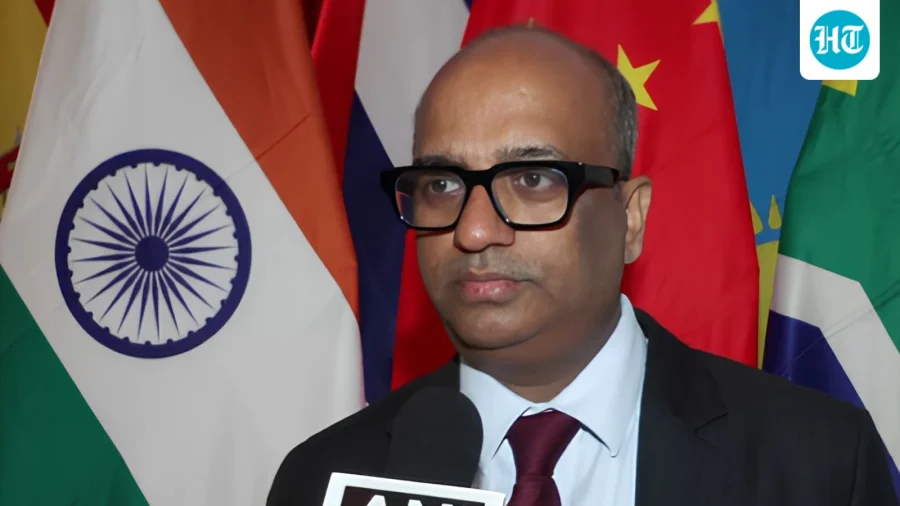
NTA Director General Abhishek Singh has said the National Eligibility cum Entrance Test will move to a computer-based format "very soon," calling it "the future." A high-powered task force led by Infosys co-founder Nandan Nilekani is reportedly working on the transition.
No date has been announced. No notification has been issued. But the signal from the top of the National Testing Agency is the clearest yet that India's largest medical entrance exam is heading for a structural overhaul.
What Exactly Did the NTA Director General Say?
According to the original report, Singh confirmed that NEET will shift to a computer-based test (CBT) in the near future. He described the change as inevitable rather than optional, framing it as the direction all large-scale examinations are moving toward.
He also confirmed that the Nandan Nilekani-led high-powered task force is "working on it" — indicating that the transition is being planned at a policy level, not merely discussed.
Importantly, Singh did not specify a year, an exam cycle, or a phase-wise rollout plan. That absence of detail matters enormously for aspirants planning their preparation years in advance.
Why This Announcement Matters to Lakhs of Medical Aspirants
NEET is not a small exam. It is the single gateway to undergraduate medical and dental seats across India, and it draws candidates in the lakhs every year. Any change to its format ripples through coaching centres, state boards, and family budgets.
For a student in Class 11 today, the format of the exam they will eventually write is now genuinely uncertain. For a dropper preparing for the next cycle, the question is sharper: will their current preparation style still hold?
The shift also carries a quieter emotional weight. Many aspirants from smaller towns and lower-income households have built their entire study routine around paper-based practice — physical test series, OMR sheets, and the muscle memory of filling bubbles under time pressure.
How NEET Has Been Conducted So Far
NEET-UG has traditionally been conducted in pen-and-paper mode, with candidates marking answers on OMR sheets. The exam is held across thousands of centres in India and abroad, and its scale is one of the reasons the NTA has historically been cautious about format changes.
Other major national exams have already made the jump. JEE Main, CUET, and several other NTA-conducted tests are delivered in computer-based mode. That precedent is likely part of why the NTA leadership now describes CBT as the natural next step for NEET.
Who Is Affected — and How Soon
The honest answer is: everyone preparing for NEET, but not necessarily immediately.
Students currently in Class 12, and droppers targeting the next available cycle, are the most directly exposed. If the transition is announced with a short lead time, they may be the first batch to face a screen instead of a sheet.
Coaching institutes will also need to rebuild their test infrastructure — from printed mock papers to online test platforms that simulate real exam conditions. That shift takes time, and it is one reason a phased rollout is often preferred for exams of this size.
What the Nandan Nilekani Task Force Is Expected to Examine
Nandan Nilekani is best known as the co-founder of Infosys and the architect of Aadhaar. His involvement signals that the committee is likely looking at large-scale digital infrastructure — the kind of system that can handle millions of simultaneous test-takers without technical failure.
According to the original report, the task force is working on the transition. Beyond that, its exact mandate, composition, and reporting timeline have not been publicly detailed.
What is clear is that the committee's focus is not merely on changing the exam mode, but on making the change workable at India's scale — a problem that is as much logistical as it is technological.
Confirmed Facts vs What Remains Unclear
Confirmed: The NTA Director General has publicly stated that NEET will move to a computer-based test "very soon." A task force led by Nandan Nilekani is reportedly working on it.
Unclear: The exact year of implementation, whether the change will be phased, whether all centres will be CBT-enabled, how students in low-connectivity areas will be accommodated, and whether the syllabus or question pattern will change alongside the mode.
Any claim about a specific NEET CBT date circulating on social media should be treated as unverified until the NTA issues an official notification.
Why Computer-Based Testing Is Being Pushed — and What It Changes
CBT offers several structural advantages: faster result processing, reduced risk of paper leaks, easier logistics for an exam of this scale, and the ability to randomise question order for each candidate.
It also changes the nature of preparation. On a screen, students cannot annotate freely, cannot flip pages, and must adapt to on-screen navigation tools. For many, that is a genuine adjustment, not a cosmetic one.
For the NTA, the appeal is clear. For aspirants, the trade-off is between a more secure, faster exam and a format that demands a different kind of practice.
Concerns That Aspirants and Experts Are Likely to Raise
The most common concern with any large-scale CBT rollout in India is infrastructure. Not every district has enough reliable computer centres, and not every candidate has grown up practising on a screen.
There are also questions about accessibility — for students with disabilities, for those in rural areas, and for candidates who have never taken a computer-based test before.
None of these concerns make the shift impossible. But they explain why a task force, rather than a simple circular, is handling the transition.
A Wider Pattern: India's Exams Are Going Digital
NEET's move would not be an isolated event. It would complete a broader shift across India's national testing ecosystem, where computer-based delivery has already become the norm for several high-stakes exams.
What makes NEET different is its sheer scale and its emotional weight. For millions of families, this exam is not just a test — it is a life decision. Any change to how it is conducted is felt far beyond the exam hall.
What Aspirants Should Do Right Now
Nothing about your current preparation needs to change today. The syllabus, the subjects, and the core concepts remain the same regardless of whether the exam is on paper or on a screen.
What you can do is start building familiarity with computer-based test interfaces. Many coaching platforms and free online mock test portals already offer CBT-style practice. Getting comfortable with on-screen navigation now costs you nothing and could help later.
Above all, wait for an official NTA notification before altering your strategy. Announcements in the media are signals, not schedules.
What Could Happen Next
The likely sequence is a formal NTA notification, followed by a pilot or phased rollout, and then full implementation. Based on how other large exams have transitioned, this is rarely an overnight change.
Until then, the exam continues as it has been. The direction, however, is now publicly stated — and that itself is a significant shift.
Our Take
The NTA's statement is a signal, not a schedule. It tells aspirants where the exam is going, not when it will get there. That distinction matters, because panic-driven preparation changes are more damaging than the format change itself.
What this story really reveals is that India's largest entrance exam is being re-engineered for a digital future — and the students who adapt early, without abandoning their fundamentals, will be the ones least unsettled when the notification finally arrives.
Frequently Asked Questions
Will NEET 2025 or NEET 2026 be computer-based?
No official confirmation exists for any specific year. The NTA Director General has said the shift will happen "very soon," but no notification has been issued. Treat any specific date circulating online as unverified.
Will the NEET syllabus change if the exam becomes computer-based?
The mode of examination and the syllabus are separate matters. No syllabus change has been announced alongside the CBT transition. Aspirants should continue preparing as per the existing syllabus.
What is the Nandan Nilekani task force working on?
According to the original report, the high-powered task force led by Nandan Nilekani is working on the transition to a computer-based NEET. Its detailed mandate and timeline have not been publicly released.
How should I prepare for a computer-based NEET?
Start practising with online mock tests that simulate a CBT interface. Your subject preparation stays the same — only the medium of answering changes. Wait for an official NTA circular before making major changes to your study plan.