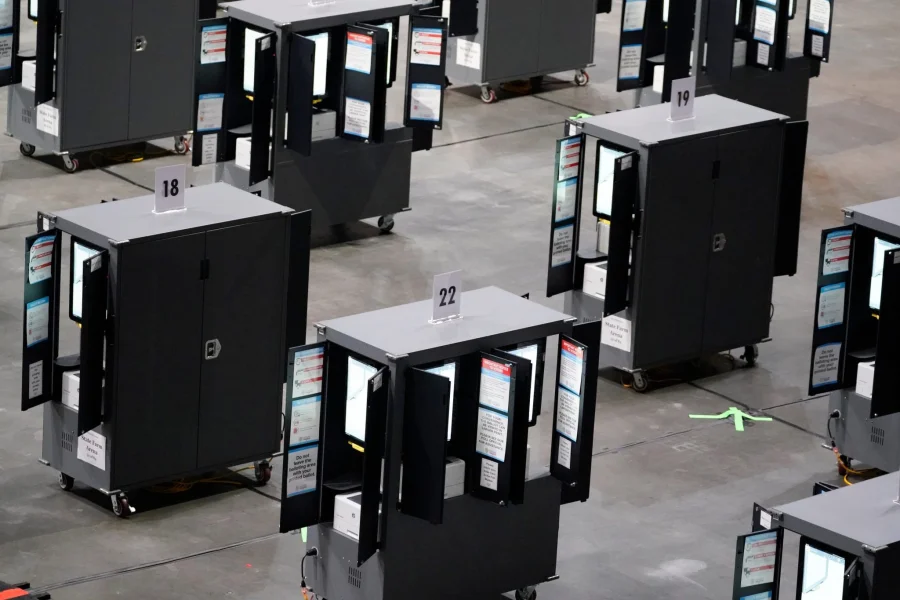
In Georgia, a voter walks into a polling place, casts a ballot, and trusts that their choice remains private. But security researchers now warn that rapid advances in artificial intelligence could make it easier for someone to break that trust — by matching voters to the ballots they cast.
The vulnerability in Georgia's voting equipment has been known for some time. What's changing is the technology available to exploit it. As AI systems grow more capable, researchers say the window to fix the flaw is closing fast.
A Known Flaw That Won't Go Away
The issue centers on a weakness in Georgia's voting equipment that could allow someone to link individual voters to their cast ballots. It does not permit votes to be changed. It does not cast doubt on election results. But it could let someone see how others voted — and that, advocates say, is a direct threat to ballot secrecy.
Ballot secrecy is not just a tradition in Georgia. It is a fundamental right protected under the state constitution. When that right is compromised, the consequences ripple beyond one election.
Why AI Changes the Equation
Security researchers say the flaw has drawn increased attention precisely because AI is making it more dangerous. Tasks that once required significant manual effort — like cross-referencing data to identify individual voters — could become faster and more accessible with AI tools.
That shift matters. A vulnerability that was once theoretical or difficult to exploit may become practical. And in election security, timing is everything.
The Fight Over Fixes Before November
Georgia election officials say they have taken steps to address the potential harm. They have not detailed exactly what those steps are, but their position is clear: the risk is being managed.
Election security advocates disagree. They argue the state has not gone far enough and that the fix should have happened before the November elections. One advocate described the situation as "really embarrassing that this is still a possibility" — a sentiment that captures the frustration on both sides of the debate.
What's Actually at Stake for Voters
For the average Georgia voter, the immediate impact may feel abstract. Votes cannot be changed. Results are not in question. But ballot secrecy is the foundation of democratic participation. If voters believe their choices can be exposed, some may choose not to vote at all.
That chilling effect is difficult to measure but impossible to ignore. It affects not just individuals but the legitimacy of the entire electoral process.
Officials vs. Advocates: Two Versions of the Same Reality
Georgia election officials point to steps they have taken to mitigate the harm. Advocates point to what hasn't been done. Both sides agree the vulnerability exists. They disagree on whether current measures are enough.
This is not a new dispute. Election security has been a battleground in Georgia for years. But the AI factor adds urgency that wasn't there before.
Confirmed Facts vs. What Remains Unclear
Confirmed: A flaw exists in Georgia's voting equipment that could allow voters to be matched to their ballots. It does not allow votes to be changed. Georgia officials say they have taken steps to address the harm. Advocates say those steps are insufficient.
Unclear: Exactly what mitigation steps Georgia has implemented. How quickly AI could realistically exploit the flaw. Whether any fix will be completed before November. What specific AI capabilities researchers are most concerned about.
Risks and the Balanced View
The risk is real but should be kept in perspective. This is not a scenario where votes are flipped or results are fabricated. The threat is to privacy, not accuracy. That distinction matters.
At the same time, dismissing the flaw as minor misses the point. Ballot secrecy is not a technicality. It is a right. And rights that erode quietly are often the hardest to restore.
A Wider Pattern in Election Security
Georgia is not alone in grappling with aging voting infrastructure and emerging threats. Across the country, election officials are being asked to defend systems against risks that didn't exist a decade ago. AI is forcing a reckoning that many states are not prepared for.
The question is no longer whether AI will play a role in election security. It already does. The question is whether the systems protecting voters can keep pace.
What Voters and Officials Should Do Now
For voters, the practical advice is simple: stay informed, verify information through official sources, and don't let fear of exposure stop you from participating. For officials, the pressure is on to demonstrate that fixes are not just planned but implemented — and soon.
Advocates will continue to push. Researchers will continue to warn. The November elections will serve as a real-world test of whether Georgia's current approach is enough.
What Happens Next
Georgia officials have not announced a timeline for further fixes. Advocates have not signaled they will stop pressing. The AI threat will not wait for either side to find common ground.
What remains to be seen is whether the state can close the gap between what officials say is being done and what advocates say still needs to happen — before voters head to the polls.
Our Take
This story is not about whether Georgia's elections are secure. It's about whether the state is treating ballot secrecy with the urgency it deserves. The flaw is known. The AI risk is growing. The fix is disputed. That combination — known problem, escalating threat, unresolved solution — is what makes this more than a technical footnote. It's a test of whether election officials can adapt as fast as the technology threatening them.
Frequently Asked Questions
Can AI change votes in Georgia?
No. The vulnerability does not allow votes to be changed or cast doubt on election results. The concern is about ballot secrecy — the ability to match voters to their cast ballots.
What exactly is the Georgia voting equipment flaw?
It's a vulnerability that could allow someone to link individual voters to their ballots after they are cast. This threatens ballot secrecy, which is a fundamental right under Georgia's constitution.
What are Georgia officials doing about it?
Georgia election officials say they have taken steps to address the potential harm. They have not detailed those steps publicly, and election security advocates argue the state has not gone far enough before the November elections.
Why is AI making this worse?
Security researchers say rapid advances in AI could make it easier to exploit the flaw. Tasks that once required significant effort — like cross-referencing data to identify voters — could become faster and more accessible with AI tools.