Most electric vehicle buyers spend weeks comparing range figures and battery sizes — then plug into the wrong charger for months without realising it. The charging level you choose quietly decides how long you wait, what you pay, and whether your battery ages gracefully or not.
Here's the part that surprises many first-time EV owners: the fastest charger isn't automatically the right one. For a large number of drivers, the slowest option is genuinely the smartest.
What Actually Separates Level 1, Level 2 and Level 3 Chargers
The three levels aren't brand categories or marketing labels. They describe how much power a charger pushes into your car's battery, and that single number changes everything — charging speed, installation cost, and even battery health over years.
Level 1 uses a standard household socket. Level 2 uses a higher-voltage supply, typically installed at home or found at public points. Level 3 — also called DC fast charging — bypasses your car's onboard charger entirely and feeds power directly to the battery.
Why the Slowest Charger Often Wins for Daily Drivers
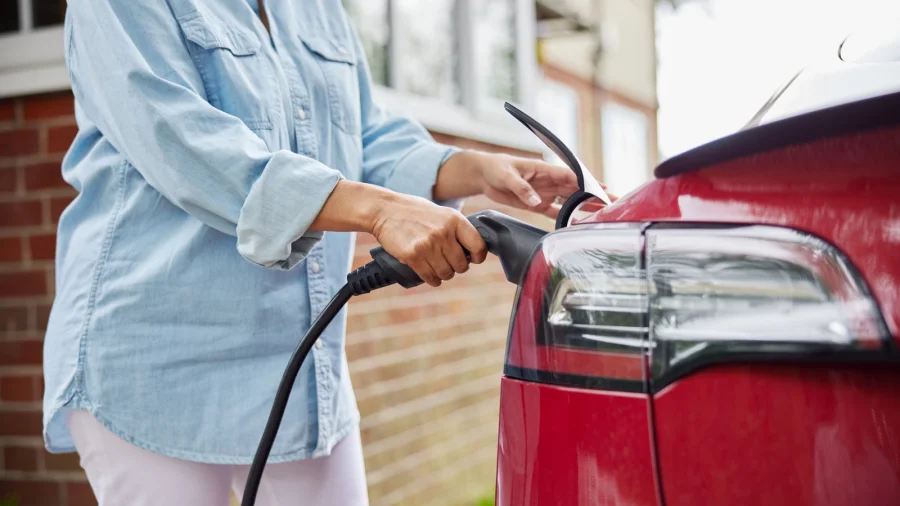
If your daily driving is limited — a commute, school runs, errands — a Level 1 charger plugged in overnight can refill what you used. No installation. No extra hardware cost. No electrician visit.
That's the core insight behind the original guidance: provided you don't drive long distances every day, Level 1 charging could be all you need. It's slower, but it works while you sleep, which is time you weren't using anyway.
How the Three Levels Compare in Real Use
Level 1 is the slowest — measured in kilometres of range added per hour, not minutes. It suits overnight charging and low daily distances.
Level 2 is significantly faster and is the standard for home installations where owners want a fuller battery in a few hours. It's also the backbone of most public AC charging points.
Level 3 is the fastest and is built for highway corridors, fleet operations and quick top-ups on long journeys. It is rarely installed at home because of cost and power requirements.
Who Feels the Difference Most
The gap between levels matters most to two groups: daily commuters with predictable short trips, and long-distance travellers who can't afford to wait.
For the first group, a Level 1 setup removes an upfront expense entirely. For the second, Level 3 access on highways is less a convenience and more a necessity — without it, long trips become impractical.
Apartment dwellers face a different problem. Without a dedicated parking spot and socket, even Level 1 isn't available, pushing them toward public Level 2 or Level 3 charging by default.
What Manufacturers and Charging Networks Advise
Automakers generally supply a Level 1 portable cable with entry-level EVs, signalling that basic home charging is considered sufficient for average use. Higher-end models often bundle or recommend Level 2 home units.
Charging network operators, meanwhile, build their business around Level 2 and Level 3 points, since those serve drivers who can't charge at home. The advice from both sides converges on the same point: match the charger to your routine, not to the spec sheet.
The Trade-Off Nobody Mentions at the Showroom
Faster charging isn't purely better. Repeated high-speed DC charging generates more heat, and battery researchers have long noted that frequent Level 3 use can accelerate degradation compared to gentler charging.
That doesn't make fast charging harmful — it makes it a tool for specific situations. Using Level 3 daily when Level 1 would suffice is like taking a highway every time you need to buy milk.
Confirmed Facts vs What Remains Unclear
Confirmed: The three-level classification exists, Level 1 uses standard sockets, Level 2 uses higher voltage, and Level 3 refers to DC fast charging. Level 1 is sufficient for low daily mileage.
Unclear or dependent on context: Exact charging speeds vary by vehicle, onboard charger capacity, battery size and local electricity supply. Costs of installation differ widely by region and electricity tariff. No universal figure applies to every driver.
Where the Real Advantage Lies for Buyers
The differentiator isn't the charger — it's the ecosystem around it. A car that supports convenient home charging, has access to a reliable public network, and manages battery thermal behaviour well will serve its owner better than one with a marginally faster peak charging rate.
For most buyers, the practical advantage comes from charging infrastructure availability and battery management software, not from chasing the highest level number.
Risks and the Balanced View
Relying solely on Level 1 has real limitations. If your daily distance creeps up, or you face an unexpected trip, slow charging can leave you short. It also assumes reliable access to a socket where you park.
Level 2 involves installation cost and, in some buildings, permission hurdles. Level 3 is fast but costs more per unit of electricity and isn't always available when you need it. None of the three is universally "best."
A Pattern Playing Out Across EV Markets
The Level 1 versus Level 3 debate reflects a broader shift: EV adoption is moving from enthusiasts who tolerate inconvenience to mainstream buyers who expect it to just work.
As that happens, the conversation is shifting away from peak charging speeds toward everyday usability — home charging access, overnight convenience, and predictable costs. The slow charger is quietly becoming a selling point again.
What You Should Actually Do
Track your real daily driving distance for a week before deciding. If it's modest and you have parking with a socket, start with Level 1 and see if it holds up.
If you regularly exceed that distance, or can't charge overnight, budget for Level 2 at home or plan around public charging. Treat Level 3 as a long-journey tool, not a daily habit.
What Comes Next
Charging technology continues to evolve, with higher-power DC systems and smarter home units entering the market. But the fundamental logic — match the charger to your routine — is unlikely to change.
For most drivers, the decision will remain simpler than the marketing suggests.
Our Take
The EV charging conversation has been dominated by speed, and that has quietly misled a lot of buyers into overpaying for capability they rarely use. The three-level system isn't a ranking — it's a set of tools for different jobs.
For a significant share of drivers, the honest answer is unglamorous: plug into a normal socket overnight and stop worrying about it. The best charger isn't the fastest one. It's the one that fits how you actually drive.
Frequently Asked Questions
What is the difference between Level 1, 2 and 3 EV chargers?
Level 1 uses a standard household socket and is the slowest. Level 2 uses a higher-voltage supply and charges faster, typically installed at home or found at public AC points. Level 3, or DC fast charging, is the fastest and is mainly used at public stations for quick top-ups.
Is Level 1 charging enough for daily use?
For many drivers, yes. If your daily driving distance is modest and you can plug in overnight, Level 1 can replenish what you use. It becomes insufficient only when daily distances are high or charging time is limited.
Is Level 3 charging bad for my EV battery?
Frequent high-speed DC charging generates more heat and has been linked to faster battery degradation over time. It isn't harmful occasionally, but using it daily when slower charging would work is generally not ideal.
Which EV charger should I install at home?
If your daily mileage is low and you have a usable socket, Level 1 may be sufficient with no installation cost. If you drive more or need faster turnaround, a Level 2 home charger is the common choice. Level 3 is rarely installed at home.
[NEWS_SCHEMA] {"@context":"https://schema.org","@type":"NewsArticle","headline":"Level 1, 2 or 3 EV Charger: Choosing Wrong Could Cost You Time and Money","description":"Confused between Level 1, 2 and 3 EV chargers? Here's how each works, how fast they charge, what they cost, and which one actually suits your daily driving.","image":"","datePublished":"","dateModified":"","author":{"@type":"Person","name":"Auto Desk","url":"","sameAs":[]},"publisher":{"@type":"Organization","name":"","logo":{"@type":"ImageObject","url":""}},"mainEntityOfPage":{"@type":"WebPage","@id":""},"articleSection":"Automotive","keywords":"Level 1 2 and 3 EV chargers, EV charging levels, Level 1 charging, Level 2 charger, DC fast charging, home EV charger"} [SOURCES] No high-confidence sources were available for this topic. This article is based on the provided headline and original story guidance only. Readers should verify specific charging speeds, costs and installation requirements with their vehicle manufacturer or a certified charging installer.