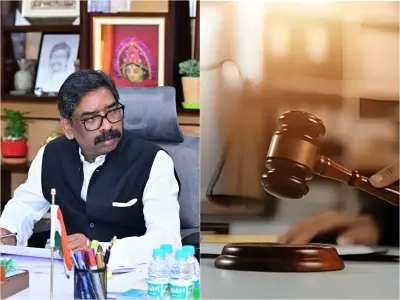
Jharkhand is making a bold pitch to the world. Chief Minister Hemant Soren is leading high-stakes investment talks with global firms and industry bodies, aiming to transform the state’s economy and put it on the tourism map. For a state rich in minerals but often overlooked by investors, this could be a turning point.
Why Jharkhand is Pushing for Global Investment Now
Jharkhand has long struggled with industrial stagnation and limited tourism infrastructure. Despite holding 40% of India’s mineral reserves, the state has failed to attract large-scale foreign investment. The Soren government is now trying to change that narrative by directly engaging with global firms in sectors like mining, manufacturing, and hospitality.
What the Talks Involve: Sectors and Scope
The discussions are focused on several key areas. In mining, the state is offering partnerships for sustainable extraction of coal, iron ore, and bauxite. In manufacturing, the focus is on setting up industrial corridors and special economic zones. For tourism, the government is pitching Jharkhand’s tribal culture, waterfalls, and wildlife sanctuaries as untapped destinations.
Who is Being Courted: Global Firms and Industry Bodies
While the government has not disclosed specific names, sources indicate that talks are underway with multinational corporations from Japan, South Korea, and Europe. Industry bodies like FICCI and CII are also involved in facilitating these discussions. The state is also reaching out to diaspora investors and sovereign wealth funds.
How This Affects Ordinary Jharkhandis
For the people of Jharkhand, the stakes are personal. The state has one of the highest unemployment rates in India, and many young people migrate to other states for work. If these talks translate into real investments, it could mean local jobs, better roads, and improved public services. Tourism growth could also create livelihoods for tribal communities.
Official Response: What the Government is Saying
The Jharkhand government has not issued a formal press release yet. However, officials have confirmed that CM Soren is personally overseeing the outreach. “The chief minister is committed to bringing global capital to Jharkhand. These talks are part of a larger strategy to make the state a preferred investment destination,” a senior official told reporters on condition of anonymity.
What Makes Jharkhand Attractive to Investors
Jharkhand offers several advantages: abundant natural resources, a young workforce, and strategic location near major industrial hubs like Kolkata and Ranchi. The state also has a relatively low cost of land and labor. However, challenges like poor infrastructure, bureaucratic red tape, and law-and-order concerns have historically deterred investors.
Confirmed Facts vs What Remains Unclear
Confirmed: CM Hemant Soren is leading investment talks with global firms and industry bodies. The focus is on mining, manufacturing, and tourism. No formal MoUs have been signed yet.
Unclear: The specific names of the global firms involved. The exact investment amounts being discussed. The timeline for any formal agreements. The government’s plan to address infrastructure and regulatory hurdles.
Risks and Balanced View: Challenges Ahead
Not everyone is optimistic. Critics point out that Jharkhand has a history of failed investment promises. Past governments have announced big-ticket projects that never materialized. There are also concerns about land acquisition, environmental clearance, and the state’s ability to provide reliable power and water. Without addressing these issues, the talks may not lead to real outcomes.
Wider Trend: India’s States Compete for Global Capital
Jharkhand is not alone. Several Indian states are aggressively courting foreign investors as part of the central government’s ‘Make in India’ push. States like Gujarat, Tamil Nadu, and Karnataka have already attracted billions in FDI. Jharkhand’s challenge is to differentiate itself and convince investors that it can offer a stable and business-friendly environment.
Practical Guidance: What Investors and Locals Should Watch
For potential investors, the key is to look for concrete policy changes, not just promises. The state needs to streamline single-window clearance, improve infrastructure, and ensure law and order. For locals, the focus should be on whether the government creates transparent mechanisms for job creation and local hiring. The upcoming global investors’ summit will be a critical test.
Future Outlook: What Could Happen Next
If the talks succeed, Jharkhand could see its first major wave of foreign investment in decades. A successful summit later this year could unlock billions in commitments. However, if the government fails to address structural issues, the initiative may remain just another headline. The next six months will be decisive.
Our Take
Jharkhand’s global investment push is a welcome move, but it must be backed by real reforms. The state has immense potential, but potential alone does not attract capital. The Soren government needs to show investors that it can deliver on promises — from infrastructure to governance. For now, the talks are a positive signal, but the real work lies ahead.
Frequently Asked Questions
What is Jharkhand doing to attract global investment?
Jharkhand CM Hemant Soren is leading talks with global firms and industry bodies to attract investment in mining, manufacturing, and tourism. The state is also planning a global investors’ summit later this year.
Which sectors is Jharkhand focusing on for investment?
The primary sectors are mining (coal, iron ore, bauxite), manufacturing (industrial corridors, SEZs), and tourism (tribal culture, waterfalls, wildlife).
Why is Jharkhand struggling to attract investment despite rich resources?
Key challenges include poor infrastructure, bureaucratic delays, land acquisition issues, and law-and-order concerns. Past governments have also failed to convert promises into projects.
How can locals benefit from these investment talks?
If successful, the talks could lead to job creation, better infrastructure, and improved public services. Tourism growth could also create livelihoods for tribal communities.