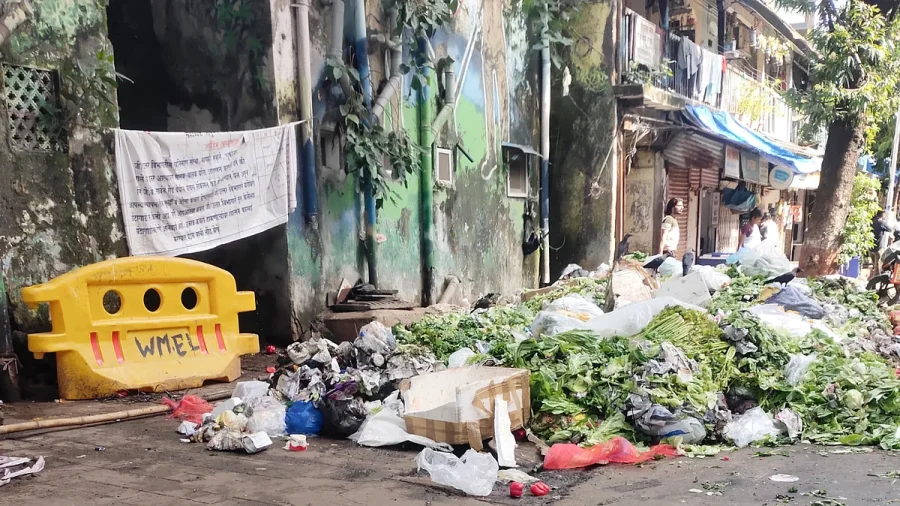
The Bombay High Court did not mince words. Hearing a batch of petitions on pollution near the Kanjurmarg dumping ground, a division bench of Justices Girish Kulkarni and Neela Gokhale said what many Mumbai residents have been saying for years — the city is drowning in its own garbage.
"Everywhere there is only filth," the bench observed, adding that the "whole city is full of filth." The court's frustration was directed squarely at the Brihanmumbai Municipal Corporation, which it said had allowed the situation to deteriorate to a point where judicial intervention became necessary.
A Court Warning That Names Names — Ward Officers on Notice
The bench made one thing clear: accountability will no longer be diffuse. It warned that BMC ward officers would be held responsible if garbage conditions in their areas did not improve. This is a significant shift — from criticising a faceless municipal body to identifying individual officers who could face consequences.
The court described the "entire municipal machinery" as inactive, a remark that cuts to the heart of Mumbai's civic governance problem. It is not just about garbage collection — it is about a system that residents say has stopped responding.
Why This Matters to Every Mumbai Resident
For the roughly 20 million people who live in Mumbai, the court's words are not abstract. Overflowing bins, garbage-strewn footpaths, and the smell that greets commuters at railway stations are daily realities. The Kanjurmarg dumping ground, one of the city's primary waste disposal sites, has been at the centre of pollution complaints for years.
What the court has now done is link those complaints to a clear consequence: if ward officers do not act, they will be answerable. For residents who have filed complaints with the BMC and heard nothing back, this is the first sign in a long time that someone is listening.
From Kanjurmarg to the Whole City — How the Case Reached This Point
The hearing stems from a batch of petitions focused on pollution in the vicinity of the Kanjurmarg dumping ground. These petitions, filed by residents and environmental groups, have been making their way through the court for some time. The bench's sharp observations on Thursday suggest the court's patience with the BMC's responses has run out.
The Kanjurmarg site has long been a flashpoint. Residents in nearby areas have complained about air quality, groundwater contamination, and the sheer volume of waste being dumped there. The court's decision to expand its scrutiny from the dumping ground to the city's overall cleanliness reflects how the problem has metastasised.
The People Who Live With the Consequences
For families living near the Kanjurmarg dumping ground, the court's remarks offer a measure of validation. But the impact extends far beyond that neighbourhood. Shopkeepers on busy market streets, parents walking children to school past uncollected garbage, and commuters navigating littered railway stations all bear the cost of a system that is not working.
Public health experts have long warned that uncollected waste contributes to vector-borne diseases, respiratory problems, and water contamination. The court's intervention, while welcome, also highlights how much of this burden has been normalised.
The Court's Unusual Suggestion — Influencers for Cleanliness
In a striking aside, the bench advised the BMC to use social media influencers to spread the message of cleanliness — a suggestion it noted had been made by Prime Minister Narendra Modi some time ago. The court's willingness to suggest modern outreach methods alongside traditional accountability measures signals that it wants the BMC to think differently about the problem.
Whether influencers can change behaviour on a citywide scale is debatable. But the court's point is clear: the BMC's current approach is not working, and it needs to try something new.
What the Court Said vs What Happens Next
Confirmed: The Bombay High Court criticised the BMC over garbage, warned ward officers of accountability, and suggested using social media influencers for cleanliness messaging. The observations were made during a hearing on pollution petitions related to the Kanjurmarg dumping ground.
Unclear: The specific timeline for improvement, the exact mechanism for holding ward officers accountable, and whether the BMC will formally respond to the court's suggestions. The court's remarks are observations — not yet binding orders — and their practical impact will depend on follow-up hearings.
The BMC's Structural Challenge — Why Garbage Keeps Piling Up
Mumbai generates thousands of tonnes of solid waste every day. The BMC's waste management system, designed for a smaller city, has struggled to keep pace with the city's growth. The Kanjurmarg dumping ground is one of the few sites handling this volume, and it is operating under severe strain.
Ward-level officers often lack the resources, staff, and infrastructure to manage collection and disposal efficiently. The court's warning puts them in a difficult position — accountable for outcomes they may not have the tools to deliver. This tension between accountability and capacity is at the heart of Mumbai's garbage problem.
Risks and the Road Ahead
The court's intervention is a positive development for residents, but it comes with risks. If ward officers are threatened with action without corresponding support, the result could be cosmetic fixes rather than systemic change. There is also the question of whether court-mandated accountability can be sustained over time, or whether it will fade once the hearings conclude.
Critics of the BMC argue that the problem is not just about individual officers but about a system that has not been reformed in decades. The court's focus on ward officers may address immediate lapses, but it does not resolve the deeper structural issues.
A Pattern of Judicial Frustration With Civic Bodies
This is not the first time the Bombay High Court has pulled up the BMC. Over the years, the court has intervened on issues ranging from air pollution to illegal construction to waste management. Each time, the pattern is similar: judicial frustration, warnings, and then a slow, uneven response from the civic body.
What makes this instance notable is the court's willingness to name ward officers as accountable individuals. If that threat is followed through, it could change how the BMC approaches its responsibilities.
What Mumbai Residents Can Do Now
For residents, the court's remarks are a reminder that civic accountability is not just a court's job. Documenting garbage accumulation in your ward, filing complaints through the BMC's official channels, and following up on those complaints creates a record that can be used in future hearings.
Ward-level citizen groups and advanced locality management (ALM) committees have historically been effective in pushing local officials to act. The court's warning gives those efforts more weight.
What Could Happen Next
The BMC is expected to respond to the court's observations in subsequent hearings. If the court formalises its warning into an order, ward officers could face specific consequences for non-compliance. The suggestion to use social media influencers may or may not be adopted — but it signals that the court wants the BMC to think beyond its traditional playbook.
For now, the ball is in the BMC's court. The next hearing will show whether the civic body treats this as a wake-up call or another warning to be absorbed and ignored.
Our Take
The Bombay High Court's remarks are a mirror held up to Mumbai's civic reality. The city's garbage problem is not new, and neither is judicial frustration with the BMC. What is new is the court's willingness to identify individual officers as accountable. That is a meaningful shift — but it will only matter if it is followed by sustained scrutiny.
Mumbai's residents deserve a city that is not described by its own High Court as "full of filth." The court has done its part. The question now is whether the BMC will do its.
Frequently Asked Questions
What did the Bombay High Court say about Mumbai's garbage problem?
The court said the "whole city is full of filth" and that the "entire municipal machinery is inactive." It warned that BMC ward officers would be held accountable if the situation did not improve.
Why was the Bombay High Court hearing this case?
The court was hearing a batch of petitions on pollution in the vicinity of the Kanjurmarg dumping ground. The bench expanded its scrutiny to the city's overall cleanliness during the hearing.
What did the court suggest about social media influencers?
The bench advised the BMC to use social media influencers to spread the message of cleanliness, noting that Prime Minister Narendra Modi had made a similar suggestion earlier.
Will BMC ward officers face action?
The court warned that ward officers would be held accountable if garbage conditions did not improve. However, the specific mechanism and timeline for action remain unclear and will depend on follow-up hearings.
What can Mumbai residents do about garbage in their area?
Residents can document garbage accumulation, file complaints through official BMC channels, and follow up on those complaints. Ward-level citizen groups and ALM committees have historically been effective in pushing local officials to act.