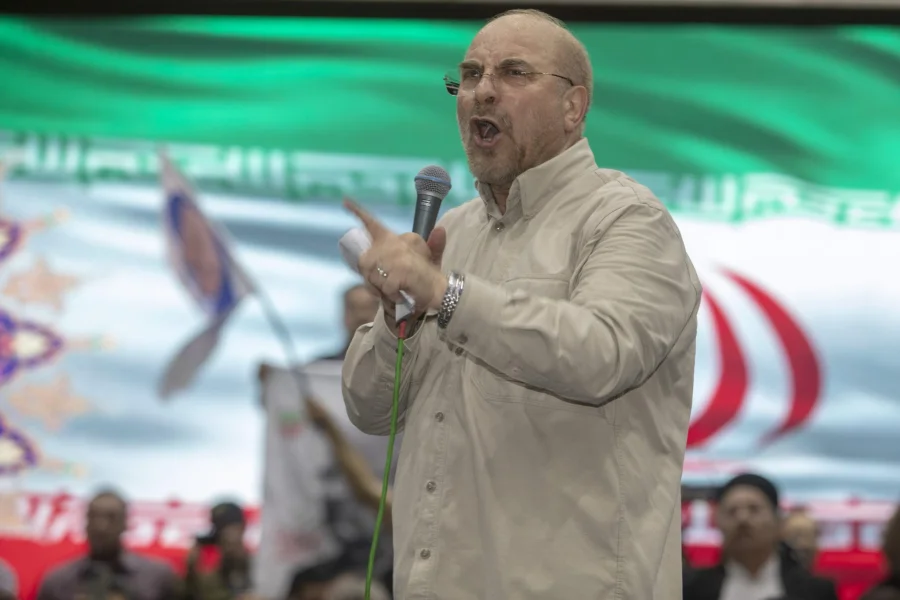
The message from Tehran is unmistakable: the next response will hurt more. Iran's chief negotiator has warned that retaliation will be "faster, heavier and more painful" after the United States struck tankers in response to an attack attempt on warships. The statement transforms a simmering maritime standoff into a direct threat of escalation that could reshape the strategic balance in one of the world's most critical waterways.
A Direct Threat That Raises the Stakes in the Strait of Hormuz
The warning arrives amid an active confrontation in the Strait of Hormuz, where the US military has reportedly hit tankers following what it described as an attack attempt on American warships. Iran's chief negotiator framed the coming response in deliberately escalating terms — "faster, heavier and more painful" — signalling that diplomatic channels have not cooled the military temperature.
For the region, this is not abstract geopolitics. The Strait of Hormuz is the chokepoint through which roughly one-fifth of the world's oil passes daily. Any sustained disruption here sends shockwaves through global energy prices, inflation expectations, and the economic calculations of every importing nation.
Why This Confrontation Matters Beyond the Battlefield
The practical consequences of this escalation reach far beyond the warships and tankers directly involved. Insurance premiums for vessels transiting the strait typically spike during such tensions. Shipping companies begin rerouting, adding weeks to delivery times. Energy markets price in risk premiums that eventually surface at petrol pumps in India, China, Japan and beyond.
For ordinary citizens, the connection between a warning from an Iranian negotiator and household budgets may seem distant. It is not. The last significant Hormuz disruption in 2019 demonstrated how quickly maritime incidents translate into measurable economic anxiety across Asia and Europe.
How the Situation Escalated: A Timeline of Provocations
The current flashpoint follows a pattern of reciprocal actions. State-run media in Tehran reported that a US vessel was attempting to enter an area Iran claims as restricted in the Strait of Hormuz. Iran says it struck an unmanned American military vessel in response. The US military rejects this account entirely.
"The report came from Iranian state media and it's a total lie," said Capt. Tim Hawkins, spokesman for the US Navy's Fifth Fleet. The flat denial underscores how far apart the two sides remain — not just in their military postures but in their basic narratives of what is happening on the water.
Who Is Affected: The Human and Economic Toll of Hormuz Tensions
The immediate human cost is borne by sailors, naval personnel and merchant mariners operating in increasingly hazardous conditions. But the broader impact falls on the billions of people who depend on stable energy supplies and uninterrupted global trade.
Indian refiners, Japanese utilities, South Korean petrochemical giants and Chinese manufacturers all rely on Hormuz transit. Each escalation cycle forces these entities to hedge, stockpile and reconsider supply chains. The anxiety is not theoretical — it is priced into every barrel and every shipping contract.
Official Responses: Denial, Warning and the Diplomatic Vacuum
The US military's categorical denial of Iran's strike claim reveals a fundamental information war accompanying the physical confrontation. When two parties cannot agree on basic facts of engagement, the path to de-escalation narrows considerably.
Iran's chief negotiator, meanwhile, has positioned retaliation as both certain and calibrated — a message designed to signal resolve without necessarily committing to a specific military course. The ambiguity is itself a strategic tool, keeping US planners uncertain about what "faster, heavier and more painful" might actually mean in operational terms.
Reading the Signals: What Iran's Warning Actually Means
Diplomatic language in such confrontations is carefully chosen. "Faster" suggests reduced response time, implying pre-positioned assets or prepared plans. "Heavier" indicates greater destructive capability or broader targeting. "More painful" points to consequences designed to inflict costs beyond immediate military damage — potentially economic, political or reputational.
Analysts would note that such warnings serve multiple audiences: domestic audiences expecting toughness, regional allies watching Iranian credibility, and American decision-makers calculating the costs of continued pressure.
Confirmed Facts vs What Remains Unclear in the Hormuz Exchange
What is confirmed: The US military has conducted strikes on tankers in response to an attack attempt on warships. Iran's chief negotiator has publicly warned of faster, heavier and more painful retaliation. The US military has denied Iran's claim of striking an unmanned American vessel.
What remains unclear: The precise sequence of events that triggered the US response. The extent of damage to the tankers involved. Whether Iran's warning represents a concrete military plan or diplomatic signalling. The status of any unmanned US vessels in the area. These unknowns matter because they determine how close the two sides are to a broader conflict.
Risks and the Fragile Balance in the Gulf
The obvious risk is miscalculation. In crowded waterways with multiple military and commercial vessels operating in close proximity, the line between warning shot and fatal strike can blur. Both sides have demonstrated willingness to use force. Neither appears ready to back down publicly.
Critics of US policy argue that strikes on tankers risk alienating neutral shipping nations and escalating precisely the conflict Washington seeks to deter. Supporters counter that failing to respond to attacks on warships would invite further aggression. The debate reflects a deeper strategic tension with no easy resolution.
The Wider Pattern: A Region Caught in Recurring Cycles
This confrontation fits a broader pattern of US-Iran tensions that have flared repeatedly over recent years. Tanker seizures, drone shootdowns, base attacks and cyber operations have all featured in an ongoing shadow conflict. Each cycle tends to follow a similar arc: provocation, response, warning, temporary de-escalation, then renewed tension.
What makes the current moment different is the explicit threat of retaliation that is both faster and heavier — language that suggests Iran may be preparing to change the established rules of engagement.
What Should Observers and Markets Watch For Now
For those tracking the situation, key indicators include: any further US military statements on tanker operations, Iranian announcements regarding naval exercises or restricted zones, changes in oil futures pricing, and shipping industry reports on rerouting or insurance adjustments.
For readers in energy-dependent economies, the practical guidance is to monitor fuel price trends and official statements from both governments. The situation remains fluid, and the gap between official narratives suggests reliable information will be scarce in the near term.
Future Outlook: Escalation, Deterrence or Accidental Conflict
Three scenarios appear plausible. The first is continued tit-for-tat escalation, with each side matching or exceeding the other's actions. The second is a managed de-escalation through backchannels, with both sides claiming victory while quietly reducing military activity. The third — the most concerning — is an accidental escalation where a tactical incident spirals beyond either side's control.
The warning of "faster, heavier and more painful" retaliation suggests Tehran is preparing for the first scenario while hoping to avoid the third. Whether Washington's response creates space for the second remains the central question.
Our Take
This confrontation carries the familiar fingerprints of a long-running rivalry that neither side appears willing to resolve through direct military victory or genuine diplomatic compromise. The warning from Iran's chief negotiator is significant precisely because it comes from a diplomatic channel — suggesting that even the official tasked with negotiation is signalling military resolve.
The denial of Iran's strike claim by the US military adds another layer of complexity. When the facts of engagement are themselves contested, the potential for misunderstanding multiplies. For the global economy and for the millions who depend on stable energy flows, the hope must be that both sides recognise the catastrophic costs of a full confrontation in the Strait of Hormuz.
Frequently Asked Questions
What did Iran's chief negotiator say about retaliation?
Iran's chief negotiator warned that retaliation will be "faster, heavier and more painful" following US strikes on tankers in response to an attack attempt on warships. The statement signals an escalation in Iran's stated response posture.
Why is the Strait of Hormuz important?
The Strait of Hormuz is a narrow waterway between Iran and Oman through which roughly 20% of global oil passes daily. Disruption to shipping there directly impacts global energy prices and supply chains.
Did Iran strike a US military vessel?
Iranian state media claimed Iran struck an unmanned American military vessel in the Strait of Hormuz. The US military has denied this, with Capt. Tim Hawkins calling the report "a total lie."
What triggered the US strikes on tankers?
The US military said it struck tankers in response to an attack attempt on American warships. The precise sequence of events remains unclear, with both sides offering differing accounts of what occurred.