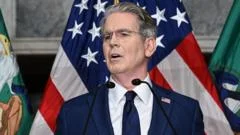
The United States has declared what it calls the "greatest financial offensive ever" against Iran, with Treasury Secretary Scott Bessent vowing to sever all economic ties with Tehran. The announcement signals a dramatic escalation in Washington's economic pressure campaign, with a clear warning to any nation that continues financial partnerships with Iran.
What the US Treasury Secretary Announced
Scott Bessent, the US Treasury Secretary, made the declaration in stark terms, stating that Washington will cut off all economic connections with Iran. His warning extended beyond Tehran itself, making clear that any country choosing to partner financially with Iran would also face isolation from the US financial system.
The statement represents one of the most aggressive economic positions taken by the US toward Iran in recent years, targeting not just direct transactions but the broader network of financial relationships that sustain Iran's economy.
Why This Escalation Matters for Global Markets
This move carries significant implications for international trade, oil markets, and global banking. Iran remains a major oil producer, and its financial connections span multiple countries, particularly in Asia and the Middle East. Nations that continue trading with Iran now face the prospect of being cut off from US financial infrastructure, including access to the dollar-based banking system.
For businesses and governments worldwide, the announcement creates immediate uncertainty about compliance, enforcement, and the potential costs of maintaining economic ties with Tehran.
Background: A History of US-Iran Economic Pressure
The US has maintained sanctions against Iran for decades, targeting its nuclear program, ballistic missile development, and regional activities. Previous administrations have imposed waves of sanctions, but this latest declaration escalates the rhetoric and scope, framing the effort as a comprehensive financial offensive rather than targeted measures.
The announcement comes amid ongoing tensions over Iran's nuclear ambitions and its regional influence, with Washington signaling a more aggressive posture toward Tehran.
Who Stands to Be Affected
Iranian citizens and businesses will feel the immediate impact through further restrictions on banking, trade, and access to international markets. Beyond Iran, companies in countries that maintain trade relationships with Tehran — particularly in energy, shipping, and manufacturing — face difficult decisions about compliance with US demands.
Financial institutions globally must now assess their exposure to Iranian-linked transactions, with the threat of US isolation adding a new layer of risk to any such dealings.
Official Statements and Attribution
According to the original story, Bessent made the remarks directly, stating that the US will sever all economic ties with Iran and that any nation partnering financially with Iran will also be isolated. The statement was reported as a direct declaration from the Treasury Secretary, though specific details on implementation timelines and enforcement mechanisms were not provided in the initial report.
Analysis: What This Financial Offensive Actually Means
The phrase "greatest financial offensive ever" suggests a coordinated, comprehensive strategy rather than incremental sanctions. This could involve designating additional Iranian entities, targeting remaining financial channels, and pressuring third-party countries to choose between US access and Iranian business.
However, the practical impact depends on enforcement. Iran has historically found workarounds through non-dollar transactions, barter arrangements, and partnerships with countries that do not fully align with US policy. The effectiveness of this offensive will hinge on how many nations comply with Washington's demands.
Confirmed Facts vs What Remains Unclear
Confirmed: The US Treasury Secretary announced the "greatest financial offensive ever" against Iran and stated the US will sever all economic ties with the country. He warned that nations partnering financially with Iran will face isolation.
Unclear: Specific sanctions measures, implementation timelines, which countries are being targeted, and how enforcement will work in practice have not yet been detailed. The full scope of the financial offensive remains to be outlined.
Risks and Balanced View
While the US frames this as a decisive economic measure, critics may point to potential downsides. Escalating sanctions could harden Iran's position, reduce diplomatic options, and create friction with allied nations that have economic interests in Iran. There is also the question of whether such sweeping measures can be effectively enforced without causing broader market disruption.
Supporters of the approach argue that maximum economic pressure is necessary to change Iran's behavior and limit its regional influence. The balance between pressure and diplomacy remains a central tension in US-Iran policy.
Wider Pattern: US Economic Statecraft
This announcement fits a broader pattern of US reliance on financial power as a primary tool of foreign policy. From sanctions on Russia to restrictions on Chinese tech firms, Washington has increasingly used its control over the global financial system to achieve strategic objectives. Iran now becomes the latest and most explicit target of this approach.
What Should Businesses and Governments Do Now
Companies with any exposure to Iranian markets should review their compliance frameworks and assess potential risks. Financial institutions need to monitor regulatory updates closely. Governments that maintain trade relationships with Iran face a strategic choice about balancing economic interests against the threat of US isolation.
Future Outlook
The coming weeks will likely bring more details on the specific mechanics of this financial offensive. Observers will watch for reactions from Iran, responses from key trading partners, and any signs of market disruption. The full consequences of this declaration will unfold over time, but the direction is clear: the US is committed to severing Iran's access to the global financial system.
Our Take
This is more than routine sanctions rhetoric. The framing of a "greatest financial offensive ever" signals a deliberate strategy to isolate Iran economically at every level. The real test will be enforcement — whether Washington can persuade or pressure enough nations to comply. For now, the announcement raises the stakes in US-Iran relations and adds a new layer of uncertainty to global markets.
Frequently Asked Questions
What did the US Treasury Secretary say about Iran?
Scott Bessent said the US will launch the "greatest financial offensive ever" against Iran, severing all economic ties with the country and isolating any nation that partners financially with Tehran.
What does "severing all economic ties" mean for Iran?
It means Iran would lose access to US financial systems, dollar-based transactions, and potentially face isolation from broader international banking networks that rely on US cooperation.
Which countries could be affected by this US policy?
Countries that maintain financial or trade relationships with Iran, particularly in energy, shipping, and banking, could face US isolation if they continue partnering with Tehran.
How might Iran respond to this financial offensive?
Iran may seek alternative financial channels, strengthen ties with non-aligned nations, or use barter arrangements to bypass US restrictions, though its options are likely to narrow under this pressure.