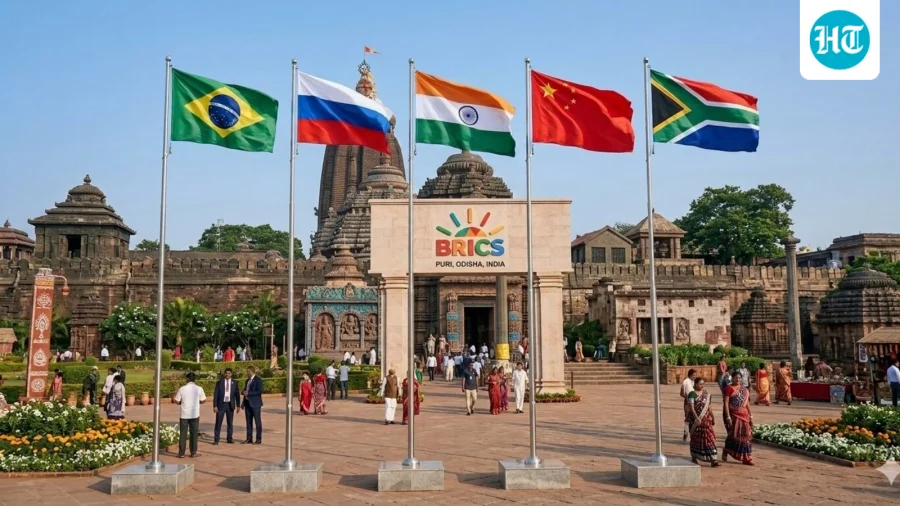
India is navigating a diplomatic tightrope. Officials are holding what they describe as “frank” talks with Brics member states over the wording of a joint meeting declaration — with territorial integrity, maritime commerce, and the West Asia conflict emerging as the most sensitive points of discussion.
What is at stake in the Brics declaration talks
The declaration is more than a formality. It represents the collective voice of a bloc that now includes major emerging economies. For India, the language matters — particularly on territorial integrity, a principle New Delhi has consistently championed in multilateral forums.
Maritime commerce is another flashpoint. With global shipping routes under strain, Brics members are keen to signal their commitment to open and secure sea lanes. But aligning all members on precise wording is proving difficult.
Why the Iran-UAE tension complicates the West Asia discussion
The West Asia conflict is the most delicate item on the table. Tensions between Iran and the UAE have added urgency to the talks. Any statement on the conflict must balance the interests of members with close ties to different regional players.
India has historically maintained strong relationships across the region — with both Tehran and Abu Dhabi. A declaration that leans too far in one direction could strain carefully built partnerships.
How the discussions have evolved so far
The talks are described as ongoing, with no final text confirmed. The use of the word “frank” suggests that member states are speaking openly about their differences rather than papering over them.
This is not unusual in multilateral settings. Brics has often struggled to produce unified statements on geopolitical crises, preferring consensus language that all members can accept.
Who is affected by the declaration’s outcome
The immediate impact falls on the Brics member governments themselves. But the ripple effects extend further. Businesses that rely on maritime trade routes will watch closely. So will nations across West Asia, where the bloc’s words carry weight.
For ordinary citizens, the declaration may seem distant. Yet the principles it affirms — territorial integrity, secure commerce, regional stability — shape the broader environment in which economies grow and prices are set.
What officials and analysts are saying
Officials involved in the talks have not disclosed specific positions of individual member states. The description of the discussions as “frank” is the only official characterisation available at this stage.
Analysts following Brics diplomacy note that India often plays a bridging role — advocating for principles while avoiding confrontation. The current talks appear to reflect that approach.
Reading between the lines of the Brics negotiation
The choice of topics is revealing. Territorial integrity is a principle India has defended in multiple forums, particularly in the context of its own neighbourhood. Maritime commerce speaks to India’s growing role as a maritime power and its interest in secure trade routes.
The West Asia conflict, however, is where the real diplomatic skill will be tested. Balancing the interests of Iran, the UAE, and other regional actors within a single declaration requires careful drafting.
Confirmed facts versus what remains unclear
What is confirmed: India is in talks with Brics states over a meeting declaration. The key topics are territorial integrity, maritime commerce, and the West Asia conflict. The discussions are described as “frank.” Tensions between Iran and the UAE provide the backdrop.
What remains unclear: the specific positions of individual member states, the exact wording under negotiation, and whether a final declaration will be agreed upon. No timeline for conclusion has been announced.
Why India’s position in Brics matters
India brings significant weight to the bloc. As one of the world’s fastest-growing major economies, its voice carries influence. Its ability to maintain relationships across rival camps — in West Asia and beyond — makes it a valuable mediator.
The bloc itself is evolving. With new members joining in recent years, consensus-building has become more complex. India’s role in shaping the declaration could set a precedent for how the expanded Brics handles future disputes.
Risks and the balancing act ahead
The risks are real. A declaration that fails to address territorial integrity could be seen as a retreat from principle. One that wades too deep into the West Asia conflict could alienate key partners.
There is also the risk of no declaration at all. If member states cannot agree on language, the meeting may conclude without a joint statement — a visible sign of discord within the bloc.
The broader pattern in multilateral diplomacy
This is not an isolated moment. Across global forums — from the UN to regional groupings — consensus is becoming harder to achieve. The Brics talks reflect a wider trend of emerging economies asserting their own interests rather than following established blocs.
India’s approach here may offer a glimpse into its broader foreign policy style: principled, pragmatic, and unwilling to be boxed into any single camp.
What readers should watch for next
For those following the story, the key signals will be the final text of the declaration — if one emerges — and how it frames the three core topics. The tone of the language will reveal which members won concessions and which had to compromise.
For businesses and investors, the maritime commerce language is worth particular attention. Any commitment to secure trade routes would be a positive signal for global supply chains.
What happens next in the Brics process
The immediate next step is continued negotiation. Whether the declaration is finalised at the current meeting or deferred to a later date remains to be seen.
Beyond that, the outcome will shape expectations for future Brics summits. A successful declaration could strengthen the bloc’s credibility as a forum for addressing global challenges. A failure would raise questions about its relevance.
Our Take
This story matters because it tests whether Brics can move beyond rhetoric and produce meaningful consensus on hard issues. India’s role is particularly significant — it is a member that genuinely engages with all sides, from Tehran to Abu Dhabi, from Moscow to Beijing.
The “frank” nature of the talks is actually a healthy sign. Multilateralism works best when differences are aired openly rather than buried. The final declaration — if it comes — will show whether the bloc can turn frank discussion into shared purpose.
Frequently Asked Questions
What is the Brics meeting declaration about?
The declaration is a joint statement being negotiated by Brics member states. India is in talks over its wording, with key topics including territorial integrity, maritime commerce, and the West Asia conflict.
Why are territorial integrity and maritime commerce important in the talks?
Territorial integrity is a core principle India has championed in multilateral forums. Maritime commerce matters because secure shipping routes are vital for global trade and economic stability.
How do Iran-UAE tensions affect the Brics declaration?
The tensions make the West Asia conflict a sensitive topic. Brics members have different relationships with regional players, so finding consensus language that satisfies all sides is difficult.
What does “frank talks” mean in diplomatic terms?
It means the discussions are open and candid, with member states expressing their true positions rather than avoiding difficult issues. It signals genuine negotiation is taking place.