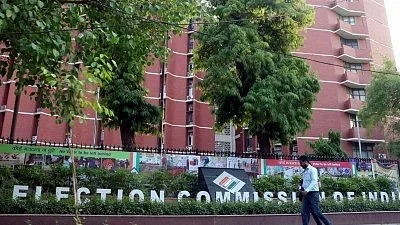
In the heated run-up to the Nandigram by-election, a single document has become the centre of a political storm. BJP candidate Hasirani Rath's affidavit — a mandatory declaration of age, education, and assets — contains details that don't add up. And the question now echoing through the constituency is simple: can the Election Commission overlook such discrepancies as mere typographical errors?
The 1965 Exam That Couldn't Have Happened
According to the affidavit, Rath is 60 years old and cleared her secondary examination in 1965. But the school she names was established in 1963 — and its first batch of students passed out only in 1973. That timeline makes a 1965 pass-out impossible. The BJP, however, insists the real year was 1980, when Rath was a Class X student, and blames the discrepancy on a typing mistake.
Why This Affidavit Error Matters Beyond Nandigram
Candidate affidavits are legal documents filed under oath. They are not casual forms. If false information is proven, it can lead to prosecution under the Representation of the People Act, 1951. For voters, the affidavit is often the only verified source of a candidate's background. When that source is questioned, public trust in the electoral process takes a hit — not just in Nandigram, but wherever such errors go unchecked.
How the Controversy Unfolded
The discrepancy first surfaced when political opponents scrutinised Rath's nomination papers. Congress and CPI(M) quickly seized on the contradiction, accusing her of providing false information and demanding a transparent, impartial investigation by the Election Commission. The BJP responded by dismissing the allegations as politically motivated, calling the entire row a manufactured controversy ahead of a crucial by-election.
Who Is Affected by This Dispute?
At the heart of it are the voters of Nandigram, who will cast their ballots based on the information available. If affidavits can contain unverified or incorrect details without consequence, the electorate's ability to make an informed choice is compromised. The candidate herself faces reputational risk, while the Election Commission faces a test of its enforcement credibility.
What the Election Commission Can Actually Do
The EC has the authority to scrutinise affidavits and, in cases of deliberate falsification, can initiate action under Section 125A of the Representation of the People Act. That section prescribes imprisonment up to six months, a fine, or both for filing false information. However, the EC typically distinguishes between clerical errors and wilful misrepresentation. The burden of proof lies in establishing intent — a high bar in cases involving typographical mistakes.
Typographical Error vs. False Information: The Legal Line
Legal experts often point out that not every error in an affidavit is a criminal offence. A genuine typo — a wrong digit, a transposed year — can be corrected if the candidate provides supporting documents. But when the error creates a logical impossibility, like an exam passed before the school's first batch, questions about intent naturally arise. The EC's decision will hinge on whether the BJP can substantiate the claim of a clerical mistake with school records or other evidence.
Confirmed Facts vs. What Remains Unclear
Confirmed: The affidavit states 1965 as the year of passing; the school was established in 1963 and its first batch passed out in 1973; the BJP admits Rath was a Class X student in 1980 and calls the discrepancy a typographical error; Congress and CPI(M) have demanded an EC probe.
Unclear: Whether the EC will treat this as a clerical error or a violation; whether Rath will submit corrected documents; and what evidence the BJP has to support its claim of a typo. No official EC statement has been issued yet.
Risks and the Balanced View
For the BJP, the risk is that the controversy lingers and damages its candidate's credibility in a high-stakes by-election. For the opposition, the risk is that if the EC finds no deliberate wrongdoing, the allegations could backfire as political mudslinging. And for the Election Commission, the risk is larger: if it appears to ignore a clear discrepancy, it undermines its own authority to enforce clean elections.
The Wider Pattern: Affidavit Errors in Indian Elections
This is not the first time candidate affidavits have come under scrutiny. Across India, civil society groups and media have repeatedly flagged discrepancies in age, education, and assets. While many are genuine clerical errors, others have led to prosecutions. The Nandigram case adds to a growing demand for stricter verification mechanisms — perhaps even mandatory cross-checking with school boards and municipal records before nominations are accepted.
What Voters and Candidates Should Take Away
For voters: read affidavits carefully. They are public documents, and discrepancies can be reported to the Election Commission. For candidates: double-check every detail before filing. A typo may seem harmless, but in a polarised political climate, it can become a weapon. For the EC: this case is an opportunity to clarify its stance on typographical errors — a ruling that could set a precedent for future elections.
What Happens Next?
The Election Commission has not yet announced whether it will investigate. If it does, the focus will be on documentary evidence — school records, birth certificates, and the original affidavit. If the BJP can prove the error was clerical, the matter may be closed with a correction. If not, the case could escalate into a legal battle with implications for the candidate's candidacy. Either way, Nandigram's voters — and political observers nationwide — are watching closely.
Our Take
This is more than a local by-election controversy. It tests the Election Commission's willingness to enforce the integrity of candidate disclosures. A typographical error is forgivable; a pattern of unchecked errors is not. The EC's response will signal whether affidavits are treated as binding legal documents or mere formalities. For democracy, the difference matters.
Frequently Asked Questions
Can the Election Commission reject an affidavit for typographical errors?
The EC can reject or seek clarification if errors are material and affect eligibility. Minor typos are usually allowed to be corrected, but deliberate false information can lead to prosecution under Section 125A of the Representation of the People Act.
What is the punishment for filing a false affidavit in India?
Under Section 125A of the Representation of the People Act, 1951, filing false information can result in imprisonment up to six months, a fine, or both.
Did the BJP candidate really pass Class X in 1965?
The affidavit says 1965, but the school's first batch passed out in 1973. The BJP admits she was a Class X student in 1980 and calls the 1965 date a typographical error.
What happens if the Election Commission finds a typo was intentional?
If intent to mislead is proven, the candidate can face legal action, including criminal proceedings. The EC may also direct the returning officer to take appropriate action under election laws.