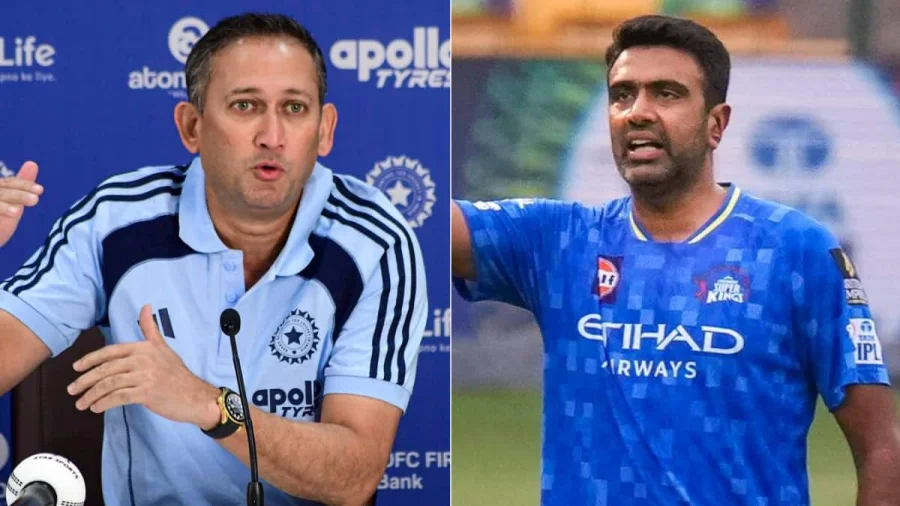
Ajit Agarkar's chair as BCCI chief selector has rarely felt stable. Now, with reports suggesting he may not seek an extension, one of Indian cricket's most respected recent voices has stepped in to defend the job he did — and the difficulty of doing it at all.
R Ashwin, speaking on his YouTube channel, offered a rare public endorsement of Agarkar's tenure, framing the role less as a privilege and more as a series of unavoidable, high-stakes calls.
Ashwin's Defence of Agarkar's Selection Calls
Ashwin acknowledged the scale of decisions Agarkar's committee had to make during a period of significant transition in Indian cricket. According to his remarks, the job of a chief selector is not about pleasing everyone — it is about making calls that will be questioned regardless of outcome.
His comments arrive at a moment when Agarkar's future has become a talking point across Indian cricket circles, with multiple reports pointing to uncertainty over whether he will continue in the role.
Why the Chief Selector's Chair Is India's Toughest Job
Few positions in world cricket attract as much scrutiny as the BCCI chief selector's seat. Every squad announcement is dissected, every omission debated, and every selection gamble judged in hindsight.
For a committee overseeing a talent pool as deep as India's, the pressure is structural — not personal. Agarkar inherited a phase where senior players were transitioning out, younger names were pushing in, and formats demanded different squads.
How the Exit Speculation Built Up
Reports of late have indicated uncertainty over Agarkar's continuation, with more recent reporting suggesting he has chosen not to seek an extension beyond his current term. No formal BCCI statement confirming either an exit or an extension has been reported.
That gap between reporting and official confirmation is precisely why Ashwin's comments carry weight — they arrive in the space where speculation usually fills the silence.
Who This Actually Affects
Beyond boardroom chatter, the outcome matters to players on the fringe, domestic performers waiting for a look-in, and fans who track every squad announcement. A change at the top of the selection committee can shift the direction of India's team-building for the next cycle.
For younger cricketers especially, continuity or change in the selection philosophy can mean the difference between being noticed and being overlooked.
What Ashwin's Support Signals
Ashwin's backing is notable because he is not a board official. His view comes from inside the dressing room experience — the side that lives with selection outcomes. When a recently retired senior player defends a selector's calls, it reframes the conversation from criticism to context.
It also subtly pushes back on the tendency to judge selection committees purely on results, ignoring the constraints they operate under.
Confirmed Facts vs What Remains Unclear
Confirmed: Ashwin publicly spoke in support of Agarkar's tenure and the difficulty of the role. Reports indicate uncertainty over Agarkar's continuation.
Unclear: Whether Agarkar has formally declined an extension, whether the BCCI has begun a succession process, and what the timeline for any change looks like. These remain unconfirmed and should be treated as speculation until officially addressed.
Risks and the Balanced View
Support for Agarkar is not universal. Selection committees are always judged on outcomes, and every tenure produces decisions that age poorly. Critics argue that continuity can also mean stagnation, and that fresh eyes sometimes serve a transition phase better.
The counter-argument — the one Ashwin appears to make — is that stability has value, and that constant churn in selection leadership can be just as damaging as a wrong call.
The Wider Pattern in Indian Cricket
India's selection committees have historically operated under intense public pressure, with tenures often ending amid debate rather than quiet exits. Agarkar's situation fits a familiar pattern: a high-profile former player takes on the role, makes consequential calls, and then faces questions about whether to continue.
What has changed is the volume — social media has turned every squad announcement into an instant referendum.
What Fans and Followers Should Watch For
Until the BCCI issues an official communication, treat exit reports as unconfirmed. Watch for formal announcements on the selection committee's composition, and pay attention to whether any change coincides with a major squad selection or tournament cycle.
For now, the most reliable signal is not speculation but official word.
What Could Happen Next
If Agarkar does step away, the BCCI would need to identify a successor capable of handling the same pressures — ideally someone with both playing credibility and administrative temperament. If he continues, the focus shifts back to selection outcomes in the coming series.
Either way, the debate about how India picks its teams is unlikely to quiet down.
Our Take
Ashwin's comments are less about defending one man and more about defending the difficulty of a job that is easy to criticise from the outside. Whether Agarkar stays or goes, the episode highlights a persistent truth in Indian cricket: selection is judged in hindsight, but made in real time, with incomplete information and enormous stakes.
Frequently Asked Questions
Is Ajit Agarkar leaving his role as BCCI chief selector?
Reports suggest uncertainty over his continuation, with some indicating he has chosen not to seek an extension. However, no official BCCI confirmation has been reported, so this remains unconfirmed.
What did R Ashwin say about Ajit Agarkar?
Speaking on his YouTube channel, Ashwin backed Agarkar's tenure, highlighting the difficulty of the chief selector's role and the major calls the committee had to make.
Why is the BCCI chief selector's job so scrutinised?
Because every squad decision affects players' careers and team outcomes, and India's deep talent pool means every omission and inclusion invites intense public debate.
What happens if Agarkar steps down?
The BCCI would need to appoint a successor to lead the selection committee. No official process or timeline has been confirmed yet.