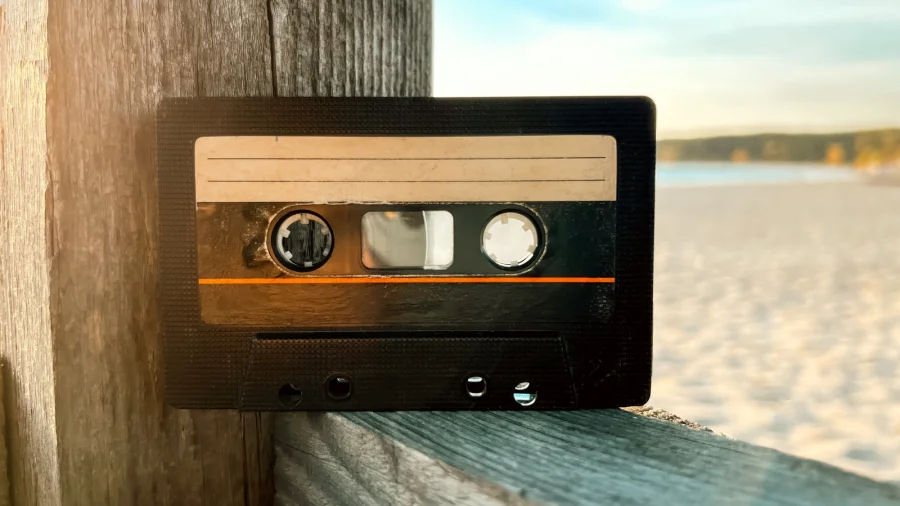
Somewhere in a cardboard box, in a drawer, or on a shelf you haven't touched in years — your old cassette tapes are quietly deteriorating. The music, the mixtapes, the voice recordings of people who may no longer be around — all of it sits on thin magnetic ribbon that doesn't last forever.
The question isn't whether cassette tapes degrade. It's how long you have before they do.
What Actually Determines How Long a Cassette Tape Lasts
A cassette tape is a strip of plastic film coated with magnetic particles. Those particles hold the audio signal. Over time, the binder that holds them to the film breaks down, the particles lose their magnetic charge, and the tape itself stretches or snaps.
How fast this happens depends almost entirely on where and how the tape is stored. Temperature, humidity, light exposure, and magnetic fields are the four biggest factors.
Why Storage Conditions Matter More Than Age
A cassette kept in a cool, dry, dark place can remain playable for decades — potentially 30 years or more. The same tape left in a hot car, a damp basement, or near a speaker magnet may become unplayable in a fraction of that time.
Heat is the single most destructive factor. It softens the binder layer, causing the magnetic coating to shed — a condition commonly called "sticky shed syndrome." Humidity warps the tape and encourages mould. Direct sunlight breaks down the plastic shell and the tape itself.
How Cassette Tapes Age Over Time
Most cassettes people still own were manufactured between the 1970s and 1990s. That makes them 30 to 50 years old right now. Even well-stored tapes from that era are entering the window where degradation becomes noticeable.
Early warning signs include muffled or dropping audio, squealing during playback, visible white powder on the tape, or the tape jamming inside the shell.
Who This Affects — And Why It's More Than Nostalgia
For most people, a cassette is a memory. A mixtape from a friend. A recording of a grandparent's voice. A concert bootleg that was never released officially.
Unlike digital files, there is no copy. Once the magnetic coating sheds or the tape snaps, the content is gone — unless it was transferred to another format beforehand.
What Archivists and Preservation Experts Recommend
Professional archivists consistently recommend the same approach: store tapes vertically, away from heat and moisture, in a stable environment with consistent temperature and low humidity. Avoid attics, basements, garages, and cars.
They also stress that playback itself causes wear. Every time a tape runs across the player's heads, it loses a tiny amount of magnetic material. Playing a fragile tape repeatedly accelerates its death.
Confirmed Facts vs What Remains Uncertain
Confirmed: Magnetic tape degrades over time. Heat, humidity, and magnetic fields accelerate that degradation. Storage conditions are the primary controllable variable.
Uncertain: There is no single universal lifespan figure. Two identical tapes stored differently can have wildly different outcomes. Manufacturer quality, tape formulation, and playback equipment also play a role.
Risks and the Balanced View
Not every tape is worth saving. Many commercial cassettes were mass-produced on low-grade tape and were never designed for long-term archival use. Some will degrade faster than others regardless of storage.
Digitisation is not perfect either. A poorly done transfer can introduce its own audio problems. But it remains the only reliable way to preserve content once a tape begins to fail.
The Wider Pattern: A Generation of Analog Media Is Fading
Cassettes are not alone. VHS tapes, floppy disks, film negatives, and early CDs are all facing similar decay. The generation that created these formats is now watching them age out of playability.
What makes cassettes particularly vulnerable is that most were consumer-grade products, never intended to last half a century.
What You Should Do Now
If you have cassettes you care about, act before you need to. Check them for visible damage. Store them upright in a cool, dry place. And if the content matters — digitise it now, not later.
Do not wait for a tape to fail before transferring it. By then, it may already be too late.
Future Outlook
As more tapes cross the 40–50 year mark, expect a growing wave of "dead" cassettes — playable once, silent forever. Preservation efforts will increasingly focus on digitisation rather than physical restoration.
For collectors and families alike, the window to save what's on those tapes is narrowing.
Our Take
Cassette tapes are not fragile in the way people assume. They are simply unforgiving of neglect. A tape stored well can outlive its owner. A tape stored badly may already be gone. The difference is not luck — it is environment.
Frequently Asked Questions
How long do old cassette tapes last?
With ideal storage — cool, dry, dark, stable temperature — a cassette tape can last 30 years or more. In poor conditions, it can degrade in under a decade.
What causes cassette tapes to go bad?
Heat, humidity, direct sunlight, magnetic fields, and repeated playback. Heat is the most damaging, causing the magnetic coating to shed from the tape.
Can you still play cassette tapes from the 1980s?
Often yes, if they were stored properly. But many tapes from that era are now showing signs of degradation. Test carefully and consider digitising before repeated playback.
How should I store cassette tapes to make them last longer?
Store them upright, in a cool, dry, dark place with stable temperature and low humidity. Avoid attics, basements, garages, cars, and areas near speakers or magnets.