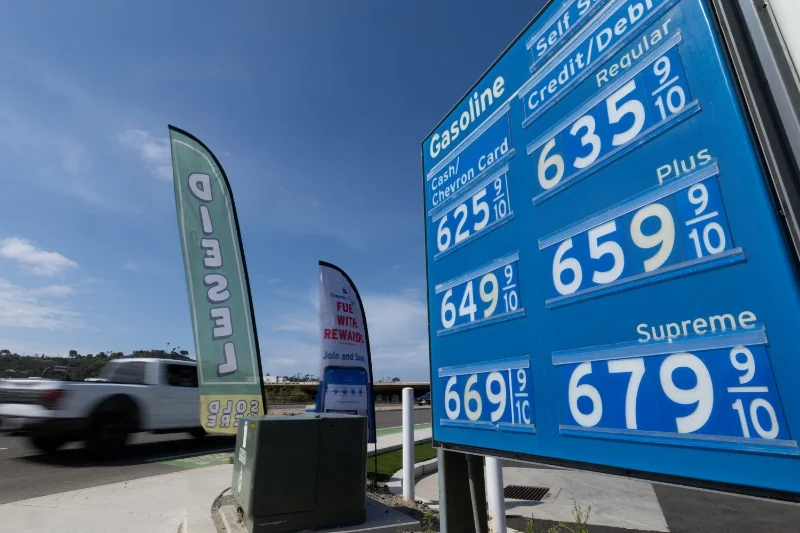
It sounds like a story from two different worlds. A family in Mumbai struggling to find a cooking gas cylinder. A driver in Los Angeles staring at a $6-per-gallon price tag. But these two scenes are now connected by a single, fragile thread: the global energy market. And that thread is tightening fast.
What started as a cooking fuel shortage in India — driven by crude oil prices soaring past $100 a barrel due to the West Asia conflict — is now sending shockwaves across the Pacific. The result? California, already grappling with some of the highest gas prices in the United States, is feeling the pressure from a crisis thousands of miles away.
The Global Chain: How a Cooking Gas Crisis in India Reaches California Pumps
The connection isn't obvious, but it's brutally logical. India relies heavily on imported liquefied petroleum gas (LPG) for cooking. When crude oil prices spike — as they have due to the conflict in West Asia — the cost of producing and transporting LPG skyrockets. This creates a severe shortage in India, where millions of households depend on subsidized cooking gas.
But here's the catch: the global market for refined products, including gasoline and diesel, is interconnected. When one major consumer like India faces a shortage, it bids up the price of available supplies on the international market. California, which imports a significant portion of its refined gasoline from overseas, finds itself competing with India and other nations for the same limited barrels. The result is a direct upward pressure on prices at California pumps.
Why This Matters Right Now
For millions of Californians, this isn't an abstract economic theory. It's a real, painful reality at the gas station. Every dollar increase in global crude prices translates to higher costs for commuters, businesses, and the entire state economy. For Indian families, the crisis is even more immediate: empty LPG cylinders mean no hot meals, forcing households to rely on more expensive and less efficient alternatives like kerosene or firewood.
The emotional and financial toll is immense. In India, the shortage is deepening inequality, as poorer families are hit hardest. In California, the rising gas prices are squeezing household budgets already strained by inflation. This is a story of how a conflict far away can reach into your kitchen and your car.
How the Crisis Unfolded: From West Asia to Your Stove
The chain of events began with the escalation of the West Asia conflict. Crude oil prices surged past $100 a barrel, a level not seen in years. This immediately impacted the cost of LPG, which is derived from natural gas processing and crude oil refining. India, which imports over 50% of its LPG needs, saw prices for new supplies jump dramatically.
Simultaneously, the risk of a blockade at the Strait of Hormuz — a critical chokepoint for global oil shipments — added a layer of uncertainty. Analysts warned that a closure could spike oil prices by 30–50% almost immediately, with the risk of surpassing $100–$150 per barrel. This threat alone has made every barrel of fuel more expensive and harder to secure.
As India scrambled to secure LPG supplies, it began outbidding other buyers on the global market. This included California, which relies on imports from refineries in Asia, the Middle East, and even Europe to meet its demand for gasoline. The competition drove up prices for everyone.
Who Is Affected and What Officials Are Saying
The impact is widespread. In India, the shortage has led to long queues at LPG distribution centers, with reports of families waiting days for a refill. The government has tried to stabilize prices through subsidies, but the global price surge has made this increasingly difficult. Officials have acknowledged the strain but have offered limited solutions.
In California, the effect is felt at the pump. State officials have pointed to global factors, including the India crisis, as a key driver of recent price increases. "We are seeing a perfect storm of global supply constraints," a California energy official said. "The situation in India is a major factor, and it's not going away anytime soon."
The public is caught in the middle. For Indian households, the crisis is a daily struggle. For Californians, it's a frustrating reminder of how vulnerable the state's energy system is to global shocks.
What We Know So Far — and What Remains Unclear
What we know: Crude oil prices above $100/barrel are causing LPG shortages in India. This is tightening global refined product markets, pushing up prices for gasoline in import-dependent regions like California. The risk of a Strait of Hormuz blockade adds a significant upside risk to prices.
What remains unclear: How long the conflict in West Asia will continue. Whether India can secure alternative LPG supplies from other regions. And how much further California gas prices could rise if the crisis deepens. The situation remains highly fluid, with no clear resolution in sight.
Risks, Concerns, and the Balanced View
The risks are significant. For India, the shortage could worsen if crude prices remain elevated, leading to social unrest and economic disruption. For California, the state's reliance on imported gasoline makes it particularly vulnerable to global price spikes. Critics argue that California's own policies, including high taxes and environmental regulations, also contribute to its high gas prices, but the global factor is undeniable.
There is also a risk of a broader energy crisis. If the Strait of Hormuz is disrupted, the impact would be catastrophic for global oil markets, affecting everything from transportation to heating. Both India and California would be severely impacted.
On the other hand, some analysts point out that the current situation may be temporary. If the West Asia conflict de-escalates, crude prices could fall, easing the pressure on both LPG and gasoline markets. But for now, the outlook remains uncertain.
Why Similar Trends or Concerns Are Growing
This crisis is not an isolated event. It is part of a larger pattern of global energy interdependence and vulnerability. The pandemic, the Russia-Ukraine war, and now the West Asia conflict have all exposed how fragile supply chains are. Countries that rely on imports are increasingly at the mercy of geopolitical events far from their borders.
For California, this is a wake-up call. The state's push for electric vehicles and renewable energy is a long-term solution, but in the short term, it remains deeply connected to global oil markets. For India, the crisis highlights the need for energy diversification and domestic production.
- India's LPG imports have risen steadily over the past decade, making it more exposed to global price shocks.
- California imports about 30% of its gasoline from foreign refineries, making it one of the most import-dependent states in the U.S.
- The Strait of Hormuz sees about 20% of the world's oil pass through it daily. Any disruption would have immediate global consequences.
"Oil Prices could spike by 30–50%+ almost immediately. A closure could spike oil prices by $8–$31/barrel, with risk of surpassing $100–$150/barrel." — Analysis of Strait of Hormuz blockade risk
What Readers, Users, or Investors Should Know Now
For Californians: Expect gas prices to remain elevated as long as the global crude market is tight. Consider carpooling, using public transit, or delaying non-essential trips to save fuel. Keep an eye on geopolitical developments in West Asia, as any escalation could push prices even higher.
For Indian households: The shortage is real, but the government is working to secure supplies. Try to stock up on LPG when available, and consider alternative cooking methods as a backup. Stay informed about subsidy programs that may help offset costs.
For investors: Energy stocks, particularly those involved in refining and LPG distribution, may see increased volatility. The crisis could also accelerate investments in renewable energy and domestic production in both India and California.
What Could Happen Next
The immediate future depends on the West Asia conflict. If tensions de-escalate, crude prices could fall, easing the LPG shortage in India and reducing pressure on California gas prices. However, if the conflict escalates or if the Strait of Hormuz is disrupted, the situation could worsen dramatically.
In the medium term, both India and California may accelerate efforts to reduce their dependence on imported fossil fuels. India is investing in domestic natural gas production and renewable energy. California is pushing for more electric vehicles and local refining capacity. But these are long-term solutions that won't help in the current crisis.
Our Take: Why This Story Matters Beyond One Incident
This story is a powerful reminder that in a globalized world, no crisis is truly local. A cooking fuel shortage in India is not just India's problem. It is a signal of how interconnected our energy systems are — and how vulnerable we all are to disruptions far from home.
For California, it's a lesson in the limits of local policy. No matter how many electric cars the state puts on the road, it cannot escape the global oil market entirely. For India, it's a call to action to build a more resilient energy system. For all of us, it's a reminder that the price at the pump is not just a number — it's a reflection of the world's fragile balance.
FAQs
How does a cooking fuel shortage in India affect gas prices in California?
India's LPG shortage is caused by high crude oil prices. This forces India to compete for limited global refined fuel supplies, driving up prices for all importers, including California. The tighter the global market, the higher the prices at California pumps.
Why is India facing a cooking gas shortage right now?
The primary cause is the surge in crude oil prices above $100 per barrel due to the West Asia conflict. This makes LPG production and import more expensive, leading to shortages and higher prices for consumers in India.
Could the Strait of Hormuz blockade make California gas prices even higher?
Yes. A blockade would spike global oil prices by 30–50% or more, immediately worsening the LPG shortage in India and pushing California gas prices to record levels. It is a major risk factor in the current crisis.
What can Californians do to protect themselves from rising gas prices?
Short-term actions include reducing fuel consumption through carpooling, public transit, and trip planning. Long-term, investing in fuel-efficient or electric vehicles can reduce exposure to global oil price volatility.