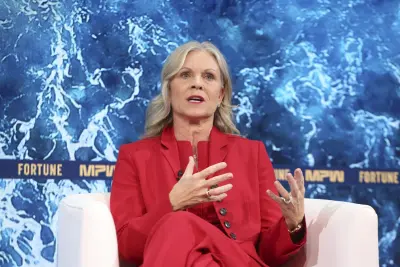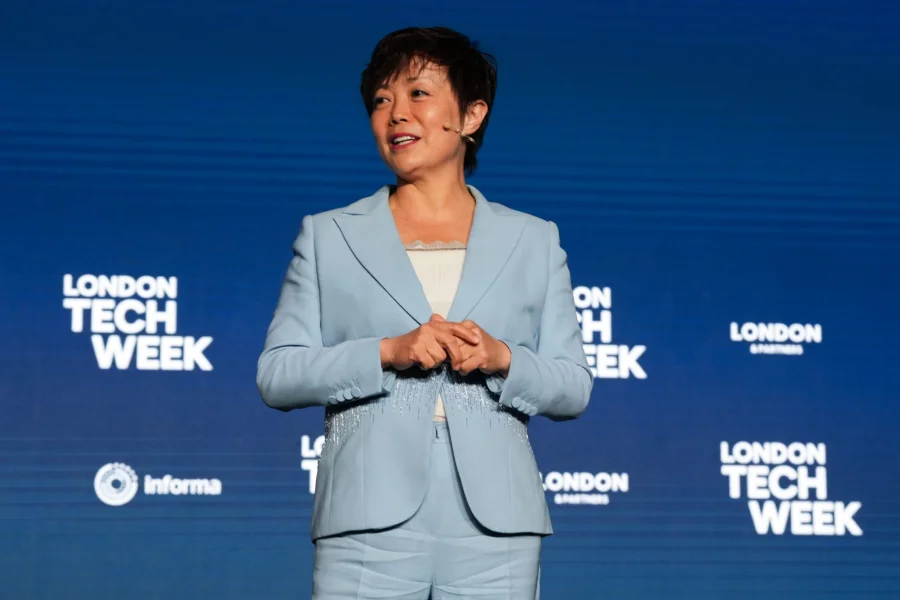
When Wang Chuanfu, CEO of Chinese EV giant BYD, stood before shareholders in Shenzhen this week and declared the company would become the world’s largest automaker within five years, he wasn’t just setting a bold target. He was betting the company’s future on a single executive: Stella Li.
The woman behind BYD’s global push
Li, BYD’s executive vice president, has spent 30 years at the company, overseeing its transformation from a mobile phone battery maker into the world’s top seller of electric vehicles. She is widely seen as the architect of BYD’s rapid international expansion — the executive selling that vision to the world.
In an interview, Li told Fortune that the company’s overseas strategy is already gaining momentum. BYD has opened factories in Thailand, Brazil, Hungary, and Uzbekistan, and is building new plants in Indonesia, Turkey, and Mexico. The goal: produce vehicles where they are sold, bypassing tariffs and building local supply chains.
Why BYD needs to go global now
The urgency is clear. China’s EV market, once a growth engine, is now fiercely competitive. More than 100 EV brands are fighting for market share, and price wars have squeezed margins. BYD sold 3.02 million vehicles in 2024, but domestic growth is slowing.
At the same time, Western markets are raising barriers. The US imposed 100% tariffs on Chinese EVs in May 2024. The EU followed with tariffs of up to 38% on Chinese-made EVs. For BYD, going global is no longer optional — it’s survival.
From batteries to global automaker: the BYD story
Founded in 1995 as a battery manufacturer, BYD (Build Your Dreams) entered the auto industry in 2003. Its breakthrough came with the Blade Battery, a safer lithium iron phosphate (LFP) battery that reduced fire risk and cut costs. By 2023, BYD had overtaken Tesla as the world’s top EV seller, delivering 1.86 million pure electric vehicles that year.
But Wang’s ambition goes beyond EVs. BYD also makes plug-in hybrids, buses, trucks, and even monorails. The company’s vertically integrated supply chain — from batteries to semiconductors to vehicle assembly — gives it a cost advantage that rivals struggle to match.
Who is affected by BYD’s global ambition
For consumers in emerging markets, BYD’s expansion means access to affordable EVs. In Thailand, BYD’s Atto 3 SUV starts at around $30,000 — half the price of many competitors. In Brazil, the company is building a factory that will employ 10,000 workers.
For legacy automakers like Toyota, Volkswagen, and Ford, BYD’s rise is a direct threat. Toyota sold 11.2 million vehicles in 2024, making it the world’s largest automaker. If BYD hits its target, it would need to sell roughly 12–15 million vehicles annually within five years — a staggering leap from its current 3 million.
What Wang Chuanfu and Stella Li are saying
At the Shenzhen shareholder meeting, Wang said: “Growing production and sales overseas is one of the major paths to becoming the world’s largest automaker.” He did not provide a specific timeline or sales target, but the five-year goal is clear.
Li, in her Fortune interview, emphasized that BYD’s international strategy is not just about selling cars. “We are building ecosystems,” she said. “We bring battery technology, manufacturing, and after-sales service to every market we enter.” She also acknowledged challenges: “Every market has different regulations, consumer preferences, and infrastructure. We must adapt.”
What BYD’s five-year plan really means
The ambition is not just about volume. Becoming the world’s largest automaker would give BYD unmatched economies of scale, bargaining power with suppliers, and brand recognition. It would also cement China’s position as the dominant force in the global auto industry — a shift with geopolitical implications.
But the path is fraught. Tariffs, regulatory hurdles, and cultural barriers in Western markets remain significant. BYD has yet to enter the US market directly, and its European expansion faces resistance from local automakers and policymakers.
Confirmed facts vs what remains unclear
Confirmed: Wang Chuanfu stated the five-year goal at the Shenzhen shareholder meeting. Stella Li is leading international expansion. BYD has factories in multiple countries and plans for more. The company is already the world’s top EV seller.
Unclear: The exact sales target for five years. Whether BYD will enter the US market directly. How it will navigate EU and US tariffs. Whether the five-year timeline is realistic given current production capacity.
Why BYD’s model gives it an edge
BYD’s competitive advantage lies in vertical integration. Unlike most automakers that rely on external suppliers for batteries, semiconductors, and other components, BYD makes almost everything in-house. This reduces costs, ensures supply chain control, and allows rapid innovation.
The company’s Blade Battery is a key differentiator — safer, cheaper, and more energy-dense than traditional lithium-ion batteries. BYD also owns its own chip design and manufacturing capabilities, insulating it from global semiconductor shortages that have hit rivals.
Risks and balanced view
Critics argue that BYD’s rapid expansion could strain quality control and brand reputation. The company has faced recalls in China and questions about build quality in some export markets.
Geopolitical risks are also significant. The US and EU view Chinese EV dominance as a strategic threat and are likely to maintain or increase trade barriers. BYD’s factory in Mexico, planned to serve the US market, could face political headwinds.
Financial analysts also note that BYD’s profit margins are thinner than Tesla’s, and its reliance on low-cost models may limit profitability as it scales.
The bigger picture: China’s auto industry goes global
BYD’s ambition is part of a broader trend. Chinese automakers like SAIC, Geely, and Great Wall Motors are also expanding overseas, driven by domestic saturation and government support. China exported 5.2 million vehicles in 2024, surpassing Japan as the world’s largest car exporter.
If BYD succeeds, it will mark a historic shift: the first Chinese automaker to lead the global industry, and the first time a company from outside Japan, Germany, or the US has held the top spot in decades.
What this means for investors, buyers, and policymakers
For investors: BYD’s stock has rallied on the news, but volatility is expected. Watch for updates on factory construction, tariff negotiations, and quarterly sales figures.
For car buyers: BYD’s global expansion means more affordable EV options in markets like Southeast Asia, Latin America, and Europe. But availability and service networks will take time to build.
For policymakers: BYD’s rise forces a reckoning. Tariffs alone may not stop Chinese EV dominance. Countries need to invest in domestic EV supply chains and innovation to compete.
What happens next
BYD’s next milestones: completion of factories in Indonesia, Turkey, and Mexico; expansion of dealership networks in Europe; and potential entry into the US market via Mexico. The company is also expected to launch new models tailored for international markets, including a budget EV for emerging economies.
Whether BYD achieves its five-year goal depends on execution, geopolitics, and consumer acceptance. But one thing is clear: Stella Li is the executive betting her legacy on making it happen.
Our Take
BYD’s five-year ambition is audacious but not impossible. The company has the technology, supply chain, and leadership to challenge the old guard. But the road is littered with obstacles — tariffs, cultural barriers, and the sheer scale of the task. Stella Li’s track record suggests she can navigate some of these, but the geopolitical headwinds may prove the toughest test. This story is about more than one company; it’s about whether China’s industrial model can conquer the global auto industry.
Frequently Asked Questions
Can BYD really become the world’s largest automaker in five years?
It’s possible but challenging. BYD would need to roughly quadruple its annual sales to around 12–15 million vehicles. The company has the production capacity and cost advantages, but faces tariffs, regulatory hurdles, and strong competition from Toyota, Volkswagen, and others.
Who is Stella Li and what is her role at BYD?
Stella Li is BYD’s executive vice president and a 30-year veteran of the company. She is widely credited as the architect of BYD’s international expansion, overseeing factory construction, dealership networks, and brand-building in markets outside China.
Why is BYD expanding overseas now?
China’s EV market is saturated and highly competitive, with over 100 brands fighting for share. At the same time, the US and EU have imposed tariffs on Chinese EVs, making local production essential. Overseas expansion is both a growth opportunity and a necessity for BYD.
What are the biggest risks to BYD’s global plan?
The main risks include: US and EU tariffs and trade barriers, geopolitical tensions, quality control issues in new markets, cultural and regulatory differences, and the challenge of building brand trust outside China. Profit margins may also be squeezed by the need to offer competitive pricing.