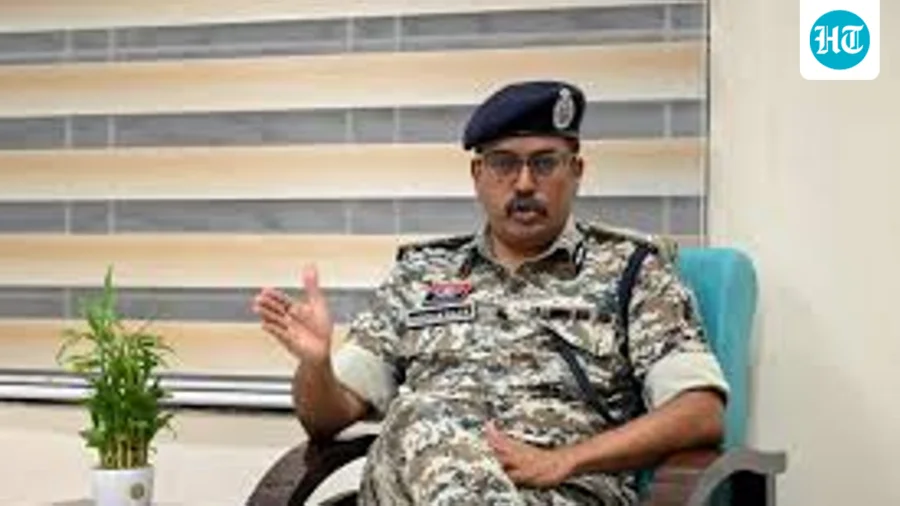
The man who led the most aggressive phase of India's anti-Maoist campaign in the Bastar forests is now headed to the National Investigation Agency. Sundarraj Pattilingam, the Inspector General of Police for Bastar Range, has been appointed as an Inspector General in the NIA on deputation, the Union home ministry ordered on Tuesday. For thousands of security personnel and the Maoist cadres who have faced his operations, this is a significant shift in the country's counter-insurgency landscape.
The man who turned the tide in Bastar
Pattilingam took charge of the Bastar Range at a time when the Maoist insurgency was at a critical juncture. Under his leadership, security forces intensified operations, leading to a series of major encounters, the elimination of top Maoist commanders, and a significant number of surrenders. He was widely credited with bringing the Maoist leadership under sustained pressure, a strategy that the government has publicly endorsed. His approach combined aggressive tactical operations with a focus on winning over local populations through development and surrender policies.
Why this appointment matters for national security
The NIA, which primarily handles terrorism cases, has been increasingly involved in Left Wing Extremism (LWE) cases, especially those with cross-border or inter-state links. Pattilingam’s appointment signals that the Centre wants to bring ground-level operational expertise into the agency’s top brass. For the people of Bastar, who have lived through decades of conflict, his move to the NIA could mean that the anti-Maoist strategy he pioneered will now be applied at a national scale, potentially affecting operations in other LWE-affected states like Jharkhand, Odisha, and Maharashtra.
From Bastar forests to the national stage: A timeline
Pattilingam, a 2009-batch IPS officer of the Chhattisgarh cadre, was posted as Bastar IG in 2022. Over the next three years, he oversaw a dramatic escalation in anti-Maoist operations. Key milestones include the elimination of several senior Maoist leaders, the recovery of large caches of arms and explosives, and a surge in the number of Maoist cadres surrendering. In a recent interview, he stated that the March 31 target for neutralizing the Maoist threat had "almost been achieved," though he acknowledged that it would take another two years to fully eliminate the insurgency. His leadership was also marked by a controversial but effective strategy of targeting the Maoist leadership's communication and supply lines.
What this means for the people of Bastar
For the residents of Bastar, Pattilingam’s departure raises questions about continuity. The region has seen a significant reduction in Maoist violence, but the threat is far from over. Many villagers who have been caught between security forces and Maoists are watching closely. The new IG will have to maintain the momentum while addressing the deep-rooted grievances that fuel the insurgency. For the families of security personnel who have lost their lives in operations, his appointment to the NIA is a recognition of the sacrifices made in the Bastar campaign.
Union home ministry’s order and next steps
The Union home ministry’s order, issued on Tuesday, states that Pattilingam will be appointed as IG in the NIA on deputation. He will take up the new role only after the Chhattisgarh government relieves him from his current post. The formal handover process is expected to be completed within the next few weeks. The NIA has not yet announced his specific portfolio, but sources indicate he is likely to oversee operations related to Left Wing Extremism and other internal security threats.
Decoding the strategy: Why Pattilingam’s approach worked
Pattilingam’s success in Bastar is attributed to a multi-pronged strategy. First, he focused on intelligence-led operations, using informants and technical surveillance to track Maoist movements. Second, he prioritized the protection of surrendered cadres, creating a pipeline of defectors who provided critical intelligence. Third, he worked closely with the CRPF and other central forces to coordinate large-scale operations. His approach was not without criticism—human rights groups have raised concerns about encounters and the treatment of surrendered Maoists—but the government has consistently backed his methods as necessary to end the insurgency.
Confirmed facts vs what remains unclear
What is confirmed: The Union home ministry has issued the order appointing Sundarraj Pattilingam as IG in the NIA. He will assume charge after being relieved by the Chhattisgarh government. His tenure as Bastar IG saw a significant reduction in Maoist activity. What remains unclear: His exact portfolio in the NIA, the timeline for his relief, and who will replace him as Bastar IG. It is also unclear whether his appointment signals a broader reshuffle of senior IPS officers in the counter-insurgency apparatus.
Risks and concerns: The other side of the story
While Pattilingam’s appointment is seen as a reward for operational success, it also raises concerns. Critics argue that the aggressive anti-Maoist strategy has led to human rights violations, including extrajudicial killings and the harassment of tribal communities. The transfer of a key officer from the ground to a central agency could also disrupt the momentum in Bastar. Additionally, the NIA’s track record in LWE cases has been mixed, with some cases dragging on for years. The challenge for Pattilingam will be to replicate his ground-level success in a bureaucratic, legal-heavy environment.
A wider pattern: The Centre’s push for centralization
Pattilingam’s appointment is part of a broader trend where the Centre is bringing state police officers with specialized experience into central agencies. In recent years, several senior IPS officers from Chhattisgarh, Jharkhand, and Odisha have been deputed to the NIA, CBI, and other central forces. This reflects the government’s view that Left Wing Extremism is a national security threat that requires a coordinated, centralized response. However, it also risks stripping state police forces of their most experienced officers at a critical time.
What should you know now
For those following the Maoist conflict, this appointment is a clear signal that the government is doubling down on its counter-insurgency strategy. For residents of Bastar, the immediate concern is who will replace Pattilingam and whether the new IG will maintain the same intensity of operations. For students and researchers of internal security, this is a case study in how operational expertise is being integrated into national security agencies. The next few weeks will be crucial as the transition unfolds.
What happens next
Pattilingam is expected to join the NIA within the next month. His first task will be to assess the agency’s current LWE cases and identify gaps in intelligence and operations. The NIA is likely to intensify its focus on Maoist networks operating across state borders, particularly in the tri-junction areas of Chhattisgarh, Odisha, and Jharkhand. Meanwhile, the Chhattisgarh government will have to appoint a new Bastar IG, a decision that will be closely watched by security forces and Maoist groups alike.
Our Take
Sundarraj Pattilingam’s appointment to the NIA is more than a routine transfer—it is a recognition that the fight against Maoism has entered a new phase. The Bastar campaign under his leadership demonstrated that a combination of intelligence, aggression, and political will can degrade a long-standing insurgency. But the challenge now is different. The NIA operates in a legal and bureaucratic framework that is far removed from the forests of Bastar. Whether Pattilingam can bring the same operational dynamism to a central agency remains to be seen. For now, his move is a testament to the government’s belief that the war on Maoism needs to be fought not just on the ground, but also in the courts and intelligence networks.
Frequently Asked Questions
Who is Sundarraj Pattilingam?
Sundarraj Pattilingam is a 2009-batch IPS officer of the Chhattisgarh cadre who served as the Inspector General of Police for Bastar Range. He is known for leading the intensified anti-Maoist operations in the region.
What is his new role in the NIA?
He has been appointed as an Inspector General in the National Investigation Agency on deputation. He will take up the role after being relieved by the Chhattisgarh government.
Why was he appointed to the NIA?
The appointment is seen as a move to bring his operational expertise in counter-insurgency to the national level, particularly for cases related to Left Wing Extremism.
What happens to the Bastar anti-Maoist operations now?
The Chhattisgarh government will appoint a new Bastar IG. The operations are expected to continue under the new leadership, but there may be a temporary disruption in momentum.