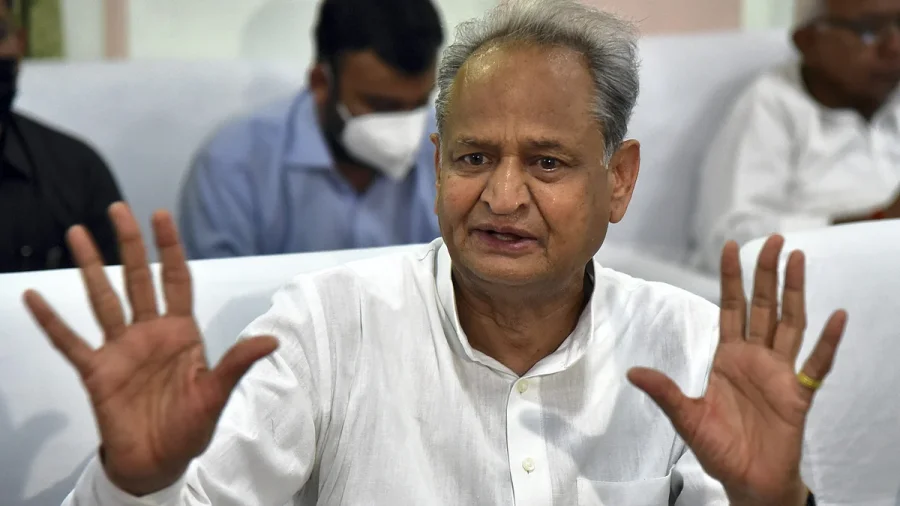
Just days before Rahul Gandhi is set to meet students in Kota, a political storm has erupted over allegations that the BJP government in Rajasthan is pulling down hoardings and banners promoting the Congress leader’s event. Former chief minister Ashok Gehlot on Tuesday accused the state administration of acting out of “fear” of Gandhi’s growing connect with young voters.
What Gehlot said about hoarding removal in Kota
Addressing reporters, Gehlot claimed that local authorities were systematically removing publicity material related to Gandhi’s scheduled interaction with students on June 17. “They are taking down hoardings from across the city. This shows they are afraid of Rahul Gandhi’s message reaching the youth,” Gehlot said.
Why this hoarding row matters for Rajasthan politics
The incident is not just about banners — it reflects the intensifying political battle in Rajasthan, a state where both Congress and BJP are aggressively wooing young voters. Kota, known as India’s coaching hub, is home to thousands of students preparing for competitive exams, making it a crucial constituency for any party.
Timeline of events leading to the controversy
Rahul Gandhi’s visit to Kota was announced last week, with the event focused on issues confronting students, including examination irregularities and the alleged NEET paper leak. Within days, Congress workers reported that banners put up across the city were being removed by municipal authorities. Gehlot’s allegations on Tuesday formalised the party’s complaint.
How students and local businesses are affected
For students in Kota, the controversy adds another layer of uncertainty. Many had planned to attend Gandhi’s event to voice concerns about exam leaks and coaching fee pressures. Local business owners who had rented out space for banners now face confusion, with some claiming they received informal warnings against hosting Congress publicity.
BJP government’s response so far
The Rajasthan BJP government has not yet issued an official statement on the hoarding removal allegations. However, Gehlot drew a sharp contrast, recalling that during his tenure as chief minister, the Congress government had allowed full administrative cooperation for BJP programmes. “We never stopped their hoardings. Why are they doing this now?” he asked.
What the hoarding row reveals about political tactics
Political analysts see the incident as part of a broader pattern where ruling parties use administrative machinery to limit opposition visibility. The removal of hoardings, while seemingly minor, can significantly impact event turnout and public perception, especially in a city like Kota where visual publicity dominates.
Confirmed facts vs what remains unclear
Confirmed: Gehlot has publicly accused the BJP government of removing hoardings. Rahul Gandhi’s Kota event is scheduled for June 17. The Congress has demanded an explanation.
Unclear: Whether the hoarding removal was ordered by the state government or was a local administrative decision. The BJP has not yet responded to the specific allegations.
Congress’s strategy behind the Kota event
For the Congress, the Kota event is a key part of Rahul Gandhi’s outreach to young voters ahead of upcoming state and national elections. By focusing on the NEET paper leak and exam irregularities, the party is tapping into widespread student anger — an issue that resonates deeply in Kota’s coaching ecosystem.
Risks and concerns surrounding the controversy
While the hoarding row gives Congress a platform to accuse the BJP of authoritarianism, it also risks polarising the city along party lines. Some local residents worry that political clashes could disrupt the academic environment in Kota, which is already under stress from high competition and student mental health issues.
Wider pattern of hoarding disputes in Indian politics
This is not the first time hoarding removals have sparked political rows in India. Similar incidents have been reported in Uttar Pradesh, Maharashtra, and Karnataka, where opposition parties have accused ruling governments of using municipal bodies to suppress dissent. The Kota case fits into this larger, recurring tension.
What students and residents should know
Students planning to attend Rahul Gandhi’s event should verify the venue and timing through official Congress channels, as last-minute changes are possible. Local businesses are advised to document any communication from authorities regarding hoarding removals, as the matter may escalate legally.
What happens next in the Kota hoarding row
The Congress is expected to approach the Election Commission or the Rajasthan High Court if the hoarding removals continue. The BJP’s official response, once issued, will determine whether the controversy escalates or subsides. Rahul Gandhi’s visit on June 17 will be closely watched for any further administrative hurdles.
Our Take
The Kota hoarding row is more than a local squabble — it is a test of democratic space in Rajasthan. While both parties have a history of such tactics, the timing and location of this incident make it significant. With students already frustrated over exam leaks, any perception of stifling their voice could backfire on the ruling party. The BJP would do well to clarify its position quickly, or risk alienating the very youth it hopes to win over.
Frequently Asked Questions
What is the Kota hoarding row about?
Former Rajasthan CM Ashok Gehlot has accused the BJP government of removing hoardings and banners promoting Rahul Gandhi’s upcoming student interaction event in Kota, alleging political fear and suppression.
When is Rahul Gandhi’s Kota event scheduled?
Rahul Gandhi is scheduled to interact with students in Kota on June 17, focusing on exam irregularities and the alleged NEET paper leak.
Has the BJP government responded to the allegations?
As of now, the Rajasthan BJP government has not issued an official statement on the hoarding removal allegations made by Ashok Gehlot.
Why is Kota important for this political controversy?
Kota is India’s largest coaching hub, home to thousands of students preparing for competitive exams. Any political outreach here has significant implications for youth voter sentiment in Rajasthan.