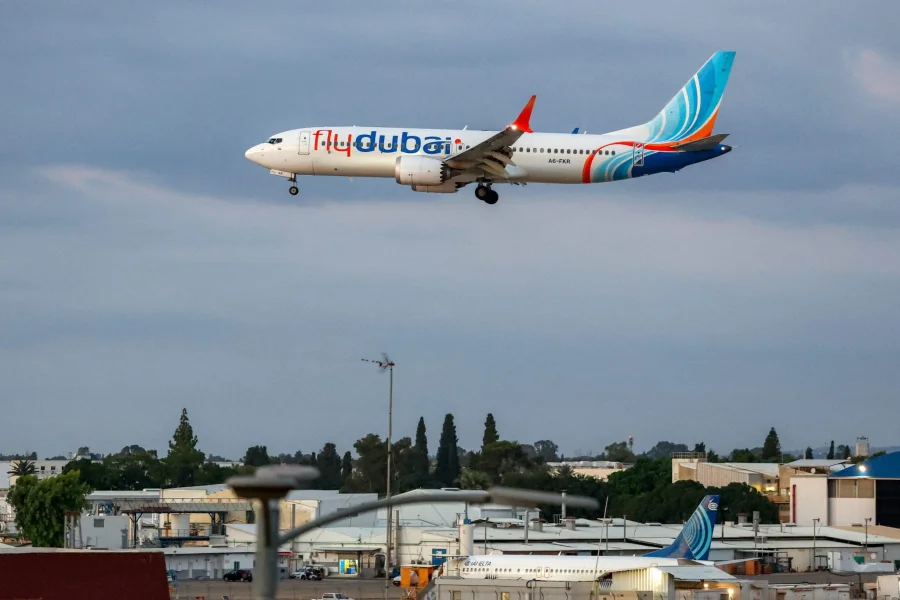
Somewhere over the Middle East on Wednesday, inside a cockpit carrying 182 people, a routine flight turned into what Emirati investigators are now calling a terrorist attack. The weapon, according to the United Arab Emirates, was the aircraft's own crash axe — a standard piece of emergency equipment bolted inside every commercial cockpit.
The co-pilot, officials say, used it against the captain and then tried to take the controls of the plummeting plane.
What UAE Investigators Say Happened in the Cockpit
The UAE, which is leading the investigation, said the co-pilot attacked the captain with the cockpit's crash axe and attempted to seize control of the aircraft. Authorities have classified the incident as a "terrorist attack."
The flight was Israel-bound and carried 182 people on board. According to the official account, the aircraft nearly crashed during the struggle.
Who Is Hamam al-Hammami — and Why Oman Had Already Flagged Him
The co-pilot has been identified as Hamam al-Hammami, an Omani national, according to three people with knowledge of the situation — including a Gulf diplomat and a Western diplomat — who spoke on condition of anonymity because they were not authorized to speak to the media.
Those sources say al-Hammami had been barred from flying on Oman's national airline because of concerns about extremist views. That detail, if confirmed, raises the central question investigators now face: how did someone flagged in one country end up in the cockpit of a commercial flight in another?
The Question Every Airline Passenger Will Ask
For the millions of people who board flights across the Gulf each year, the immediate question is not geopolitical. It is personal: how does a pilot with a known flag in his home country clear the vetting process at another carrier?
Aviation security in the Gulf depends on information-sharing between national regulators, airlines, and intelligence agencies. When that chain has a gap, the consequences are measured in lives — in this case, 182 of them.
How the Story Has Unfolded
The incident took place on Wednesday aboard an Israel-bound FlyDubai flight. By Saturday, officials had begun confirming details: the weapon used, the co-pilot's nationality, and the fact that Oman had previously restricted him from flying.
The UAE's decision to publicly label the event a "terrorist attack" is significant. It signals that investigators are treating this not as a mental health episode or a personal dispute, but as something with an ideological dimension.
Who Is Affected — Beyond the Passengers On Board
The 182 people on the flight are the most immediate victims. But the fallout extends further: FlyDubai's crew, Gulf carriers that rely on cross-border pilot vetting, and Omani aviation authorities who will now face questions about what they knew and when.
There is also a diplomatic dimension. The flight was Israel-bound, and the incident involves an Omani national flying for a UAE carrier — three countries with overlapping but distinct security interests.
What Officials Have Confirmed — and What They Haven't
Confirmed: The UAE says the co-pilot attacked the captain with the crash axe and tried to take control. The flight carried 182 people. The co-pilot has been identified as Hamam al-Hammami.
Reported but not officially confirmed: That Oman barred him from flying over extremist concerns. This comes from anonymous diplomatic sources, not from Omani or Emirati officials on the record.
Unclear: The co-pilot's current condition and legal status, the captain's condition, the exact sequence of the struggle, and how the flight was ultimately stabilized.
Why FlyDubai's Vetting Process Is Now Under Scrutiny
FlyDubai operates as a low-cost arm of the Emirates group, flying to more than 100 destinations. Its pilots are recruited internationally, and the carrier relies on a combination of its own screening and regulatory clearances from pilots' home countries.
The central vulnerability in that model is this: a restriction imposed by one country does not automatically travel with a pilot to another. Unless the flag is shared through formal channels, a carrier in a different jurisdiction may never see it.
The Risks and the Unanswered Questions
There are real risks in drawing conclusions too quickly. Anonymous diplomatic sourcing, while common in intelligence-adjacent reporting, is not the same as an official finding. Oman has not publicly confirmed that it barred al-Hammami, and the nature of the "extremist views" concern has not been detailed.
There is also the risk of stigmatizing an entire nationality or region. The overwhelming majority of Gulf-based pilots undergo rigorous vetting, and this appears to be an individual case — not a systemic failure proven across the industry.
A Wider Pattern the Aviation Industry Cannot Ignore
This is not the first time cockpit security has come under global scrutiny. Since the 2015 Germanwings crash, when a co-pilot deliberately flew a plane into a mountain, airlines have tightened cockpit access rules and psychological screening.
What this case adds is a new layer: cross-border intelligence sharing on pilot backgrounds. If a pilot can be flagged in one country and fly in another, the gap is not in the cockpit door — it is in the data.
What Passengers and Aviation Professionals Should Watch For
For travelers, there is no immediate action required — Gulf aviation remains among the most heavily regulated in the world. But expect visible changes: tighter crew vetting announcements, possible regulatory reviews, and updated guidance from carriers operating in the region.
For aviation professionals, the case is a reminder that licensing and clearance are not the same thing. A pilot can hold a valid license and still carry a flag that never reaches the airline that hires them.
What Happens Next
The UAE investigation is ongoing. Key developments to watch: whether Oman officially confirms or denies the flight ban, whether FlyDubai issues a statement on its vetting process, and whether the incident triggers a broader review of pilot screening across Gulf carriers.
Formal charges, if any, will depend on the UAE's legal process. The captain's condition and the co-pilot's status remain unconfirmed.
Our Take
This story matters less for what happened in that cockpit — horrifying as it was — and more for what it reveals about the seams in international aviation security. A pilot flagged in one country should not be invisible in another. The 182 people on that flight survived, but the question of how the co-pilot got there in the first place is the one that should keep regulators awake.
Frequently Asked Questions
What happened on the FlyDubai flight?
According to UAE authorities, the co-pilot attacked the captain with the cockpit's crash axe and attempted to seize control of the Israel-bound aircraft, which was carrying 182 people. The UAE has classified the incident as a terrorist attack.
Who is the FlyDubai co-pilot?
He has been identified as Hamam al-Hammami, an Omani national, according to three people with knowledge of the situation who spoke on condition of anonymity.
Why was the co-pilot barred from flying in Oman?
Sources say he was barred from flying on Oman's national airline due to concerns about extremist views. This has not been officially confirmed by Omani authorities.
How did the co-pilot pass FlyDubai's vetting if Oman had flagged him?
That is the central unanswered question. Pilot restrictions imposed in one country do not automatically transfer to another jurisdiction unless shared through formal channels. Investigators are expected to examine this gap.