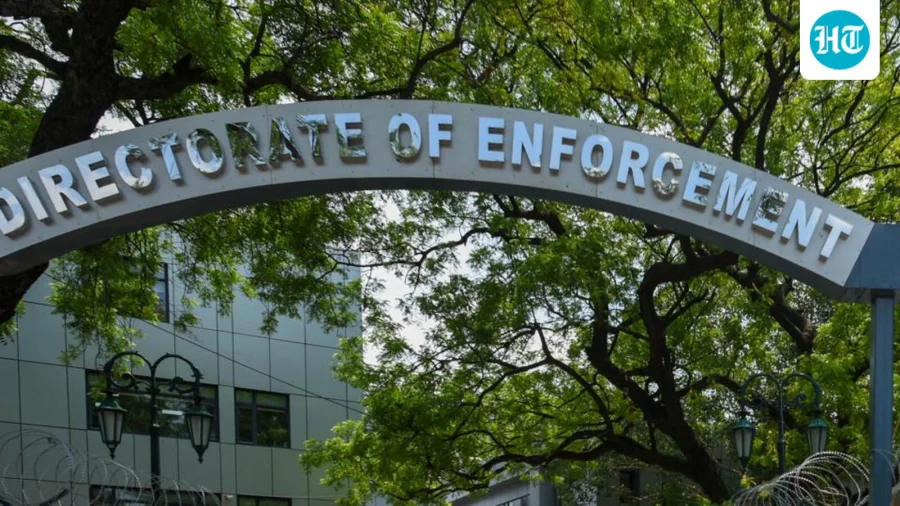
The Enforcement Directorate has moved a step closer to formal trial in one of Chhattisgarh's most closely watched recruitment-related cases. On the record before the Special PMLA Court in Raipur, the agency has filed a prosecution complaint against the former chairman of the Chhattisgarh Public Service Commission (CGPSC) and six other accused.
The complaint runs to 99 pages. The documents filed alongside it run to roughly 3,700 pages — a scale that signals how much evidentiary material the agency says it has gathered.
A 99-Page Complaint, Backed by Thousands of Pages
Under the Prevention of Money Laundering Act (PMLA), a prosecution complaint is the ED's formal charge document. It is not a charge sheet in the ordinary criminal sense, but it performs a similar function: it places the agency's allegations before a designated court and asks it to take cognisance.
The volume of annexures — around 3,700 pages — is the detail that stands out. In PMLA matters, such bulk usually reflects transaction records, statements, and documentary exhibits the agency intends to rely on.
Why a CGPSC Case Draws Public Attention
The CGPSC conducts recruitment for state government posts in Chhattisgarh. For lakhs of aspirants, its examinations are the gateway to a government career — and any allegation of irregularity touches directly on public trust in that process.
That is why a case involving the commission's former chairman carries weight beyond the courtroom. It speaks to a question every candidate asks: is the selection process clean?
How the Matter Reached This Stage
The ED's filing is the latest formal step in a probe that has been building over time. A prosecution complaint is typically filed after investigation, when the agency believes it has enough material to seek prosecution under the PMLA.
What the available record establishes is narrow and specific: a 99-page complaint, filed in Raipur, against seven named accused including the former chairman, with approximately 3,700 pages of accompanying documents.
Who Is Affected — and How
Three groups have a direct stake. First, the accused, who now face the prospect of trial. Second, CGPSC aspirants and serving candidates, for whom the case is about the credibility of their own results. Third, the commission itself, which must function while its former head is under legal scrutiny.
For aspirants, the practical concern is continuity: examinations, results, and counselling must proceed regardless of what happens in court.
What the Agency Has Said — and What It Has Not
Based on the material available, the ED has filed its complaint and supporting documents before the Special PMLA Court in Raipur. No public statement from the agency or from the accused has been cited in the available record.
That absence matters. Until the court takes the complaint on record and the accused respond, the allegations remain untested.
Reading the Filing Correctly
A prosecution complaint is an accusation, not a finding. Indian law presumes an accused innocent until a competent court holds otherwise. The 99-page document sets out the agency's case; it does not establish it.
The 3,700 pages of annexures will now be examined by the court. That process — not the filing itself — is where the case will actually be tested.
Confirmed Facts vs What Remains Unclear
Confirmed: The ED filed a 99-page prosecution complaint before the Special PMLA Court in Raipur against the former CGPSC chairman and six others, with documents running to around 3,700 pages.
Unclear: The specific allegations contained in the complaint, the identities of the six other accused, the amounts allegedly involved, and the court's initial response are not established in the available material. Any claim on these points should be treated as unverified until confirmed by the court record or an official statement.
Risks and the Balanced View
The risk of over-reading is real. A large filing is not the same as a proven case, and a high-profile accused is not the same as a convicted one. Equally, the scale of the documentation suggests the agency is not treating this as a routine matter.
Both things can be true at once. The case deserves scrutiny; so does the presumption of innocence.
The Wider Pattern in Recruitment Probes
Recruitment bodies across several states have faced scrutiny in recent years, with agencies examining whether money changed hands around examinations and selections. The CGPSC matter sits within that broader pattern of institutional scrutiny.
What distinguishes each case is the evidence, not the headline. That is the standard the Raipur court will now apply.
What Aspirants and Observers Should Do Now
For candidates, the practical advice is unchanged: track official CGPSC notifications for examination and result updates, and treat social media claims about the case as unverified unless confirmed by the court or the commission.
For observers, the next meaningful development will be the court's action on the complaint — cognisance, notice to the accused, or further directions.
What Happens Next
The Special PMLA Court in Raipur will examine the complaint and its annexures. If it takes cognisance, the accused are likely to be summoned and given an opportunity to respond. That stage — not the filing — will define the shape of the trial.
Further hearings are expected. Until then, the record stands as filed: 99 pages of allegations, and roughly 3,700 pages waiting to be read.
Our Take
The significance of this filing lies less in its size than in its timing and target. An agency moving formally against the former head of a state recruitment commission signals that the investigation has reached a stage where the ED is prepared to defend its allegations in open court.
That is a meaningful threshold. It is also only a threshold. The gap between a prosecution complaint and a conviction is where most PMLA cases are actually decided — and it is the gap that will now be tested in Raipur.
Frequently Asked Questions
What is a prosecution complaint in an ED case?
It is the Enforcement Directorate's formal charge document filed before a designated PMLA court, setting out the agency's allegations and the evidence it relies on. It is comparable to a charge sheet but specific to the Prevention of Money Laundering Act.
Who has the ED named in the CGPSC case?
The complaint names the former CGPSC chairman and six other accused — seven in total. The identities of the six others are not established in the available material.
How large is the filing?
The prosecution complaint runs to 99 pages. The documents filed with it run to approximately 3,700 pages.
Where was the complaint filed?
Before the Special PMLA Court in Raipur, Chhattisgarh.
Does the filing mean the accused are guilty?
No. A prosecution complaint is an accusation. Guilt is determined only by a competent court after trial, and the accused are presumed innocent until then.