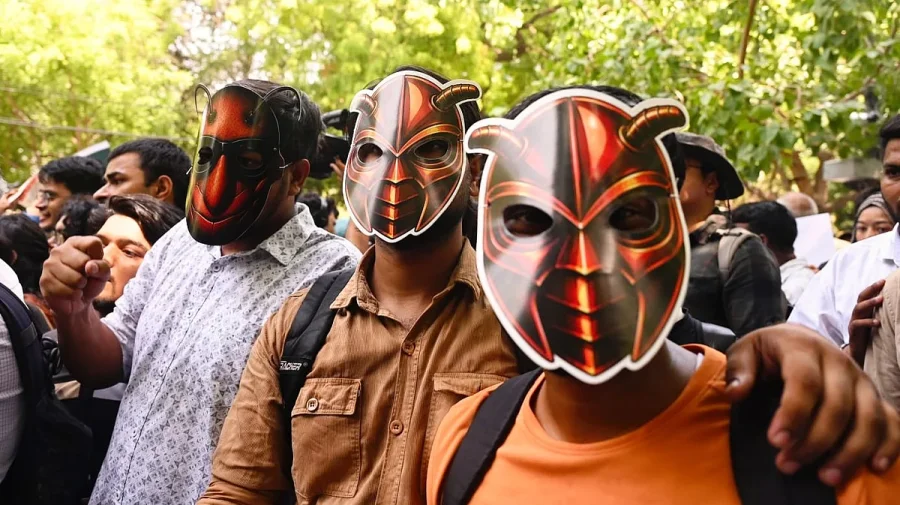
In a significant legal development, the Delhi High Court on Tuesday directed the restoration of the X account of the Cockroach Janta Party (CJP), a satirical political group, after the Union government withdrew its objection. The decision marks the end of a brief but contentious episode that saw the account blocked ahead of a high-stakes national examination.
Why the Account Was Blocked: The NEET Re-Test Link
The Centre had blocked the CJP’s X account as a "precautionary step" before the June 21 NEET re-test, Solicitor-General Tushar Mehta informed the court. He argued that some posts on the account carried the potential to create confusion and panic among lakhs of candidates and their parents, who were already under immense stress.
Government Withdraws Objection After Exam Concludes
With the NEET re-test now over, the government told the court that its original concern "no longer survived." Solicitor-General Mehta stated that the Centre had no objection to the account being unblocked in India, paving the way for the court order. Justice Swarana Kanta Sharma passed the order on a petition filed by CJP founder Abhijeet Dipke.
Who Is Behind the Cockroach Janta Party?
The Cockroach Janta Party is a satirical political entity known for its humorous and often critical commentary on Indian politics and social issues. Its founder, Abhijeet Dipke, had challenged the government's decision to block the account, arguing it was a disproportionate response that violated free speech. The party’s name itself is a play on the often-dismissive term for political opponents.
Human Impact: Free Speech vs. Exam Panic
The case highlights a delicate balance between preventing public panic during a critical examination and protecting the right to free expression. For lakhs of NEET aspirants and their families, the re-test was a period of high anxiety. The government’s argument that the account could have exacerbated that fear was a key factor in the initial blocking. For Dipke and his followers, the blocking was seen as an overreach by the state.
Court’s Reasoning and Legal Precedent
Justice Swarana Kanta Sharma’s order, while not a detailed judgment on the merits of the blocking, effectively accepted the government’s changed position. The court did not rule on whether the initial blocking was legally justified, but simply directed the restoration since the reason for the block had ceased to exist. This leaves open the question of how such cases will be handled in the future.
Confirmed Facts vs What Remains Unclear
Confirmed: The Delhi High Court ordered the restoration of the CJP X account. The government withdrew its objection after the NEET re-test. The account was blocked as a precautionary measure.
Unclear: The exact nature of the posts that caused concern. Whether the government will seek to block similar accounts in future exam periods. The timeline for the actual restoration of the account on the X platform.
Risks and Balanced View
While the restoration is a win for free speech advocates, the case also underscores the government’s willingness to use broad powers to block content during sensitive periods. Critics argue this sets a precedent for preemptive censorship. Supporters of the government’s action say it was a necessary step to protect the integrity of a crucial examination and prevent mass panic. The balance between these two positions remains a contentious issue.
Wider Trend: Social Media and Exam Anxiety in India
This case is part of a larger pattern where social media content is scrutinized during major examinations in India. From fake answer keys to misleading information about exam dates, authorities have increasingly taken proactive steps to block content they believe could disrupt the process. The CJP case is a unique example involving a satirical account, but it reflects a broader tension between online expression and public order.
Practical Guidance for Social Media Users
For users and content creators, this case serves as a reminder that even satirical content can be subject to government action if it is deemed to cause public panic. While the court ultimately ordered restoration, the initial blocking shows the power of the state to act swiftly. Creators should be aware of the potential consequences of posting content related to sensitive national events.
Future Outlook: What Happens Next?
The immediate next step is the technical restoration of the CJP account on X. In the longer term, the case may prompt a broader discussion on the criteria for blocking accounts during national events. Legal experts will be watching to see if the government develops a more transparent framework for such actions, or if it continues to rely on ad-hoc precautionary measures.
Our Take
The Delhi High Court’s order is a pragmatic resolution to a case that pitted free speech against public order. While the restoration is welcome, the fact that the account was blocked in the first place raises important questions about the proportionality of government action. The case is a reminder that in the digital age, even a satirical party can find itself at the center of a serious constitutional debate.
Frequently Asked Questions
Why was the Cockroach Janta Party X account blocked?
The account was blocked by the Central government as a precautionary step ahead of the June 21 NEET re-test, to prevent confusion and panic among candidates and parents.
Who ordered the restoration of the account?
Justice Swarana Kanta Sharma of the Delhi High Court ordered the restoration after the government withdrew its objection.
What is the Cockroach Janta Party?
It is a satirical political group founded by Abhijeet Dipke, known for its humorous and critical commentary on Indian politics.
Will the account be restored immediately?
The court has ordered the restoration. The actual process on the X platform is expected to follow shortly.