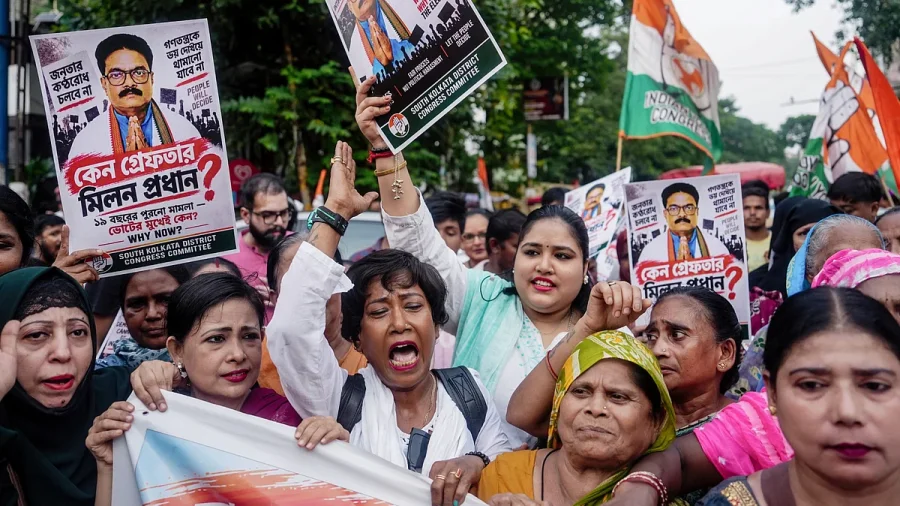
The Calcutta High Court's decision to allow a jailed Congress candidate to contest the Nandigram bypoll has turned a local election into a test of judicial oversight over electoral fairness. For Milan Pradhan, the ruling means a chance to stand for office. For West Bengal's political landscape, it signals that the courts are willing to intervene when a candidate's liberty and electoral rights collide.
A Court Order That Puts a Candidate Back on the Ballot
On Thursday, 24 September, Justice Tirthankar Ghosh of the Calcutta High Court orally directed the West Bengal government to allow Milan Pradhan to participate in the 6 October Nandigram by-election. The court indicated interim bail, effectively clearing the immediate legal hurdle that had kept him in custody.
The order does not erase the charges against him, but it ensures that his candidacy is not extinguished by detention before the vote. In practical terms, Pradhan can now file or continue his nomination and campaign in the constituency.
Why Nandigram Still Commands National Attention
Nandigram is not an ordinary constituency. It was the flashpoint of a violent land acquisition movement in 2007 that reshaped West Bengal's political map and propelled Mamata Banerjee to power. Every election here carries the weight of that history.
A bypoll in Nandigram is therefore more than a local contest. It is a measure of how the state's dominant political forces are performing, and how institutions like the judiciary are navigating the line between law and order and democratic participation.
How the Case Unfolded — and Why a 2007 Arrest Resurfaced
Pradhan's arrest in a 2007 case became the centre of a separate high court hearing. A different bench questioned the timing and basis of that arrest, and ordered protection from further police action in that matter until 12 October.
The court's scrutiny suggests it found the arrest difficult to justify at this juncture. The protection order gives Pradhan legal breathing room through the election period, though it does not amount to a final verdict on the 2007 case itself.
The Human Cost of a Politically Charged Arrest
Behind the legal filings is a family under pressure. Pradhan's wife, Arpita, has publicly appealed to Chief Minister Mamata Banerjee and to political workers for support, alleging that her husband's arrest was politically motivated.
Her appeal underscores a broader concern: when candidates are jailed close to an election, the burden falls not only on them but on their families and supporters. The court's intervention addresses the immediate electoral consequence, but the political allegation remains unresolved.
What the High Court's Direction Actually Changes
The court's oral observation that Pradhan "should be allowed to participate in the election" is a significant procedural relief. It means the state cannot use his detention to prevent him from contesting.
However, the direction is interim in nature. It does not acquit him, nor does it bar the state from pursuing the case after the election. The legal proceedings in the 2007 matter will continue, with the next hearing expected after 12 October.
Confirmed Facts vs What Remains Unclear
Confirmed: The Calcutta High Court orally directed the state to allow Pradhan to contest the 6 October bypoll and indicated interim bail. A separate bench questioned his arrest in the 2007 case and granted protection from police action until 12 October.
Unclear: The exact grounds on which the 2007 case was revived, whether the state will challenge the order, and how the interim bail conditions will be enforced. The allegation of political motivation remains a claim, not a proven fact.
Risks and the Balanced View
The court's intervention protects electoral participation, but it also raises questions about the state's handling of old cases against political opponents. If arrests close to elections become a pattern, the judiciary may find itself repeatedly stepping in.
At the same time, the state has a legitimate interest in pursuing criminal cases, even against candidates. The balance between law enforcement and free elections is delicate, and this order reflects the court's attempt to hold that line without prejudging the case.
A Wider Pattern of Judicial Scrutiny in Bengal
This is not an isolated instance. Courts in West Bengal have repeatedly examined arrests and restrictions on political figures around election time. Each such order adds to a growing body of judicial oversight over how state machinery interacts with electoral politics.
The Nandigram ruling will be watched as another data point in that trend — one that could influence how similar cases are handled in future polls.
What This Means for Voters and Political Workers
For voters in Nandigram, the ballot will now include a Congress candidate who was, until this week, behind bars. For political workers, the order is a reminder that legal relief can arrive late but can still change the contest.
For the Congress party, the ruling provides an opportunity to consolidate its presence in a constituency where it has historically been a minor player. Whether that translates into votes is a separate question.
What Could Happen Next
Pradhan is expected to move quickly to comply with any bail conditions and resume campaigning. The state may seek clarification or challenge the order, though the oral direction currently stands.
The 6 October vote will proceed with Pradhan on the ballot unless the order is modified. The 2007 case will continue after 12 October, keeping the legal uncertainty alive beyond the election.
Our Take
The Calcutta High Court's direction is a reminder that elections are not just political events — they are legal processes with rights attached. By allowing Pradhan to contest, the court has protected the principle that detention should not become a backdoor disqualification.
At the same time, the order does not resolve the underlying allegations. The real test will be whether the state pursues the 2007 case with the same urgency after the bypoll, and whether the courts continue to scrutinise arrests that coincide with election season.
Frequently Asked Questions
What did the Calcutta High Court order in the Nandigram bypoll case?
The court orally directed the West Bengal government to allow jailed Congress candidate Milan Pradhan to contest the 6 October Nandigram bypoll and indicated interim bail.
Why was Milan Pradhan arrested?
He was arrested in connection with a 2007 case. A separate high court bench questioned the arrest and ordered protection from further police action in that matter until 12 October.
Can Milan Pradhan campaign for the Nandigram bypoll now?
Yes. With the court's direction and interim bail, he is permitted to participate in the election process, including campaigning, subject to any conditions imposed.
What happens to the 2007 case against him?
The case is not over. The protection order runs until 12 October, after which proceedings are expected to continue. The court has not acquitted him.