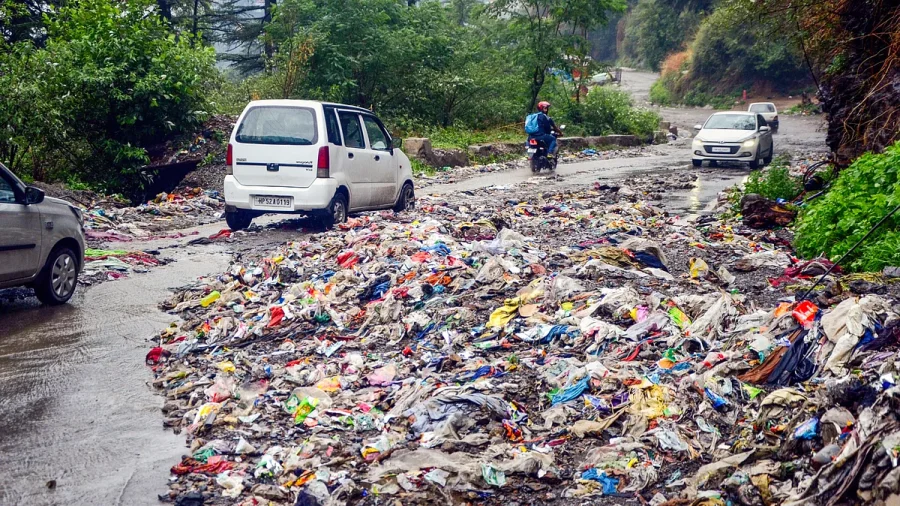
The Bombay High Court on Friday turned the mirror on India's public behaviour, asking a question that has troubled civic-minded citizens for decades: why do many Indians follow cleanliness rules meticulously abroad but abandon them the moment they land home?
Court's sharp observation on dual standards in cleanliness
A bench of Justices G.S. Kulkarni and Aarti Sathe made the observation while hearing a batch of petitions concerning pollution, foul odour, gas emissions and health hazards around the Kanjurmarg dumping ground in Mumbai. The court said citizens as well as civic officials need to be sensitised to ensure public roads and spaces remain free of garbage.
The judges pointed to a clear inconsistency in behaviour — the same person who would not dream of dropping a wrapper on a street in Singapore or London thinks nothing of throwing garbage on an Indian road. This dual standard, the court suggested, reflects a deeper civic failure.
Cleanliness as a fundamental duty, not just an option
"If a person wants a clean environment, then he or she has a corresponding fundamental duty towards the society to maintain cleanliness," the bench observed. This framing elevates the issue beyond mere civic courtesy to a constitutional obligation under Article 51A(g), which expects citizens to protect and improve the natural environment.
The court's message was clear: demanding clean surroundings without contributing to them is hypocritical. The right to a clean environment comes with a duty to maintain it.
Kanjurmarg dumping ground: a long-standing environmental concern
The petitions before the court highlighted the grim reality of Mumbai's waste management crisis. Residents around the Kanjurmarg dumping ground have long complained of toxic air, unbearable stench and serious health problems linked to unchecked garbage accumulation and gas emissions.
This is not a new problem. Mumbai's dumping grounds at Deonar, Kanjurmarg and Mulund have been environmental flashpoints for years, with periodic fires and health emergencies drawing attention to the city's inability to manage its mounting waste.
Who bears the responsibility for public cleanliness?
The bench did not single out only citizens. It also held civic officials accountable, calling for strict enforcement against violators. The court's observation suggests that sensitisation alone is insufficient — there must be consequences for those who defile public spaces.
For ordinary Mumbaikars, this means the burden is shared. A citizen who throws garbage on the road is as much a problem as a municipal worker who fails to clear it. The court's message is that both need to change.
What the court expects from citizens and officials
The judges stressed that maintaining cleanliness was a shared responsibility. They called for sensitisation drives and strict enforcement against those who violate cleanliness norms. The message extends beyond Mumbai — it applies to every Indian city struggling with garbage-strewn streets.
The court's observation also implicitly criticised the tendency to blame authorities while ignoring personal responsibility. Every individual who litters contributes to the problem they complain about.
Why the "abroad vs India" comparison resonates so deeply
The court's question touches a raw nerve because it exposes an uncomfortable truth. Indians abroad are often praised for being disciplined, law-abiding and clean. The same people, when back home, frequently abandon these habits. This behavioural shift is not about capability — it is about attitude.
Experts in urban sociology argue that this stems from a collective mindset where public spaces are seen as "nobody's property" rather than "everyone's responsibility." When no one owns a space, no one feels accountable for it.
Confirmed facts vs what remains to be seen
What is confirmed: The Bombay High Court bench of Justices G.S. Kulkarni and Aarti Sathe made these observations on Friday while hearing petitions related to the Kanjurmarg dumping ground. The court called for strict enforcement and sensitisation of citizens and officials.
What remains unclear: The specific directions, if any, issued by the court in this hearing, and the timeline for action on the Kanjurmarg ground. Further orders are expected as the case progresses.
The deeper civic failure behind the littering culture
The court's observation is not merely about garbage — it is about a broader civic disconnect. Indians queue patiently at foreign airports, follow traffic rules in Dubai and keep streets clean in Tokyo. But the same discipline evaporates in Indian cities. This is not a question of resources; it is a question of respect for one's own surroundings.
The bench's remarks highlight a cultural paradox that urban India has struggled with for generations. Until citizens treat public spaces with the same respect they show private ones, no amount of municipal spending will solve the problem.
Risks and the counter-argument
Some may argue that comparing India to countries like Singapore or Japan is unfair — those nations have draconian fines and decades of civic education behind them. India's infrastructure gaps, lack of public bins and overburdened municipal systems also contribute to the problem.
However, the court's point stands: individual behaviour is not determined solely by infrastructure. The same person who litters in Mumbai does not litter in London, despite London having its own waste management challenges. The difference lies in attitude, not amenities.
A pattern across Indian courts: judiciary pushing civic consciousness
The Bombay High Court is not alone in this push. Indian courts have repeatedly emphasised the link between fundamental rights and fundamental duties. From the Supreme Court's rulings on the right to a clean environment to various high courts ordering action against garbage dumping, the judiciary has consistently tried to nudge citizens toward greater civic responsibility.
This case fits into a broader judicial trend of holding both citizens and the state accountable for environmental degradation.
What citizens and officials should do now
For citizens, the takeaway is simple: cleanliness begins at home, but it does not end there. Public spaces are shared spaces, and treating them with respect is not a favour to the government — it is a duty to fellow citizens.
For civic officials, the court's message is equally clear: enforcement cannot be lax. Fines and penalties must be implemented consistently for the law to have meaning. Sensitisation campaigns must go beyond posters and reach actual behaviour change.
What happens next in the Kanjurmarg case
The court is expected to continue hearing the petitions concerning the Kanjurmarg dumping ground. Further directions on waste management, pollution control and enforcement of cleanliness norms are likely. The case will be watched closely by environmental activists and residents of Mumbai's eastern suburbs.
Whether the court's sharp observation translates into concrete action on the ground remains to be seen. But the message has been delivered — cleanliness is not just a civic expectation, it is a fundamental duty.
Our Take
The Bombay High Court has done more than address a legal petition — it has articulated a national frustration. Every Indian who has ever felt embarrassed by garbage-strewn streets while knowing the same people behave impeccably abroad will recognise the truth in the court's words.
The observation is powerful because it shifts the conversation from infrastructure to attitude. India does not lack the resources to be clean; it lacks the collective will. The court's reminder that a clean environment comes with a corresponding duty is a lesson that extends far beyond the Kanjurmarg dumping ground.
Frequently Asked Questions
What did the Bombay High Court say about littering?
The Bombay High Court rapped the culture of littering in public places, questioning why many people follow cleanliness rules abroad but disregard them in India. The bench stressed that maintaining cleanliness is a shared responsibility and called for strict enforcement against violators.
Which case was the Bombay HC hearing when it made these remarks?
The bench of Justices G.S. Kulkarni and Aarti Sathe was hearing a batch of petitions concerning pollution, foul odour, gas emissions and health hazards around the Kanjurmarg dumping ground in Mumbai.
What is the fundamental duty related to cleanliness in India?
Article 51A(g) of the Indian Constitution expects citizens to protect and improve the natural environment, including forests, lakes, rivers and wildlife. The Bombay HC linked this to the duty to maintain cleanliness in public spaces.
Why did the court compare cleanliness behaviour in India vs abroad?
The court pointed out that many Indians follow cleanliness rules meticulously in foreign countries but abandon them in India. The judges suggested this reflects a civic failure and a lack of respect for public spaces at home.