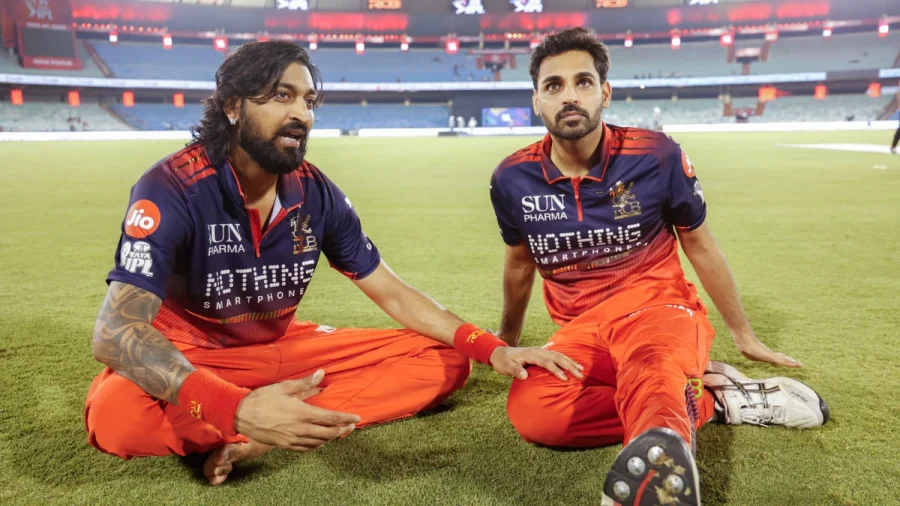
Six-a-side cricket leaves almost no room for a slow start. One loose over, one dot-ball cluster, and a match is gone. That is the challenge facing an India squad built almost entirely from IPL experience, with Bhuvneshwar Kumar and Krunal Pandya among the names confirmed for the 2026 Hong Kong Sixes.
The group also includes Shashank Singh, Rahul Tewatia, Nitish Rana, Rahul Tripathi and T. Natarajan — a line-up that reads less like a national side and more like a roll-call of players who have spent years solving T20 problems under pressure.
A Squad Built for a Format That Punishes Hesitation
The Hong Kong Sixes is not a shortened version of T20. It is a different sport in practice: fewer players, fewer overs, and far less margin. Batters are expected to attack from the first ball, and bowlers are asked to defend with fields that offer little protection.
That is precisely why the composition of this India squad matters. Bhuvneshwar and Natarajan give the side two bowlers who have built careers on control at the death — the phase where six-a-side matches are usually decided.
Krunal Pandya's value sits in the middle: left-arm spin, hard hitting lower down, and the kind of T20 awareness that short formats reward more than raw statistics.
Why These Names, and Why Now
Every player in this group carries a specific T20 credential. Shashank Singh has become known for finishing innings under pressure. Rahul Tewatia's reputation was built on hitting boundaries when the required rate looks impossible. Nitish Rana and Rahul Tripathi bring top-order aggression.
None of them are newcomers to high-pressure cricket. That appears to be the selection logic — experience over experimentation, in a format where there is no time to settle in.
What the Six-a-Side Format Demands From This Group
In six-a-side cricket, the batting order is less a structure and more a rotation. Everyone is expected to bowl, everyone is expected to hit. Players who are specialists in one discipline can find themselves exposed.
That makes all-rounders and adaptable cricketers more valuable than usual. Krunal Pandya fits that description directly. So does Tewatia, whose bowling has often been underused in longer formats but becomes more relevant here.
The pace pair of Bhuvneshwar and Natarajan will likely carry the heaviest workload. In a format where an over can cost a match, their accuracy matters more than their speed.
What Is Confirmed, and What Is Not
What is confirmed: the names in the squad, and that India will be represented at the 2026 Hong Kong Sixes by this IPL-heavy group.
What is not confirmed in the available information: the exact schedule, the captaincy structure, the full list of participating nations, and whether any of these players will be unavailable closer to the tournament. Those details have not been established in the source material and should not be assumed.
The Risk of Reading Too Much Into a Six-a-Side Squad
It is worth being clear about what this selection is not. The Hong Kong Sixes is an exhibition-format tournament, and squads for it are not a signal about national selection for ODIs or T20Is.
For players like Shashank Singh or Tewatia, this is an opportunity to stay match-fit and visible. For Bhuvneshwar, it is another outing in a format that suits his skills. But it would be a mistake to treat this squad as a selection statement for anything beyond this tournament.
A Wider Pattern: T20 Specialists Finding New Formats
The last few years have seen a quiet expansion in the number of short-format competitions worldwide — franchise leagues, exhibition events, and invitational tournaments. For players whose skills are tuned to T20, this has created a parallel calendar.
India's Hong Kong Sixes squad reflects that shift. It is a group of players who have built their careers in the IPL ecosystem, now being asked to apply those skills in a format that compresses everything further.
What This Means for the Players Involved
For the senior names, the stakes are modest but real. A strong showing keeps them in the conversation. For the younger or less-celebrated members of the squad, it is a chance to be seen in a setting where individual moments carry disproportionate weight.
Six-a-side cricket is unforgiving in that way. There is no time to build into a tournament. A single innings or a single over can define how a player is remembered from the event.
What to Watch For
The immediate focus will be on how quickly this group adjusts to the format's demands — particularly the bowling plans, where conventional T20 thinking does not always apply.
Beyond that, the tournament offers a useful look at how IPL-honed skills translate into a compressed, high-variance version of the game. That is the real curiosity here, more than any result.
Our Take
This is a sensible squad for the format. India have picked players who already think in terms of boundaries and death overs, rather than trying to convert longer-format cricketers into six-a-side specialists.
The bigger story is structural. Indian cricket now has a deep enough pool of T20-trained players that it can field a competitive squad for a niche tournament without touching its main national side. That depth is the actual headline — the names are just the evidence.
Frequently Asked Questions
Who is in India's squad for the 2026 Hong Kong Sixes?
The squad includes Bhuvneshwar Kumar, Krunal Pandya, Shashank Singh, Rahul Tewatia, Nitish Rana, Rahul Tripathi and T. Natarajan.
What is the Hong Kong Sixes format?
It is a six-a-side cricket tournament where matches are played over a small number of overs. The shortened format means games can change direction within a handful of deliveries, rewarding aggressive batting and accurate death bowling.
Does this squad selection affect India's national team plans?
No. The Hong Kong Sixes is a separate short-format tournament, and selection for it is not an indicator of national selection for ODIs or T20Is.
Why were these particular players chosen?
The squad leans heavily on IPL experience. Bhuvneshwar and Natarajan offer proven pace and control, while the batting group — Shashank Singh, Tewatia, Rana and Tripathi — brings T20 power-hitting and adaptability suited to the six-a-side format.