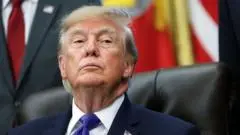
President Donald Trump has handed one of the most sensitive portfolios in modern governance — artificial intelligence — to his top spy. The announcement that the national intelligence chief will lead a new AI taskforce places the technology squarely inside America's security apparatus, a move that signals how seriously Washington is treating the risks and rivalries surrounding AI.
A Spy Chief, Not a Tech Regulator, Will Steer AI Policy
The choice is deliberate. By tapping the national intelligence chief rather than a commerce or science official, the White House is framing AI as a matter of national security — not just innovation. The taskforce is expected to coordinate how the US government approaches AI, though its exact mandate has not been detailed.
Why AI Is Now a Security File, Not Just a Tech File
Artificial intelligence has moved from lab curiosity to strategic asset. Governments worry about AI-enabled cyberattacks, disinformation, autonomous weapons, and economic espionage. For the US, the concern is also about staying ahead of China and other rivals. Putting an intelligence leader in charge reflects that urgency.
How We Got Here: The Quiet Escalation of AI Concerns
Worries over AI have been building for years. From deepfakes influencing elections to AI-generated malware, the threat landscape has expanded faster than regulation. The US has debated AI rules, but a coordinated, security-led taskforce is a notable shift. Trump's announcement did not include specifics on when the group will begin work or who else will sit on it.
Who This Affects — and Why It Matters to Everyday Americans
AI policy is not abstract. It touches jobs, privacy, healthcare, and national defense. A security-led approach could mean tighter controls on AI exports, stricter scrutiny of foreign tech, and new rules for companies developing powerful models. For the public, the trade-off is between safety and speed of innovation.
What Officials Have Said — and What They Haven't
Trump made the announcement directly, but details remain thin. There is no confirmed list of taskforce members, no stated budget, and no timeline. The national intelligence chief's office has not issued a detailed statement. Officials have not clarified whether the taskforce will write policy, coordinate agencies, or simply advise the president.
The Strategic Logic Behind the Appointment
Intelligence agencies are already deep in AI — for analysis, surveillance, and cyber defense. Giving the spy chief a coordinating role could streamline efforts across the Pentagon, CIA, NSA, and private sector. It also sends a message: the US sees AI as a domain to be defended, not just developed.
Confirmed Facts vs What Remains Unclear
Confirmed: Trump said his national intelligence chief will lead a new AI taskforce. The announcement was made by the president himself.
Unclear: The taskforce's scope, authority, membership, budget, and start date. Whether it will have regulatory power or only advisory status. How it will interact with existing AI initiatives in Congress or the private sector.
Risks and the Balanced View
Critics may argue that a security-first approach could stifle open research, chill international collaboration, or lead to excessive secrecy. Supporters counter that AI risks are too grave to leave to slow-moving committees. The tension between innovation and control will define this taskforce's legacy — if it has one.
A Wider Pattern: AI Is Being Militarized and Securitized
Globally, AI is increasingly treated as a strategic asset. The EU has its AI Act; China has its own rules; the US is now leaning into a security framework. Trump's move fits a pattern where AI is not just a commercial race but a geopolitical one.
What Readers Should Watch For
Keep an eye on three things: who else is appointed to the taskforce, whether it proposes new export controls or domestic rules, and how tech companies respond. For students, researchers, and investors, the direction of US AI policy will shape opportunities and constraints for years.
Future Outlook
If the taskforce gains real authority, it could become the central node of US AI governance. If it remains advisory, its impact may be limited. Much depends on whether Congress acts, and whether the intelligence community's involvement expands or contracts. For now, the signal is clear: AI is a national security priority.
Our Take
This is less about one appointment and more about a shift in how the US government sees AI. By placing it under the intelligence chief, Trump is saying the biggest AI threats are not just economic but existential. Whether that leads to smarter policy or overreach is the open question. What's certain is that AI has moved to the center of American power.
Frequently Asked Questions
Who will lead Trump's new AI taskforce?
Trump said his national intelligence chief will lead the taskforce. The exact title and name were not specified in the announcement.
Why put a spy chief in charge of AI?
It signals that AI is being treated as a national security issue, not just a tech or commerce matter. Intelligence agencies already use AI heavily and understand its risks.
What will the taskforce actually do?
That remains unclear. It could coordinate policy, advise the president, or oversee AI-related security efforts. No official mandate has been released.
Does this affect AI companies or users?
Possibly. A security-led approach could bring new rules, export controls, or scrutiny for AI developers. For now, no specific regulations have been announced.