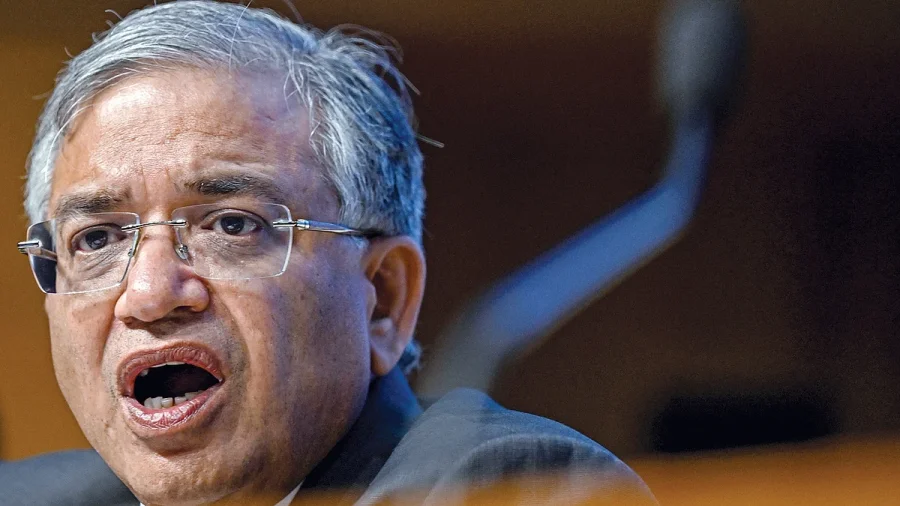
The political confrontation over India's election machinery escalated sharply on Monday when Shiv Sena (UBT) MP Sanjay Raut launched an unprecedented personal attack on Chief Election Commissioner Gyanesh Kumar, calling him an "enemy of the country" and claiming he has gone underground.
Raut's remarks, made to reporters, signal a dramatic hardening of Opposition rhetoric against the poll body. The Shiv Sena (UBT) leader also announced that all Opposition MPs will march to the Election Commission of India's office in New Delhi on Tuesday.
Why Raut's 'Enemy of the Country' Charge Marks a New Flashpoint
This is not the first time the Opposition has clashed with the Election Commission. But the language used by Raut — branding a sitting CEC an "enemy of the country" — crosses a line rarely seen in Indian political discourse.
The allegation that Gyanesh Kumar has "gone underground" suggests the Opposition believes the CEC is avoiding public accountability. Whether that claim is accurate remains unverified, but its political impact is immediate.
The SIR Process and the 14 Objections That Sparked the Crisis
The immediate trigger for the Opposition's fury is a report by The Indian Express revealing that Election Commissioners Sukhbir Singh Sandhu and Vivek Joshi had objected on record at least 14 times over the past 10 months.
Those objections concerned decisions and orders related to the Special Intensive Revision (SIR) process, which the two commissioners said were issued without proper consultation. The SIR is a controversial electoral roll revision exercise that has raised concerns about voter disenfranchisement.
Who Is Affected — and Why This Matters Beyond Politics
For ordinary voters, the SIR process determines whether their names remain on electoral rolls. Errors or arbitrary deletions can strip citizens of their voting rights.
Opposition MPs claim that in states where the poll body allegedly helped the ruling BJP, voters faced injustice. Raut said the EC should meet Opposition MPs who have suffered this injustice. The demand is not just procedural — it goes to the heart of electoral fairness.
What the Election Commission Has Said — and What Remains Silent
As of Monday evening, there was no official response from the Election Commission or from CEC Gyanesh Kumar to Raut's allegations. The silence is notable given the severity of the charge.
The ECI has previously defended the SIR process as necessary for cleaning electoral rolls. But the internal objections from two commissioners suggest the decisions were not unanimous — a rare breach in an institution that traditionally projects unity.
Confirmed Facts vs What Remains Unclear
Confirmed: Sanjay Raut made the allegations publicly. Opposition MPs will march to the ECI office on Tuesday. The Indian Express reported that two Election Commissioners objected 14 times to SIR-related decisions.
Unclear: Whether CEC Gyanesh Kumar has actually "gone underground" — no independent verification exists. The exact nature of the 14 objections and whether they were formally recorded. Whether the EC will meet the Opposition delegation.
The Institutional Moat of the Election Commission — and Why It's Under Strain
The ECI's authority rests on public trust in its neutrality. Unlike a company with a network effect or proprietary technology, the Commission's "moat" is its reputation for impartiality.
When internal dissent becomes public and Opposition parties openly call for the CEC's resignation, that trust erodes. The Commission's ability to conduct free and fair elections depends on all sides accepting its legitimacy.
Risks and the Balanced View: What Critics and Supporters Say
Critics argue that the SIR process, combined with the CEC's alleged unilateral decision-making, threatens democratic integrity. They point to the 14 objections as evidence of internal dysfunction.
Supporters of the ECI counter that electoral roll purification is a routine necessity and that political pressure on the Commission undermines its independence. They warn that personal attacks on the CEC could set a dangerous precedent.
Both sides agree on one thing: the credibility of India's electoral system is at stake.
A Wider Pattern: Opposition vs. Institutions
This confrontation is part of a broader trend. Over the past year, Opposition parties have repeatedly challenged the neutrality of central institutions — from the ECI to investigative agencies.
The SIR process has become a flashpoint in multiple states. The march on Tuesday is the latest in a series of escalations that show no sign of abating.
What Readers and Voters Should Watch For
If you are a voter in a state undergoing SIR, verify your name on the electoral roll immediately. The process can lead to deletions, and corrections are easier before final publication.
For politically engaged citizens, the key question is whether the ECI will meet the Opposition delegation and whether it will address the internal objections publicly.
Future Outlook: Where This Confrontation Heads Next
Tuesday's march will be a test of both Opposition unity and the ECI's willingness to engage. If the Commission refuses to meet the MPs, the standoff could intensify.
If CEC Gyanesh Kumar remains silent, calls for his resignation are likely to grow louder. The coming days will determine whether this remains a political slugfest or becomes a full-blown institutional crisis.
Our Take
Sanjay Raut's language was inflammatory, but the underlying concerns about the SIR process and internal ECI dissent are serious. The Election Commission's silence is not helping its case. For Indian democracy, the real test is not who wins this political battle — it is whether voters can trust that their votes will be counted and their names will remain on the rolls.
Frequently Asked Questions
What did Sanjay Raut say about CEC Gyanesh Kumar?
Raut called Gyanesh Kumar an "enemy of the country" and alleged that the CEC has gone underground. He also demanded that the EC meet Opposition MPs who faced injustice in states where the poll body allegedly helped the BJP.
Why are Opposition MPs marching to the Election Commission office?
They are protesting against the SIR process and demanding the CEC's resignation. The march follows a report that two Election Commissioners objected 14 times to SIR-related decisions.
What is the SIR process?
Special Intensive Revision (SIR) is an electoral roll revision exercise. It involves verifying voter details, which can lead to names being deleted if discrepancies are found. Opposition parties claim it targets specific voters.
Has the Election Commission responded to Raut's allegations?
No. As of Monday evening, there was no official response from the ECI or CEC Gyanesh Kumar to Raut's remarks.