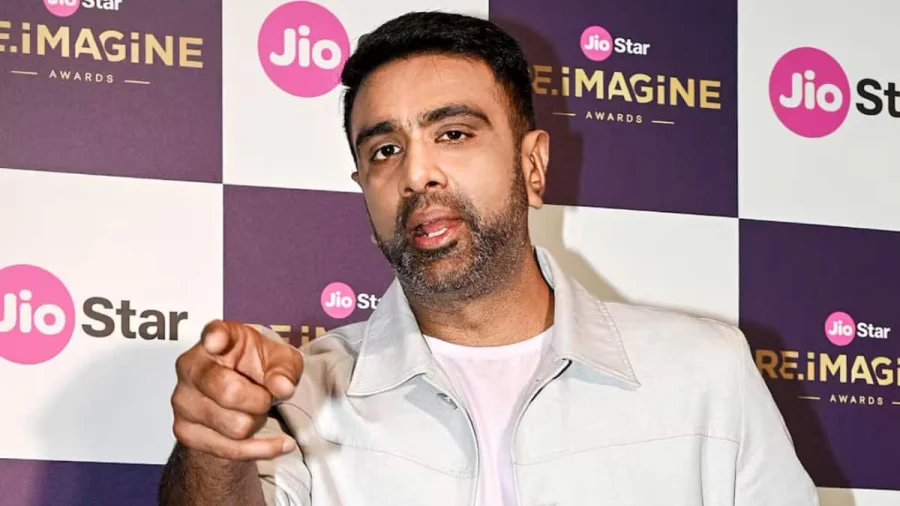
When one of India's sharpest cricketing minds speaks, the dressing room listens. Ravichandran Ashwin has now turned his attention to something that has quietly hurt India more than any opposition — the way the system handles its own injured players.
Speaking on his YouTube channel, the former off-spinner questioned accountability at the BCCI Centre of Excellence (CoE) in Bengaluru, the facility that oversees the medical and rehabilitation needs of India's top cricketers.
Why Ashwin's Words Carry Weight Beyond the Studio
Ashwin is not a peripheral voice. He has played across eras, formats and dressing rooms, and understands how the machinery around Indian cricket actually functions.
His concern is not just about one injury. It is about a pattern — repeated, lengthy layoffs that keep pulling key players out of series at critical moments.
The Varun Chakravarthy Example That Sparked the Debate
During the discussion, Ashwin pointed to Varun Chakravarthy's case to illustrate how injuries are being managed within the system.
The reference was not about blame. It was about process — how a player moves from diagnosis to rehabilitation to return, and who is answerable at each stage.
The Communication Gap Between CoE and Selectors
At the heart of Ashwin's argument is a simple question: does the medical team at the CoE talk clearly enough with the senior selection committee?
If selectors pick a squad without a full picture of a player's fitness, the consequences fall on the player, the team and eventually the fans who paid to watch them.
Separate Teams for Tests, ODIs and T20Is — A Radical Rethink
Ashwin went further. He suggested the time has come for India to field separate teams across the three international formats.
It is a structural idea, not a tactical one. It would mean different players, different workloads and different preparation cycles — a model that some cricket boards have already moved toward in parts.
Why This Matters to Every Indian Cricket Fan
Injuries are not just a team problem. They affect series results, ticket buyers, broadcasters and the emotional investment of millions who plan their weeks around matches.
When a star player is ruled out, the story is not only about the player. It is about a system that either protected them or failed to.
What the BCCI Has Said So Far
As of now, the BCCI has not issued a public statement responding to Ashwin's remarks.
That silence is not unusual — the board typically avoids commenting on internal processes in real time. But it does leave the questions unanswered.
Confirmed Facts vs What Remains Unclear
Confirmed: Ashwin made these remarks publicly on his YouTube channel. He cited Varun Chakravarthy as an example. He called for separate format-wise teams.
Unclear: Whether the CoE's internal processes will change. Whether the BCCI will formally respond. Whether selectors have raised similar concerns privately.
The Bigger Pattern: A Calendar That Never Sleeps
India plays more cricket across formats than almost any other nation. The IPL, bilateral series, ICC events and domestic commitments overlap constantly.
That volume is the real backdrop to Ashwin's argument. No medical system can fully protect players from a schedule that leaves little room to recover.
Risks and the Other Side of the Argument
Separate teams sound clean in theory but are complicated in practice. India's talent pool, while deep, is not infinite. Sponsors, broadcasters and fans expect star names.
There is also a counter-view: the CoE was created precisely to centralise and improve player management. Judging it too early may be unfair.
What Players and Fans Should Take From This
For players, the message is that workload conversations are no longer private. For fans, it is a reminder that behind every "ruled out" headline is a system under pressure.
For the BCCI, the takeaway is simpler: accountability, once questioned publicly by a respected voice, becomes harder to ignore.
What Could Happen Next
Expect the debate to continue through the next selection cycle. If more players suffer long-term injuries, the pressure on the CoE will grow.
Any formal review, if it happens, would be the real signal that Ashwin's words landed where they needed to.
Our Take
Ashwin has done what few active or recently retired players do — he has named the system, not just the symptom. Whether or not one agrees with separate format teams, the accountability question is legitimate and overdue.
Indian cricket's biggest opponent right now may not be Australia or England. It may be its own calendar and the way it manages the bodies that carry it.
Frequently Asked Questions
What did Ashwin say about the BCCI Centre of Excellence?
Ashwin questioned accountability at the CoE over how player injuries are managed and how its medical staff communicates with the senior selection committee.
Why did Ashwin mention Varun Chakravarthy?
He used Chakravarthy's case as an example to highlight how injuries are being handled within the Indian cricket system.
What is Ashwin's suggestion for India's teams?
He suggested India should move toward separate teams for Tests, ODIs and T20Is to better manage player workload and injuries.
Has the BCCI responded to Ashwin's comments?
No public response has been issued by the BCCI so far regarding Ashwin's remarks.