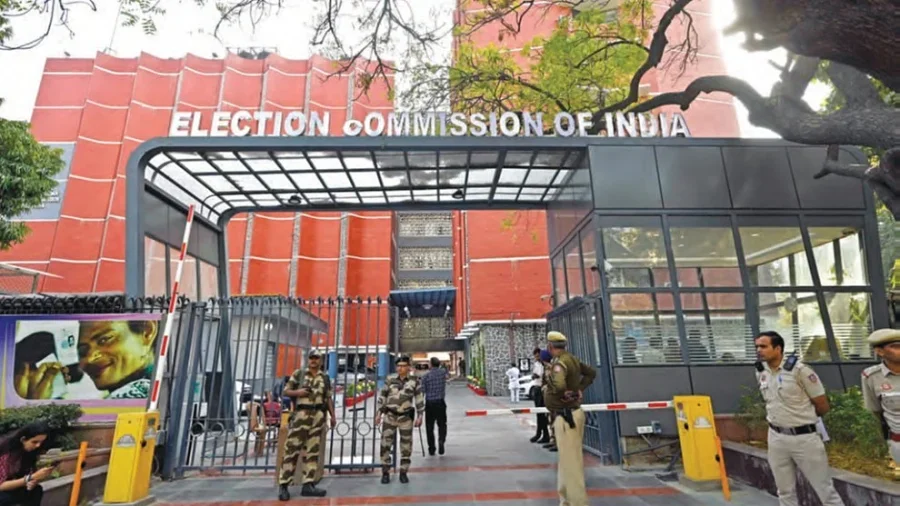
Fourteen times. That's how often two of India's three election commissioners reportedly put their objections in writing — not to each other, not in a meeting minute, but formally, to the Cabinet Secretary. The disclosure, part of an Indian Express investigation, has reopened a question that refuses to stay settled: how independent is the Election Commission of India, really?
What the Letters Actually Said — And Why They Went Up, Not Across
According to the investigation, the two commissioners — who together formed a majority on the three-member commission — objected on 14 occasions to decisions taken without their knowledge or consent. The critical detail is the recipient: the Cabinet Secretary, not an internal file noting, not a dissent minute. Writing to the Cabinet Secretary signals that the commissioners believed the matter could not be resolved within the commission's own walls.
Why This Isn't Just a Bureaucratic Spat
The Election Commission conducts the world's largest democratic exercise. If its own commissioners feel sidelined in decision-making, the concern isn't procedural — it's constitutional. Every voter has a stake in whether the body that runs elections functions as a collective authority or as a rubber stamp.
The ECI's Own Words: Unanimity, Selectively Read
The commission's 23 September press note pushed back firmly. It stated that all decisions were unanimous and that the communications cited by The Indian Express "selectively" pointed to differences of opinion and suggestions. The note's language — "selectively" — implies the full record, if released, would tell a different story. That record has not been made public.
Sambit Patra's Rebuttal — And the Question It Doesn't Answer
BJP spokesperson Sambit Patra repeated on Wednesday that the ECI is autonomous and the government has nothing to do with its decisions. That may well be the government's position. But it doesn't explain why two commissioners felt the need to write to the Cabinet Secretary in the first place. Autonomy, after all, is measured not by what the government says about it, but by whether the institution's own members experience it.
Confirmed Facts vs What Remains Unclear
Confirmed: The Indian Express investigation reports 14 written objections. The ECI issued a press note on 23 September defending unanimity. Sambit Patra made public comments on Wednesday.
Unclear: The full content of the letters. Whether the Cabinet Secretary responded. Whether the objections changed any outcomes. Whether the commissioners' concerns were about process, personnel, or substantive election decisions. The ECI has not released the correspondence.
The Institutional Moat — Why ECI's Credibility Is Its Only Currency
The Election Commission has no army, no police force of its own, no financial leverage. Its power rests entirely on public trust and the perception of neutrality. Once that perception cracks — regardless of whether the underlying decisions were correct — the institution's ability to conduct credible elections weakens. That's why internal dissent, even if procedural, carries outsized weight.
Risks and the Other Side of the Argument
It's worth noting that differences of opinion within a multi-member commission are not inherently improper. The ECI's press note frames the communications as suggestions and disagreements — normal in any collective body. The risk lies in the pattern: 14 instances, a majority of commissioners, and an escalation route that bypassed internal resolution. Critics may see coordination; supporters may see routine friction. The truth likely sits somewhere in the unreleased paperwork.
The Wider Pattern: When Constitutional Bodies Talk Past Each Other
This isn't the first time questions have been raised about the functioning of constitutional authorities. Similar debates have surfaced around the judiciary, the CBI, and the CAG. The common thread: when internal disagreements become public through leaks or investigations rather than official disclosure, trust erodes faster than any single controversy would suggest.
What This Means for Voters and Citizens Right Now
For the average voter, the immediate impact is indirect — no election schedule has changed, no result is under question. But the long-term implication is real. If the ECI's internal decision-making is contested, future electoral decisions — from poll dates to model code enforcement — could face heightened legal and public scrutiny. Citizens should follow whether the ECI releases the full correspondence or continues to rely on the press note.
What Could Happen Next
The ECI could release the full record to settle the matter. The government could clarify whether the Cabinet Secretary acted on the letters. Opposition parties may demand a parliamentary discussion. Or the controversy could fade — as many institutional disputes do — without resolution. The one thing that won't change: the letters exist, and their existence is now part of the public record.
Our Take
The story isn't really about whether the ECI is independent — it's about whether its own commissioners believe it is. Fourteen letters to the Cabinet Secretary suggest they had doubts. The ECI's response suggests it wants the public to believe otherwise. Both can't be fully true. Until the full correspondence is released, the burden of proof sits with the institution, not the investigators.
Frequently Asked Questions
Why did the election commissioners write to the Cabinet Secretary?
According to The Indian Express investigation, two election commissioners objected in writing 14 times to decisions taken without their knowledge or consent. Writing to the Cabinet Secretary was their way of formally escalating concerns outside the commission's internal channels.
What did the ECI say about these letters?
The ECI's 23 September press note stated that all decisions were unanimous and that the communications "selectively" pointed to differences of opinion and suggestions. The full correspondence has not been made public.
Does this affect upcoming elections?
No immediate election schedule has been changed. However, the controversy could lead to increased scrutiny of ECI's internal processes and future electoral decisions.
What is the Cabinet Secretary's role in this matter?
The Cabinet Secretary is the top civil servant in the Government of India. The commissioners writing to this office — rather than resolving internally — suggests they believed the matter required executive-level attention or intervention.