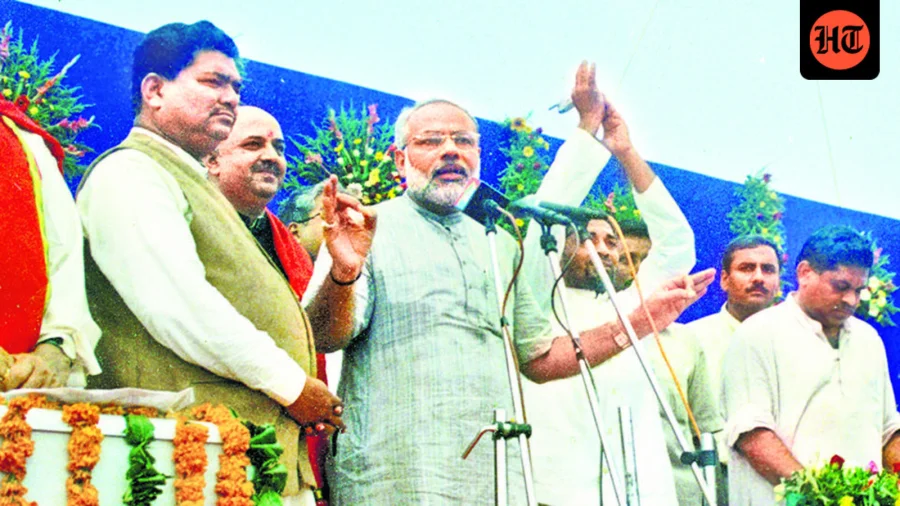
On October 7, Narendra Modi will complete 25 years in public service — a span that began with an oath in Gandhinagar and now stretches across 4,495 days as India's longest continuously-serving elected prime minister. Few political careers in modern India have been as closely tracked, as fiercely debated, or as consequential.
A Quarter-Century That Began in Gujarat
Modi's entry into elected office came in October 2001, when he took charge as Chief Minister of Gujarat. At the time, he was a relatively untested figure in state administration, having spent much of his earlier career as an organisational leader within the BJP.
What followed in Gujarat — three consecutive terms as chief minister — became the foundation on which his national profile was built. The state became a laboratory for governance experiments, industrial policy, and a distinctive style of political communication that would later define his national campaigns.
Why 4,495 Days as Prime Minister Matters
When Modi moved to Delhi in 2014, he did so with a clear mandate. Since then, he has won successive general elections, a feat matched by few in India's parliamentary history.
The 4,495-day figure is significant not just as a statistic, but as a marker of political durability. In a country where coalition politics and anti-incumbency have toppled many governments, continuity at the top is rare. It reflects a sustained ability to hold together a vast and diverse electoral coalition.
How the Journey Unfolded
The arc from Gandhinagar to Delhi was not linear. Modi's tenure as Gujarat chief minister was marked by both praise for administrative decisiveness and sharp criticism over communal violence in 2002. That period remains one of the most contested chapters of his career.
By 2014, however, he had repositioned himself as a candidate of development, governance, and national ambition. The campaign that followed reshaped how Indian elections are fought — heavy on digital outreach, personality-driven messaging, and centralised strategy.
Who Is Affected by This Milestone
For ordinary citizens, 25 years of one leader's dominance has meant policy continuity in areas like taxation, welfare delivery, and infrastructure. Schemes have been launched, rebranded, and expanded. Some have reached millions; others have drawn questions about implementation.
For political observers, the milestone is a case study in how a regional leader can scale to national prominence — and how that prominence reshapes the party, the opposition, and the media landscape around him.
What the Record Shows — and What It Doesn't
The source material for this article confirms the timeline: 25 years in public service, 4,495 days as prime minister, and the distinction of being India's longest continuously-serving elected PM.
What remains open to debate is the interpretation. Supporters point to stability, decisive leadership, and global standing. Critics point to centralisation, social polarisation, and questions over institutional independence. Both views exist in the public record, and neither can be dismissed as noise.
The Political Force Beyond the Numbers
What makes Modi a political force is not just longevity. It is the ability to remain the central figure in India's political imagination for over two decades — through victories, controversies, and changing national moods.
That kind of endurance is rare in any democracy. It suggests a deep organisational grip, a carefully cultivated public image, and a messaging apparatus that has adapted with each election cycle.
Risks and the Balanced View
No political career of this length is without criticism. Concerns have been raised about the concentration of power, the space for dissent, and the treatment of minority communities. These are part of the record and cannot be ignored in any honest assessment.
At the same time, the electoral verdicts — repeated and decisive — reflect a substantial base of support that cannot be explained away. Understanding the 25-year arc requires holding both realities at once.
A Wider Pattern in Indian Politics
Modi's quarter-century in public life coincides with a broader shift in Indian politics: the rise of presidential-style campaigns, the decline of older coalition structures, and the increasing role of digital media in shaping public opinion.
His journey is both a product of that shift and a driver of it. Few leaders have shaped the rules of the game as thoroughly as they have played by them.
What This Means for Readers
For voters, the milestone is a reminder to assess records, not just rhetoric. For students of politics, it is a case study in leadership, communication, and endurance. For critics and supporters alike, it is an invitation to look beyond the headline and examine the full arc.
What Comes Next
Modi remains in office, and the next phase of his tenure will be watched as closely as the last. Whether the 25-year mark is remembered as a peak or a turning point will depend on what follows — and on how history weighs the record.
Our Take
Twenty-five years is a long time in any democracy. Narendra Modi's journey from Gujarat's chief minister to India's longest continuously-serving elected prime minister is a story of political skill, timing, and sustained public connection. It is also a story of controversy, centralisation, and unanswered questions. Both dimensions belong in the same frame. That is what makes this milestone worth examining — not as a celebration or a condemnation, but as a serious chapter in India's democratic story.
Frequently Asked Questions
How long has Narendra Modi been in public service?
Narendra Modi completes 25 years in public service on October 7, having first taken oath as Gujarat's chief minister in October 2001.
How many days has Modi served as Prime Minister?
He has served 4,495 days as India's longest continuously-serving elected prime minister, according to the source material.
What makes Modi's tenure significant?
His tenure is marked by repeated electoral victories, policy continuity, and a central role in reshaping India's national political landscape over two decades.
Is this milestone officially being celebrated?
No official statement or celebration has been confirmed in the source material provided for this article.