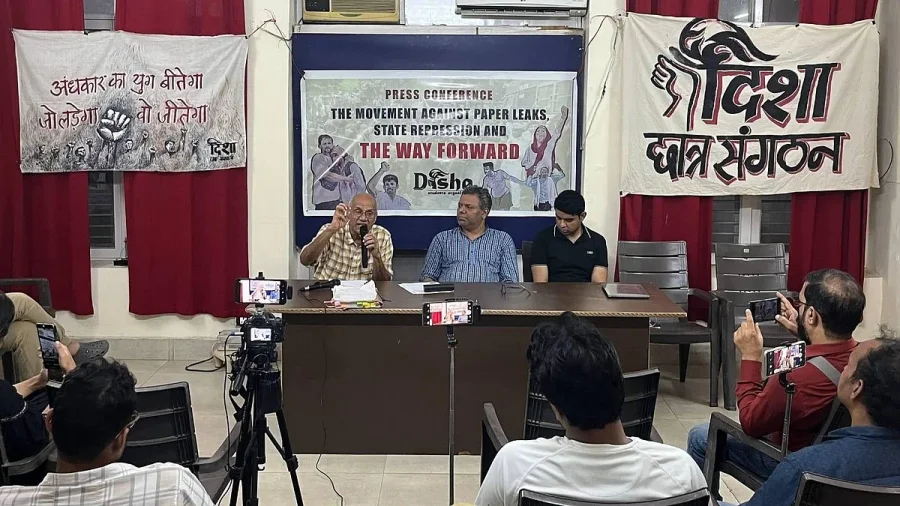
The 36-day protest at Jantar Mantar may have ended, but the movement is far from over. On Saturday, the Disha Students’ Organisation stood before the media in Delhi and made two demands clear: a ban on pellet guns and the withdrawal of all cases registered against student protesters. The message was blunt — the fight against examination paper leaks and alleged police repression continues.
Why the Demand for Pellet Gun Ban and Case Withdrawals Is Gaining Momentum
For student activists, the demand for a pellet gun ban is not abstract. It stems from years of protests where demonstrators have faced the brunt of police action. The Disha Students’ Organisation argues that no student should fear pellet guns while demanding their basic right to protest. Alongside this, the withdrawal of cases against student protesters remains a core demand — one that activists say the government promised but never delivered.
The Jantar Mantar Agitation: A Partial Victory, Say Activists
Disha members acknowledged that their 36-day sit-in at Jantar Mantar played a role in forcing the resignation of Union Education Minister Dharmendra Pradhan. But they were quick to describe this as only a “partial and symbolic victory.” The core issue — examination paper leaks — remains unresolved. Activists argue that a change in leadership without systemic reform changes little for students who face the consequences of leaked papers every year.
Who Is Affected by the Examination Paper Leak Crisis
Every year, thousands of students across India prepare for competitive exams that determine their academic and professional futures. When question papers leak, the entire examination calendar is disrupted. Students who studied honestly face uncertainty, re-exams, and delays. The Disha Students’ Organisation says this is not just an administrative failure — it is a violation of students’ right to a fair and transparent evaluation system.
Government Assurances vs. Ground Reality
The core frustration expressed at the press conference was broken trust. Activists claim that assurances were given that cases against student protesters would be withdrawn. On the ground, however, many students still face legal proceedings. This gap between official promises and actual action is what the organisation says is driving them back to the streets.
What the Press Conference Revealed About the Movement’s Next Phase
The press conference, titled “The movement against paper leaks, state repression, and the way forward,” brought together student representatives, lawyers, academics, and activists. The discussion was not just about past grievances but about strategy. The organisation signalled that renewed protests are on the horizon, with a sharper focus on both paper leaks and police action against demonstrators.
Confirmed Facts vs. What Remains Unclear
What is confirmed is that the Disha Students’ Organisation held the press conference and made these demands publicly. It is also confirmed that the group claims credit for Dharmendra Pradhan’s resignation and describes it as a partial victory. What remains unclear is the exact number of cases pending against student protesters and whether the government has formally responded to the demand for a pellet gun ban. These details have not been independently verified.
Why This Movement Matters Beyond the Headlines
This is not just about one protest or one minister’s resignation. It is about whether student protests in India can lead to lasting institutional change. The demand for a pellet gun ban touches on the broader question of how dissent is managed. The demand for case withdrawals speaks to whether peaceful protesters can trust the legal system. For students across the country, the outcome of this movement could set a precedent.
Risks and the Road Ahead for the Protest Movement
Renewed protests come with risks. Activists face the possibility of further police action, legal cases, and disruption to their academic lives. Critics of the movement may argue that the resignation of the education minister was already a significant win and that continued agitation could disrupt the academic calendar further. Supporters, however, believe that without sustained pressure, the systemic issue of paper leaks will never be addressed.
What Students and Supporters Should Know Right Now
For students who support the movement, the immediate takeaway is that the organisation is planning its next steps. Those involved in protests should be aware of their legal rights and the potential consequences of participation. For the general public, the key question is whether the government will respond to the twin demands of a pellet gun ban and case withdrawals — or whether the movement will escalate further.
Future Outlook: Will the Government Respond to These Demands?
The coming weeks will determine whether the government engages with the Disha Students’ Organisation or ignores its demands. If cases are withdrawn and a dialogue begins on pellet gun use, the movement may de-escalate. If not, the organisation has made it clear that renewed protests are inevitable. The ball is now in the government’s court.
Our Take
This story is a reminder that student movements in India are not easily silenced. The resignation of a minister is a significant achievement, but it is not the same as systemic reform. The demand for a pellet gun ban and the withdrawal of cases are not extreme asks — they are basic protections for democratic participation. Whether the government sees it that way will determine whether this movement ends in dialogue or in further confrontation.
Frequently Asked Questions
Why are activists demanding a pellet gun ban?
Activists argue that pellet guns have caused severe injuries to protesters in the past and that no student should face such force while exercising the right to peaceful protest. The demand is part of a broader call for reform in how police handle demonstrations.
What is the Disha Students’ Organisation demanding regarding student protesters?
The organisation is demanding the withdrawal of all cases registered against student protesters who participated in the Jantar Mantar agitation. Activists claim the government assured them cases would be withdrawn but has not followed through.
Did the Jantar Mantar protest lead to Dharmendra Pradhan’s resignation?
The Disha Students’ Organisation claims that its 36-day protest helped force the resignation of Union Education Minister Dharmendra Pradhan. However, the group describes this as only a “partial and symbolic victory” since the core issue of paper leaks remains unresolved.
What happens next in the student protest movement?
The organisation has called for renewed protests against examination paper leaks and alleged police repression. The next steps will depend on whether the government responds to the demands for a pellet gun ban and withdrawal of cases against student protesters.