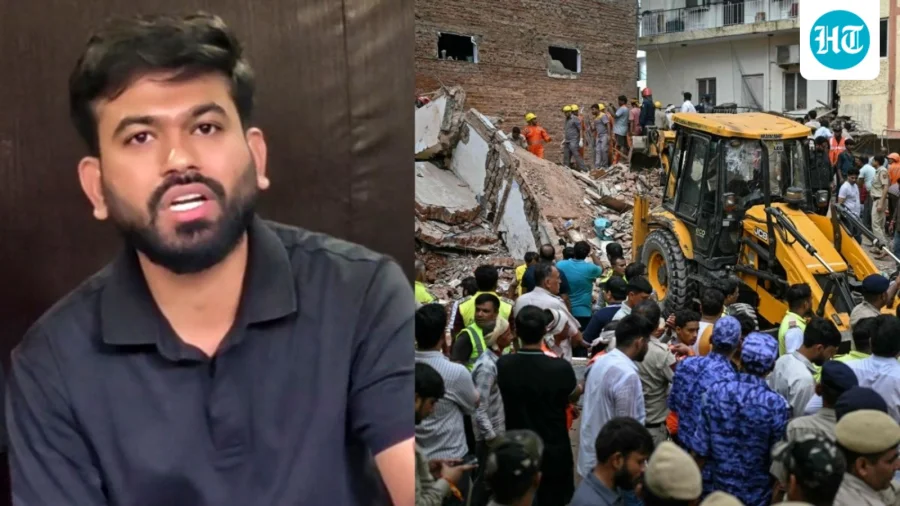
The collapse of a boys' PG building in Delhi's Satya Niketan has taken a sharp political turn. NCP leader Abhijeet Dipke has directly challenged the Centre, asking whether Prime Minister Narendra Modi will visit Delhi University again and explain the incident. His question cuts deep — not just at the tragedy itself, but at the silence that often follows such disasters.
A Political Question Amid Rescue Operations
Abhijeet Dipke's reaction came as rescue teams continued their search at the collapsed building site in Satya Niketan, a locality densely packed with student accommodations near Delhi University. The NCP leader's remarks suggest a growing frustration over what he perceives as selective government attention — visits and photo-ops during campaigns, but quiet when crises strike.
Why Satya Niketan Collapse Hits Close to Home
Satya Niketan is not just another Delhi neighbourhood. It is home to thousands of students who move there for proximity to DU colleges. A building collapse in this area is not merely a structural failure — it threatens the sense of safety that parents rely on when they send their children to study in the capital. The emotional weight of this incident extends far beyond the debris.
What We Know About the Building Collapse
Details about the collapsed PG building remain limited. Rescue operations were underway, with emergency personnel working to ensure no one was trapped. The cause of the collapse has not been officially confirmed. What is clear is that the incident has exposed vulnerabilities in the informal housing market that caters to students — buildings often converted into PGs without strict adherence to safety codes.
The Human Toll Behind the Headlines
For students living in similar PGs across Delhi, this collapse is a wake-up call. Many such buildings operate in a regulatory grey area — landlords convert residential spaces into high-occupancy accommodations with minimal oversight. The victims here are not just those directly affected, but every young person who now questions the safety of their own room.
Political Reactions and the Demand for Accountability
Abhijeet Dipke's pointed question reflects a broader political sentiment — that national leaders must engage with tragedies, not just celebrations. By referencing PM Modi's visits to DU, Dipke highlighted a contrast between ceremonial appearances and crisis response. His statement puts pressure on the Centre to acknowledge the incident and address systemic safety failures.
Reading Between the Lines of Dipke's Statement
The NCP leader's words carry a dual message. On one level, they demand a response from the Prime Minister. On another, they question the prioritisation of political visibility over public welfare. This is not just about one building collapse — it is about whether those in power show up when it matters most, not just when it looks good.
Confirmed Facts vs What Remains Unclear
Confirmed: A boys' PG building collapsed in Delhi's Satya Niketan. Rescue operations were ongoing. Abhijeet Dipke made a statement questioning PM Modi's silence.
Unclear: The exact cause of the collapse. The number of people affected. Whether any official response from the Centre or PMO has been issued. These details await official confirmation.
Safety Concerns in Student Housing: A Growing Pattern
This incident is part of a larger, troubling pattern across Indian cities. Rapid urbanisation, high student demand, and weak enforcement have created a market where safety often takes a backseat to profit. PG buildings in Delhi, Bengaluru, Pune and other student hubs frequently operate without proper structural audits or fire safety clearances.
What Students and Parents Should Do Now
For students living in PGs, this is a moment to check basic safety measures — building age, structural cracks, electrical wiring, and emergency exits. Parents should ask landlords direct questions about building approvals and maintenance. Local authorities must be pushed to conduct structural audits of student housing, especially in high-density areas like Satya Niketan.
What Happens Next in This Story
The immediate focus remains on rescue and relief. Beyond that, the political pressure on the Centre is likely to grow. Abhijeet Dipke's question may force a response, but the larger issue — the safety of thousands of students in unregulated housing — demands systemic action that goes beyond political statements.
Our Take
Abhijeet Dipke's question is uncomfortable precisely because it is fair. When tragedies strike, citizens look to their leaders for reassurance and accountability. The Satya Niketan collapse is a reminder that infrastructure safety is not a luxury — it is a basic right. Whether or not PM Modi visits DU again, the real test will be whether this incident leads to concrete action on building safety standards for student housing across India.
Frequently Asked Questions
What did Abhijeet Dipke say about the Delhi PG building collapse?
NCP leader Abhijeet Dipke questioned whether PM Modi will visit Delhi University again and explain the collapse of a boys' PG building in Satya Niketan. His remarks came as rescue operations continued at the site.
Where did the building collapse in Delhi take place?
The boys' PG building collapsed in Satya Niketan, a locality in South Delhi known for student accommodations near Delhi University colleges.
Why is Abhijeet Dipke asking PM Modi to visit DU?
Dipke's question highlights a contrast between PM Modi's previous visits to DU and the perceived silence after the building collapse. He is demanding accountability and a government response to the tragedy.
What safety concerns has the Satya Niketan collapse raised?
The collapse has raised concerns about structural safety in student housing across Delhi. Many PG buildings operate without strict enforcement of building codes, leaving students vulnerable to such incidents.