For the first time in living memory, Kolkata's food inspectors are moving through the city with unusual urgency. Their target: stale meat and fish in restaurants and roadside stalls. Their mission: discard anything deemed unhygienic. But for many residents, the timing feels anything but routine.
A crackdown that feels different this time
The drive has caught most eateries off guard. Some were forced to throw away meat and fish stored in freezers — stock they insist was perfectly good. There have been no protests yet, but the silence is uneasy. Restaurant owners are stunned, unsure whether this is genuine enforcement or something more calculated.
What makes this drive unusual is its visibility. Food safety checks have happened before, but rarely with this intensity and rarely so close to Durga Puja. The question forming in public memory is simple: why now?
Why the VHP threat changes the mood
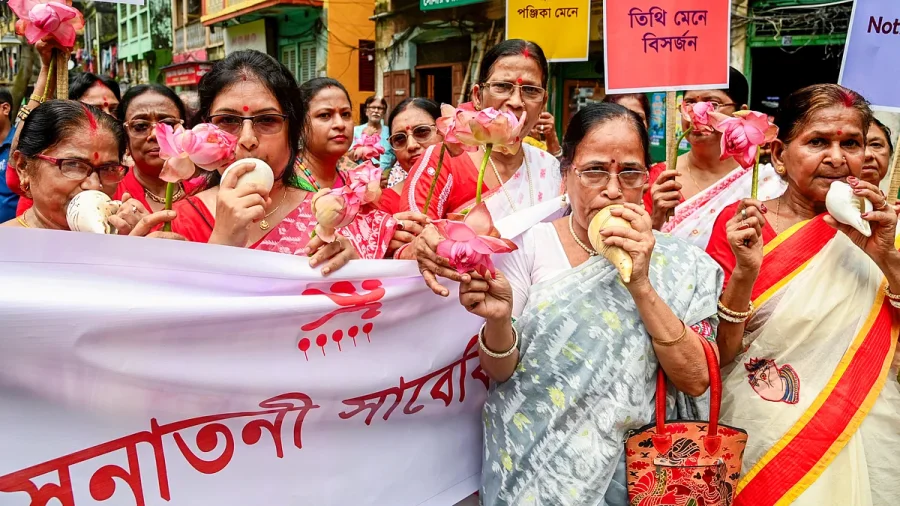
Days before the drive began, the Vishwa Hindu Parishad (VHP) threatened to keep non-vegetarian food away from 'sarbojoneen' — meaning for all — Durga Puja events starting in mid-October. For many Bengalis, the puja is inseparable from food. Bhog, fish fry, mutton curry — these are not just meals; they are tradition.
The coincidence has not gone unnoticed. Social media is now flooded with messages questioning whether the food-safety drive is a cover for a larger cultural push. Is the BJP, now in power in Bengal, using regulation to reshape the state's most beloved festival?
The history of food and politics in Bengal
Bengal has always treated food as identity. The adda over a plate of kosha mangsho, the ritual of bhog after pushpanjali, the late-night rolls after pandal-hopping — these are cultural anchors. Any attempt to police them, even under the banner of hygiene, touches a raw nerve.
This is not the first time food has become political in India. But in Bengal, where Durga Puja is both faith and festival, the stakes feel higher. The drive may be legally defensible, but emotionally, it is being read as a signal.
What this means for the average Bengali
For the average resident, the fear is not about stale meat. It is about what comes next. If non-vegetarian food is pushed out of community pujas, will the festival lose its character? Will the puja pandal — traditionally a space of inclusion — become a site of exclusion?
Families who plan their entire year around the puja are watching closely. Street food vendors, who depend on the festival rush, are worried about their livelihoods. And young Bengalis, who see the puja as a celebration of culture, are asking whether their traditions are being quietly rewritten.
What officials and organisers are saying
Officials have not linked the drive to any political motive. The framing is simple: food safety is a public health priority, and enforcement must be visible. Puja organisers, meanwhile, are treading carefully. Some have welcomed the hygiene focus; others are privately concerned about the VHP's threat.
No official statement has confirmed any connection between the drive and the VHP's position. But in a city that reads politics like a daily newspaper, the absence of denial is itself a statement.
Reading between the lines of the food drive
If this were only about hygiene, the drive would have been routine. What makes it political is the context. The VHP's threat, the timing before Durga Puja, and the visible intensity of enforcement have all combined to create a narrative that is hard to shake.
Analysts point out that food regulation is often used as a tool of cultural messaging. Whether that is the intent here remains unproven. But perception, in politics, often matters more than proof.
What is confirmed versus what remains unclear
What is confirmed: food inspectors conducted a visible drive across Kolkata targeting stale meat and fish. Some eateries discarded stored stock. No protests have been reported.
What remains unclear: whether the drive is politically motivated, whether it will expand, and whether the VHP's threat will be enforced at actual puja venues. All of this is speculation at this stage — but it is speculation rooted in a very real public mood.
Why Bengal's festival culture is a political battleground
Durga Puja is not just Bengal's biggest festival; it is its most democratic space. Rich and poor, young and old, all gather at the same pandal. The food served there is part of that democracy. Any attempt to control it — real or perceived — is seen as an attack on that openness.
This is why the food-safety drive has resonated so deeply. It is not about meat; it is about who gets to decide what Bengal's festivals look like.
Risks and concerns emerging from the drive
There are legitimate concerns on both sides. Supporters of the drive argue that food safety is long overdue and that unhygienic practices must be checked. Critics worry that the drive is selective enforcement — a way to intimidate businesses and signal a cultural shift.
There is also the risk of overreach. If the drive expands into puja venues and targets non-vegetarian food specifically, it could provoke a backlash that the state may not have anticipated.
A pattern beyond Bengal
This is not an isolated event. Across India, food choices have increasingly become cultural flashpoints. From beef bans to vegetarian-only zones in religious spaces, the politics of food is reshaping public life. Bengal's Durga Puja may be the next frontier.
The question is whether Bengal's famously secular festival culture will resist this trend or slowly absorb it.
What residents and organisers should watch for
For now, the advice is to stay informed. Puja organisers should clarify their food policies publicly. Residents should watch whether the drive expands beyond restaurants to puja venues. And businesses should document any enforcement actions they believe are unfair.
If the VHP's threat materialises, the response from organisers and the public will define the festival's future character.
What happens next in the coming weeks
Durga Puja begins in mid-October. In the weeks ahead, three things will matter: whether the food-safety drive continues, whether the VHP follows through on its threat, and how puja organisers respond. Each will signal whether Bengal's biggest festival is changing under BJP rule.
Until then, the city watches — and waits.
Our Take
This story is not really about stale meat. It is about the anxiety of cultural change. Bengal has always prided itself on a form of Hinduism that is inclusive, celebratory, and deeply tied to food. The sudden visibility of a food-safety drive, coming right after a VHP threat, has triggered a legitimate public question: is the state using regulation to reshape tradition?
There is no evidence yet of a conspiracy. But there is also no reassurance. In a democracy, perception matters as much as policy. The onus is on the state to clarify its intentions — not just through statements, but through consistent, non-selective enforcement. Until then, the doubt will linger, and Durga Puja will carry an extra layer of tension this year.
Frequently Asked Questions
Is the Kolkata food safety drive linked to the BJP government?
No official link has been established. The drive is being framed as a routine food-safety measure. However, its timing — just after a VHP threat to restrict non-vegetarian food at Durga Puja events — has led to public speculation about political motives.
What is the VHP's threat regarding Durga Puja?
The Vishwa Hindu Parishad has threatened to keep non-vegetarian food away from 'sarbojoneen' (community) Durga Puja events beginning in mid-October. This has raised concerns among Bengalis who see food as central to the festival's inclusive character.
Will non-vegetarian food be banned at Durga Puja pandals?
There is no confirmed ban. The VHP has made a threat, but no official policy has been announced. Whether the threat is enforced will depend on puja organisers and the state's response.
How are restaurant owners reacting to the food safety drive?
Most are stunned and have not protested publicly. Some were forced to discard stored meat and fish. There is widespread concern about whether the drive is selective enforcement aimed at sending a cultural message.