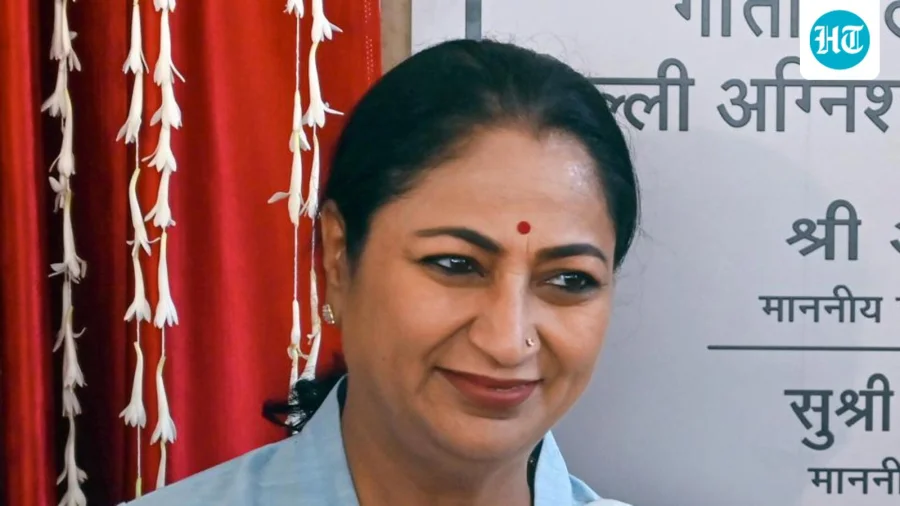
Delhi Chief Minister Rekha Gupta has asked a question that cuts through years of conditioned thinking: why should only women be held responsible for their safety? The remark, made in the context of recent incidents of sexual violence and harassment in the capital, lands at a moment when public anger and frustration are once again at a boiling point.
A Question That Refuses to Stay Uncomfortable
Gupta's statement is not a policy announcement. It is a challenge — directed at a society that has, for decades, trained its gaze on what a woman wore, where she went, and at what hour. Her question flips the lens: if safety is a collective responsibility, why does the burden of prevention fall almost entirely on the potential victim?
Why This Question Matters More Than Any Circular
Every time a crime against women is reported in Delhi, public discourse follows a predictable script. Questions about the survivor's movements, her clothes, her timing. Rarely do the same questions turn toward the systems meant to protect her — street lighting, police patrolling, public transport safety, or the speed of justice.
Gupta's remark, however brief, interrupts that script. It signals that the conversation may finally be shifting from "what should she have done" to "what should we have done."
The Backdrop: A Capital Under Scrutiny
Delhi has long carried the weight of being labelled India's most unsafe city for women — a perception reinforced by high-profile cases that have shaped national law and public memory. The recent incidents that prompted Gupta's statement are part of a pattern that resurfaces with painful regularity, each time testing public patience and institutional credibility.
Who Feels This the Most
For millions of women in Delhi — students, office-goers, night-shift workers, homemakers — safety is not an abstract debate. It is a daily calculation. Which route to take. Which cab to trust. Whether to leave the house after sunset. Gupta's question speaks directly to that lived reality, acknowledging what many have long felt: the responsibility has been placed on the wrong shoulders.
What the Chief Minister Actually Said — and What She Didn't
According to the original statement, Gupta framed the issue as a question of responsibility, not a policy prescription. She did not announce new measures, nor did she name specific cases. The absence of a detailed action plan has drawn both support and scepticism — support for the sentiment, scepticism about whether words will translate into systemic change.
Reading Between the Lines of a Political Statement
In Indian politics, statements on women's safety often carry dual weight — genuine concern and electoral signalling. Gupta's remark can be read both ways. But its value lies in the fact that it names a bias that is rarely acknowledged from a position of power: the automatic assignment of blame to women.
Confirmed Facts vs What Remains Unclear
Confirmed: Rekha Gupta made the statement questioning why only women are held responsible for their safety, in the context of recent sexual violence incidents in Delhi.
Unclear: Whether this will lead to specific policy measures, budget allocations, or institutional reforms. No timeline or detailed plan has been announced.
Speculation: Political interpretations of the statement's timing and intent remain unverified.
Risks and the Balanced View
Critics argue that rhetorical questions, however powerful, do not protect anyone. Without enforcement, infrastructure, and faster judicial processes, the sentiment risks becoming another headline. Supporters counter that changing the narrative is the first step — that laws alone have not worked because the mindset behind them has not changed.
Both views hold weight. The question is whether this moment becomes a turning point or another pause before the next incident.
A Pattern That Refuses to Break
India has strengthened its laws against sexual violence — from the Criminal Law Amendment Act to fast-track courts. Yet conviction rates and reporting gaps remain concerns. The gap between legislation and lived safety is where Gupta's question finds its sharpest edge.
What This Means for the Woman on the Street
For the reader — whether a student, a parent, or a professional — the takeaway is simple: safety is not a favour granted to women. It is a baseline expectation. Holding institutions accountable, demanding better infrastructure, and refusing to accept victim-blaming as normal are not radical acts. They are necessary ones.
What Could Happen Next
If the statement is followed by concrete action — improved street lighting, expanded police presence, safer public transport, and faster trials — it could mark a shift. If not, it will join the long list of statements that asked the right question but never answered it.
Our Take
Rekha Gupta's question is not new. Women have been asking it for generations. What is new is that it is being asked from the Chief Minister's office. That alone does not change reality — but it does change the conversation. And in a city where conversations have too often blamed the wrong person, that shift matters.
Frequently Asked Questions
What did Delhi CM Rekha Gupta say about women's safety?
She questioned why only women are held responsible for their safety, in the context of recent sexual violence and harassment incidents in Delhi.
Why is this statement significant?
It challenges the long-standing practice of victim-blaming and shifts the accountability debate toward society, institutions, and law enforcement.
Has any new policy been announced?
No specific policy or action plan has been announced yet. The statement remains a public remark on responsibility and mindset.
What should citizens take away from this?
That safety is a collective responsibility — and that demanding accountability from systems, not victims, is the right approach.