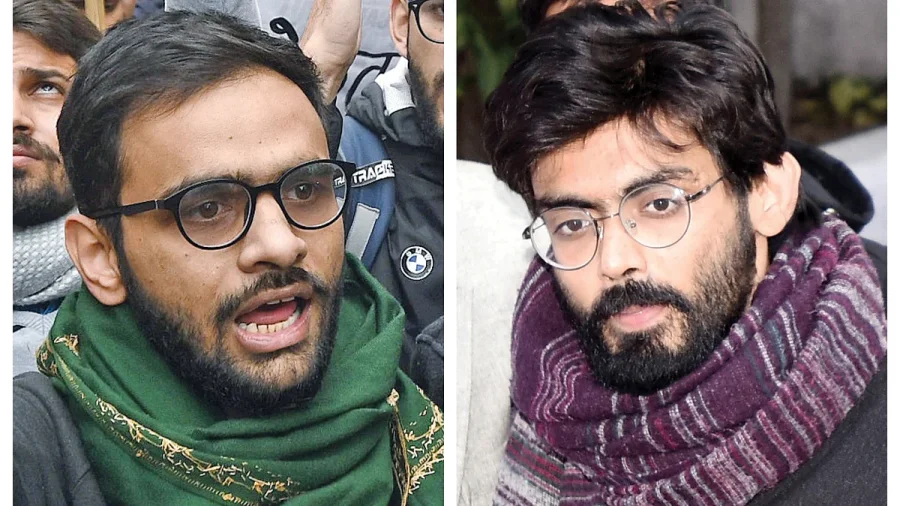
The Delhi High Court on Wednesday refused bail to activists Umar Khalid and Sharjeel Imam, dismissing their third attempt to secure release in the case concerning the alleged larger conspiracy behind the February 2020 north-east Delhi riots. The bench of Justices Prathiba M Singh and Dinesh Bhatt said it could not modify a Supreme Court order passed on January 5, which allowed the two to seek bail only after the examination of protected witnesses is completed or after one year from that order — whichever is earlier.
For Khalid and Imam, both arrested in 2020, the decision extends a custody that has already stretched beyond four years. The case, prosecuted under the Unlawful Activities (Prevention) Act (UAPA), remains one of the most closely watched legal battles stemming from the riots that left 53 people dead and scarred a city.
A Legal Door Closed, But Not Locked
The High Court's refusal is not a verdict on the merits of the case. Instead, it hinges on procedural discipline: the Supreme Court's January 5 order set a clear timeline, and the High Court found no room to alter it. This means the door to bail is not permanently shut — it is simply timed to the completion of a specific legal milestone.
Legal experts note that this approach reflects a broader judicial caution in UAPA cases, where courts often defer to the Supreme Court's framing to avoid conflicting orders. For Khalid and Imam, the practical effect is that their next realistic chance at release depends on how quickly protected witnesses are examined — a process that can be slow and unpredictable.
Four Years in Custody: The Human Cost of a Slow Trial
Umar Khalid was arrested in September 2020; Sharjeel Imam in August 2020. Since then, both have remained in jail, their trials progressing in fits and starts. For their families, the wait has been measured in missed milestones, mounting legal costs, and the psychological toll of indefinite detention.
Supporters argue that the length of custody itself raises questions about the pace of justice. Critics of the bail pleas, however, point to the seriousness of the allegations — a alleged conspiracy that, according to the prosecution, fueled one of the worst episodes of communal violence in the capital in decades. The case remains sub judice, and no final finding of guilt has been recorded.
What the Supreme Court's January 5 Order Actually Said
The January 5 order was a crucial turning point. It acknowledged the prolonged custody of the accused but stopped short of granting immediate bail. Instead, it laid down a dual condition: release could be sought either after the examination of protected witnesses is complete or after one year from the order — whichever comes first.
That order effectively created a structured waiting period. The High Court's Wednesday decision reinforces that structure, signaling that lower courts will not circumvent the Supreme Court's timeline. For observers, this underscores how UAPA cases often unfold in a labyrinth of procedural stages, where each hearing can reset expectations.
The Alleged Conspiracy and the Riots That Shook Delhi
The February 2020 riots in north-east Delhi were a watershed moment. What began as clashes over the Citizenship Amendment Act spiraled into days of violence that left 53 dead, hundreds injured, and entire neighborhoods scarred. The police investigation later alleged a larger conspiracy behind the violence, naming several activists, including Khalid and Imam.
The prosecution's case rests on allegations of provocative speeches, meetings, and a coordinated plan to disrupt law and order. The defense has consistently denied these claims, arguing that the accused were exercising their democratic right to protest and that the UAPA has been invoked to criminalize dissent. The truth remains contested, and the trial is ongoing.
Why This Bail Rejection Matters Beyond the Courtroom
This is not just a legal development; it is a signal about the state of India's criminal justice system. UAPA, with its stringent bail provisions, makes it exceptionally difficult for accused persons to secure release before trial. The result is that many spend years in custody before a verdict is reached — a reality that has drawn criticism from civil liberties groups and legal scholars.
For the families of Khalid and Imam, the High Court's decision means another stretch of uncertainty. For the broader public, it raises uncomfortable questions: How long is too long to wait for justice? And at what point does prolonged detention become a punishment in itself, before any finding of guilt?
Confirmed Facts vs. What Remains Unclear
Confirmed: The Delhi High Court dismissed the third bail pleas of Umar Khalid and Sharjeel Imam. The bench cited the Supreme Court's January 5 order, which set conditions for future bail applications. Both were arrested in 2020 and remain in custody.
Unclear: The exact timeline for the examination of protected witnesses is not publicly known. It is also unclear whether the defense will approach the Supreme Court again or wait for the one-year mark. The outcome of the main trial remains open.
Risks and the Balanced View
The prosecution argues that granting bail in a UAPA case involving allegations of a large-scale conspiracy could endanger witnesses and undermine the trial. The defense counters that indefinite detention without trial violates fundamental rights and presumes guilt. Both positions have legal weight, and the courts are tasked with balancing them.
There is also a broader risk: if trials drag on for years, public faith in the justice system can erode. Conversely, if bail is granted too readily in sensitive cases, it could be seen as compromising security. The High Court's decision reflects this tension, leaning toward caution.
The Wider Pattern: UAPA and Prolonged Detention
Khalid and Imam's case is not an outlier. Across India, UAPA accused persons often spend years in jail awaiting trial. According to data cited in various legal reports, the conviction rate under UAPA remains low, yet bail remains elusive. This has sparked a national debate about the law's application and its impact on civil liberties.
The Delhi riots case, with its high-profile accused and political undertones, has become a symbol of that debate. Each bail hearing is watched not just for its legal outcome but for what it says about the state of dissent and due process in the country.
What This Means for Readers and the Affected
For those following the case, the immediate takeaway is that Khalid and Imam will remain in jail for now. Their next legal move will likely be to either wait for the one-year mark from January 5 or to expedite the examination of protected witnesses. Families and supporters will continue to press for release, while the prosecution will push for a speedy trial.
For the general public, this case is a reminder of how long justice can take — and how legal procedures, however necessary, can become a source of prolonged suffering for those caught in the system.
Future Outlook
The ball is now in the Supreme Court's court, or rather, in the hands of the trial court to complete witness examinations. If protected witnesses are examined quickly, bail applications could be revived sooner. If not, the one-year mark from January 5, 2025, will become the next significant date.
Either way, the legal saga is far from over. The main trial will continue, and with it, the national conversation about UAPA, bail, and the meaning of justice in a complex case.
Our Take
This is a story about time — the time it takes for justice, the time spent in custody, and the time that families lose while waiting. The High Court's decision is legally sound given the Supreme Court's order, but it also highlights a system where procedural rigor can feel indistinguishable from delay. For Umar Khalid and Sharjeel Imam, the wait continues. For the rest of us, the case remains a mirror to the tensions between security and liberty, and between the law's letter and its human cost.
Frequently Asked Questions
Why did the Delhi High Court refuse bail to Umar Khalid and Sharjeel Imam?
The court said it could not modify the Supreme Court's January 5 order, which set specific conditions for bail — either after the examination of protected witnesses or after one year, whichever is earlier.
Can Umar Khalid and Sharjeel Imam apply for bail again?
Yes. They can seek bail after the examination of protected witnesses is completed or after one year from the Supreme Court's January 5 order, whichever comes first.
What is the UAPA case against them?
The case alleges a larger conspiracy behind the February 2020 north-east Delhi riots. The prosecution claims the accused were part of a plan that led to the violence. The defense denies these allegations.
How long have they been in custody?
Umar Khalid was arrested in September 2020 and Sharjeel Imam in August 2020. Both have been in custody for over four years.