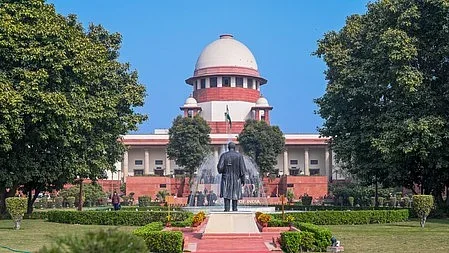
The government has taken a decisive step that will reshape the highest court in the land. By promulgating an ordinance, the President of India has increased the sanctioned strength of the Supreme Court to 38 judges, including the Chief Justice of India. This is not just a routine administrative update — it is a move that directly addresses a looming crisis of judicial capacity, with several senior judges, including two members of the powerful collegium, set to retire in 2026. For millions of litigants waiting for justice, this change could mean the difference between years of delay and a faster resolution.
The Ordinance and the New Strength of the Supreme Court
The ordinance, promulgated by the President, raises the sanctioned strength of the Supreme Court from 34 (33 judges plus the CJI) to 38 judges. This marks the first increase since 2019, when the strength was last raised to 33 judges excluding the CJI. The move is rooted in Article 124 of the Constitution, which states that the Supreme Court shall consist of the Chief Justice of India and “such number of other Judges as Parliament may by law prescribe.” By using an ordinance, the government has bypassed the usual legislative process, signaling urgency.
Why This Matters Right Now
This is not an abstract policy change. The Supreme Court is currently grappling with a massive backlog of over 80,000 pending cases. With several senior judges — including Justice Vikram Nath and Justice J.K. Maheshwari, who are the second and third most senior judges and key members of the collegium — set to retire in 2026, the court faced the prospect of losing significant judicial experience and decision-making capacity. The ordinance ensures that new appointments can be made before these retirements create a vacuum, potentially slowing down the disposal of critical constitutional and criminal appeals.
How the Increase in Supreme Court Judges Unfolded
The history of the Supreme Court’s strength is a story of gradual expansion. In 1988, the strength was increased from 18 to 26 judges. Two decades later, in 2009, it was raised to 30 judges plus the CJI. The most recent increase before this ordinance came in 2019, when the strength was set at 33 judges excluding the CJI. Each increase has been driven by the same fundamental pressure: a rising number of cases and the need to ensure timely justice. The current ordinance follows this pattern but comes at a particularly critical juncture due to the impending retirements.
Who Is Affected and What Officials Are Saying
The immediate impact will be felt by the Supreme Court collegium, which is responsible for recommending appointments. With Justice Vikram Nath and Justice J.K. Maheshwari retiring in 2026, the collegium’s composition and its ability to function effectively could have been compromised. The ordinance allows the government to appoint new judges before these retirements, ensuring continuity. While official statements from the government have focused on reducing pendency, legal experts note that the move also gives the executive more flexibility in shaping the court’s composition at a sensitive time.
What We Know So Far — and What Remains Unclear
What we know: The sanctioned strength is now 38 judges. The ordinance has been promulgated. The last increase was in 2019. Several senior judges are retiring in 2026. What remains unclear: The exact timeline for new appointments. Whether the government will consult the collegium in the usual manner or fast-track the process. And crucially, whether this increase will be sufficient to address the long-term backlog, or if further reforms in the lower judiciary are needed.
Risks, Concerns, and the Balanced View
While the increase is widely seen as necessary, there are concerns. Critics argue that simply increasing the number of judges without addressing infrastructure, case management, and the quality of appointments may not solve the problem. There is also the question of judicial independence — some worry that an ordinance, rather than a full parliamentary debate, could set a precedent for executive action in judicial matters. Supporters, however, point out that the ordinance is constitutionally valid and that the urgency of the retirements justifies the move. The balance lies in ensuring that the new appointments are made transparently and on merit.
Why Similar Trends or Concerns Are Growing
The pressure on the Supreme Court is not unique to India. Across the world, apex courts are facing rising caseloads and delays. In India, the problem is compounded by a high rate of litigation and a lower judge-to-population ratio compared to many developed nations. The ordinance reflects a growing recognition that judicial capacity must keep pace with the country’s economic and social complexity. However, experts caution that without simultaneous reforms in case management and alternative dispute resolution, even a larger bench may struggle to keep up.
- The Supreme Court currently has a pendency of over 80,000 cases.
- The judge-to-population ratio in India is among the lowest in the world.
- Several high-profile constitutional cases have been pending for years.
“The increase in the number of judges is a welcome step, but it must be accompanied by systemic reforms to ensure that the quality of justice is not compromised.” — Legal expert quoted in reports.
What Readers, Users, or Investors Should Know Now
For the average citizen, this means that the highest court may be able to hear and decide cases faster. For lawyers and litigants, it signals that the government is aware of the backlog problem and is willing to take executive action. For investors and businesses, a more efficient Supreme Court could mean faster resolution of commercial disputes, which is a positive signal for the ease of doing business. However, the real test will be in the appointments that follow and whether the court’s efficiency actually improves.
What Could Happen Next
The government is expected to begin the process of appointing new judges soon. The collegium will likely recommend names, and the government will clear them. The new judges will take oath and begin hearing cases. In the medium term, the court may also introduce new case management systems to handle the increased workload. If the appointments are made quickly, the impact on pendency could be visible within a year. However, if the process is delayed, the benefit of the ordinance may be lost.
Our Take: Why This Story Matters Beyond One Incident
This ordinance is more than a bureaucratic adjustment. It is a signal that the government recognizes the judiciary as a critical institution that needs to be strengthened. But it also raises important questions about the balance of power between the executive and the judiciary. The use of an ordinance, while legal, bypasses parliamentary scrutiny. As India’s legal landscape becomes more complex, the debate over judicial appointments and capacity will only intensify. This move is a step forward, but it is not a final solution.
FAQs
Why did the government use an ordinance to increase the number of Supreme Court judges?
The government used an ordinance to bypass the usual legislative process, signaling urgency. With several senior judges, including two collegium members, set to retire in 2026, the ordinance allows for immediate action to prevent a judicial capacity crisis.
How many judges will the Supreme Court have now?
The Supreme Court now has a sanctioned strength of 38 judges, including the Chief Justice of India. This is an increase from the previous strength of 34 judges (33 plus the CJI).
What is Article 124 of the Constitution?
Article 124 of the Indian Constitution establishes the Supreme Court and states that it shall consist of the Chief Justice of India and such number of other judges as Parliament may prescribe by law. This article provides the constitutional basis for increasing the number of judges.
Will this increase help reduce the backlog of cases in the Supreme Court?
Yes, the increase is intended to help reduce the backlog of over 80,000 pending cases. However, experts say that simply adding judges may not be enough without simultaneous reforms in case management, infrastructure, and the lower judiciary.