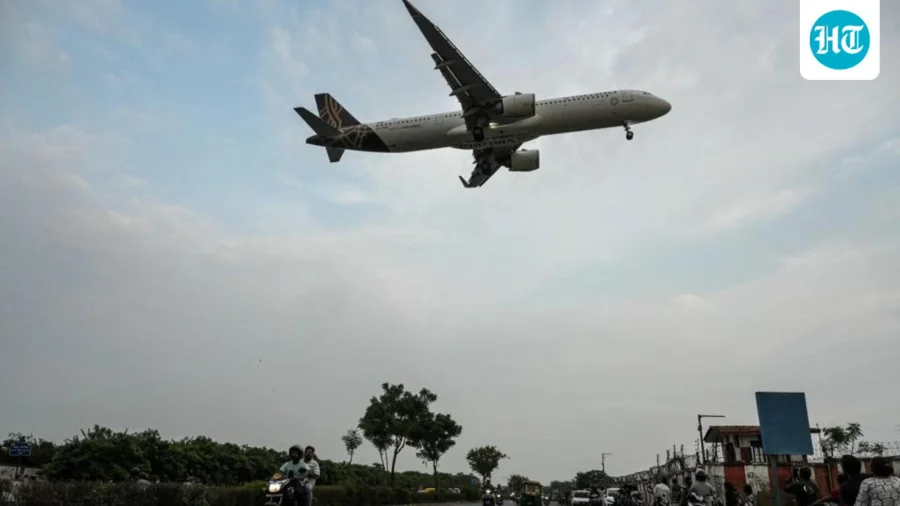
For three days in September, the skies around India's capital will operate under a different set of rules. A Notice to Airmen (NOTAM) has barred non-scheduled flight operations within 300 kilometres of Delhi from 7 am to 11 pm between September 11 and 13 — a sweeping restriction timed to the BRICS Summit.
The order does not ground commercial airlines. It targets a specific category: private jets, charter aircraft, and non-commercial operators who normally move in and out of Delhi's airspace on their own schedules. For those operators, the window is effectively closed.
Why Delhi's Airspace Is Being Sealed for Three Days
BRICS summits bring together heads of state from some of the world's largest economies. That concentration of VVIP movement demands layered security — on the ground, on the roads, and in the air.
Restricting non-scheduled flights is a standard protocol in such situations. It reduces the number of unknown aircraft in the airspace, simplifies coordination for security agencies, and creates a controlled corridor for official delegations arriving and departing.
Who Is Actually Affected — and Who Isn't
Regular passengers flying IndiGo, Air India, or any scheduled commercial carrier are unlikely to see cancellations because of this NOTAM. The restriction is aimed at non-scheduled operations — a category that includes business aviation, chartered tourist flights, and private aircraft.
That said, ripple effects are possible. Slot adjustments, air traffic congestion, and last-minute routing changes during high-security events can occasionally delay commercial flights too. Travellers flying in or out of Delhi around September 11-13 should check their flight status closer to departure.
What a NOTAM Actually Means — in Plain Language
A NOTAM is a formal notice filed with aviation authorities to alert pilots and operators about conditions that could affect a flight. It is not a suggestion. It is a binding instruction that operators are expected to follow.
In this case, the NOTAM defines three things clearly: the geographic boundary (300 km around Delhi), the time window (7 am to 11 pm), and the dates (September 11-13). Outside those hours, normal non-scheduled operations may resume, subject to any further notices.
The Business Aviation Squeeze
For India's private aviation sector, the timing is inconvenient. September is an active period for corporate travel, and Delhi is a primary hub. Charter companies will need to either advance or postpone flights, reroute to alternative airports outside the 300 km radius, or absorb the cost of grounded aircraft.
Operators who fail to comply with a NOTAM face regulatory consequences. The restriction is not advisory — it is enforceable.
Confirmed Facts vs What Remains Unclear
Confirmed: The NOTAM exists, covers September 11-13, applies from 7 am to 11 pm, and restricts non-scheduled flights within 300 km of Delhi.
Unclear: Whether any exemptions will be granted for medical evacuations, emergency services, or specific government-approved flights. Whether the restriction could be extended or modified. Whether commercial airlines will face secondary operational impact.
These details have not been publicly specified in the available notice. Any claims beyond what the NOTAM states should be treated as speculation.
Why This Matters Beyond the Summit
India has hosted major international events before — the G20 Summit in 2023 being the most recent example of large-scale airspace and security coordination in Delhi. Each time, the machinery of restriction and control is tested at scale.
The BRICS Summit adds another layer: it involves countries with complex bilateral relationships, and the security apparatus must account for that. The airspace restriction is one visible piece of a much larger logistical operation that most citizens never see.
What Should Travellers and Operators Do Now
If you have a private or charter flight planned around September 11-13, contact your operator immediately. Alternative arrangements — earlier departures, later returns, or routing through airports outside the restricted zone — should be explored now rather than closer to the date.
Commercial passengers should monitor their airline's communications. While the NOTAM does not directly target scheduled flights, operational adjustments during summit periods are not unusual.
What Happens After September 13
The NOTAM has a defined end date. Unless extended or amended, normal non-scheduled flight operations within the 300 km radius should resume from September 14. Operators should still verify with aviation authorities before filing flight plans for that period.
Historically, such restrictions are lifted once the event concludes and VVIP movement ceases. But the exact timing of the relaxation depends on the summit's closing schedule and any post-event departures.
Our Take
Airspace restrictions during diplomatic summits are routine — but they are not trivial for the people and businesses they affect. The BRICS Summit NOTAM is a reminder that hosting global leaders carries a cost that extends well beyond protocol and pageantry.
For most Indians, this will be a non-event. For the private aviation sector and anyone with travel plans in that window, it is a logistical problem that needs solving now. The NOTAM is clear about what is restricted. It is silent on flexibility. That silence is where the real planning begins.
Frequently Asked Questions
What is a NOTAM and why has it been issued for Delhi?
A NOTAM (Notice to Airmen) is an official alert to pilots and flight operators about conditions affecting airspace. It has been issued to restrict non-scheduled flights within 300 km of Delhi during the BRICS Summit for security and air traffic management reasons.
Are regular commercial flights to and from Delhi cancelled?
No. The NOTAM specifically targets non-scheduled operations — private jets, charters, and non-commercial aircraft. Scheduled commercial airlines are not the primary target of this restriction, though minor operational adjustments are possible.
Which dates and times does the restriction cover?
The restriction applies from 7 am to 11 pm on September 11, 12, and 13. Outside these hours, non-scheduled operations may be permitted, subject to any further notices.
What should private jet or charter operators do?
They should contact aviation authorities and their flight planning teams immediately to explore alternatives — rescheduling, rerouting to airports outside the 300 km radius, or adjusting departure times to fall outside the restricted window.