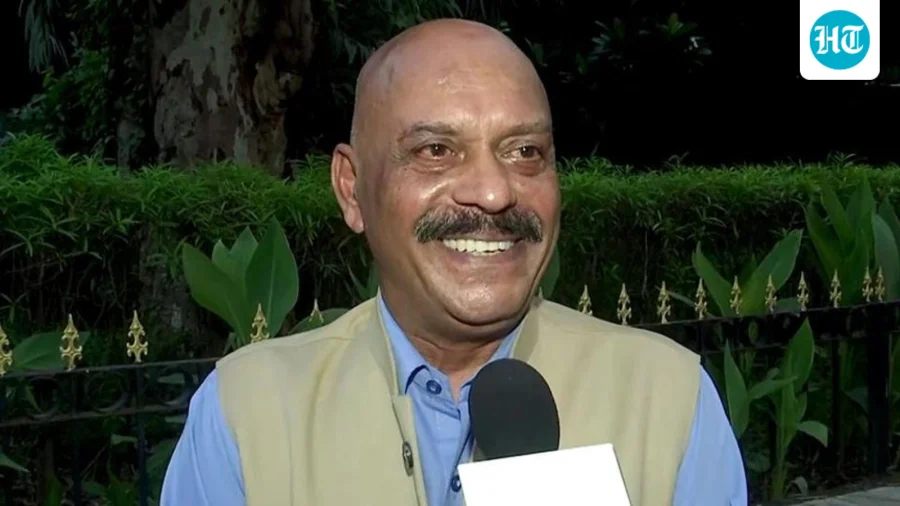
The sight of a decorated Air Force officer standing beside the Prime Minister at a strategic air base is not an everyday occurrence. For Jeetendra Mishra, that moment at the Adampur air base in Punjab was a public milestone in a career marked by quiet, high-stakes service. Now, this ex-Indian Air Force officer is charting a new course, moving from the defence of the nation to a role with the Shri Ram Janmabhoomi Teerth Kshetra trust, the body overseeing the Ram Temple in Ayodhya.
A Profile in Service: Who is Jeetendra Mishra?
Jeetendra Mishra is a former officer of the Indian Air Force (IAF), a background that places him within an institution known for its rigorous discipline and technical expertise. While specific details of his service record are not fully public, his receipt of the Operation Sindoor medal places him at the heart of a significant military action.
Operation Sindoor refers to the recent series of precise, targeted strikes conducted by the Indian military in response to cross-border terrorism. The medal awarded to personnel involved signifies not just participation, but a validated role in a high-stakes national security operation.
The Adampur Air Base Moment: A Symbol of Trust
The image of Mishra accompanying Prime Minister Narendra Modi at the Adampur air base is telling. Such proximity is rarely accidental; it often signals the presence of key personnel involved in the operation's execution or coordination. For Mishra, it was a moment of public recognition, placing him in the frame of national history as the country reviewed the success of Operation Sindoor.
This public appearance likely cemented his profile as an officer of notable capability, one whose service had directly contributed to a moment of national significance.
From Defence to Dharma: The Ram Temple Trust Appointment
The transition from a career in the armed forces to a role within the Shri Ram Janmabhoomi Teerth Kshetra trust is a significant pivot. The trust, established by the Government of India, is responsible for the construction and management of the grand Ram Temple in Ayodhya. It operates with a mix of administrative, financial, and spiritual oversight.
Mishra's appointment suggests the trust is seeking to bolster its administrative and security-related expertise. His background in the IAF brings a skill set that includes logistics, strategic planning, and personnel management—qualities that are transferable to managing the vast operations of a major religious and cultural centre.
Why This Transition Matters to the Public
For many Indians, the Ram Temple is not just a place of worship but a symbol of cultural resurgence and national identity. The people chosen to manage this institution are therefore held to a high standard of integrity and capability.
An appointment of a decorated military officer brings a sense of discipline and patriotic service to the trust's functioning. It reassures the public that the management of this historic project is in the hands of individuals with a proven track record of service and dedication.
What We Know and What Remains Unclear
It is important to distinguish between what has been reported and what is yet to be confirmed. The core facts are that Mishra is an ex-IAF officer, a recipient of the Operation Sindoor medal, and was seen with PM Modi at Adampur. His association with the Ram Temple trust is the latest development.
However, the specific title of his new role, the scope of his responsibilities, and the official announcement from the trust are still emerging. Until an official statement is released, the precise nature of his duties remains a matter of report rather than confirmed detail.
Risks and the Weight of a New Responsibility
Moving from a military hierarchy to a religious-cultural organisation presents distinct challenges. The decision-making processes, stakeholder expectations, and operational rhythms are vastly different. Mishra will be navigating a world where public sentiment and spiritual significance are as important as administrative efficiency.
There is also the inherent pressure of the role itself. The Ram Temple is a project of immense national and global interest for the Indian diaspora. Any misstep in its management attracts significant scrutiny. His military background, however, suggests a temperament accustomed to handling pressure and maintaining focus under public observation.
A Pattern of Service: Military Officers in Civilian Institutions
Mishra's move is part of a broader, respected pattern in India where retired defence personnel bring their expertise to civilian institutions. From heading public sector undertakings to managing security for critical infrastructure, ex-servicemen are often sought after for their integrity and organisational skills.
This trend underscores the value of military training in shaping leaders who can operate in high-pressure, mission-driven environments. The Ram Temple trust's decision to bring in such a profile indicates a desire for robust, disciplined management as the temple enters its next phase of operations.
What Readers Should Watch For
For those following this story, the key is to await the official confirmation from the Shri Ram Janmabhoomi Teerth Kshetra trust regarding Mishra's designation. This will clarify his specific portfolio, whether it involves administration, security, or broader strategic oversight.
Observing how the trust integrates a military professional into its existing structure will also offer insights into its long-term operational strategy. It signals a move towards institutionalising the management of one of India's most significant religious sites.
Future Outlook: A New Chapter of Service
For Jeetendra Mishra, this appointment is a continuation of a life of service, albeit in a different uniform. His legacy will now be tied not to aerial defence, but to the stewardship of a cultural landmark. The skills that earned him the Operation Sindool medal—precision, dedication, and strategic thinking—will now be applied to a different kind of mission.
The coming months will reveal how he translates his military discipline into the service of the Ram Temple, and how this unique blend of backgrounds shapes the next chapter of the trust's journey.
Our Take
The story of Jeetendra Mishra is more than a personnel change; it is a narrative about the diverse forms of national service. It highlights how the discipline of the armed forces can be repurposed for cultural and spiritual stewardship. While the full scope of his role is yet to be defined, his presence signals a thoughtful approach to managing a site of profound national importance. This is a story of a soldier finding a new way to serve his country, and it will be interesting to see the impact of his unique expertise on the future of the Ram Temple complex.
Frequently Asked Questions
Who is Jeetendra Mishra?
Jeetendra Mishra is a former officer of the Indian Air Force who was awarded the Operation Sindoor medal. He recently gained public attention for accompanying Prime Minister Narendra Modi at the Adampur air base and has been appointed to a role with the Shri Ram Janmabhoomi Teerth Kshetra trust.
What is the Operation Sindoor medal?
The Operation Sindoor medal is a recognition awarded to Indian military personnel who participated in the recent targeted strikes against cross-border terrorism. It signifies an individual's direct involvement in a significant national security operation.
What role will Jeetendra Mishra have at the Ram Temple trust?
As of now, the specific title and responsibilities of Jeetendra Mishra's role at the Shri Ram Janmabhoomi Teerth Kshetra trust have not been officially detailed. His appointment is confirmed, but the exact scope of his duties is expected to be clarified in an official announcement.
Why was Jeetendra Mishra seen with PM Modi at Adampur?
Jeetendra Mishra accompanied Prime Minister Narendra Modi during his visit to the Adampur air base in Punjab following Operation Sindoor. This is typically a sign of recognition for officers involved in the operation's execution or coordination.