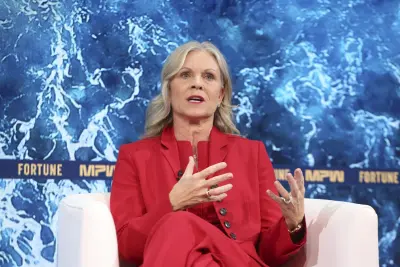
It started as a routine onstage interview. A few minutes in, the conversation took a turn nobody planned for — a sudden nosebleed, a fistful of tissues turning red, and a journalist trying to keep his composure while a Fortune Most Powerful Women Summit audience watched.
What happened next says less about the injury and more about the person sitting across the stage: Flex CEO Revathi Advaithi paused, checked in, and kept the moment human.
A Nosebleed, a Pause, and a Lesson Nobody Scripted
The interviewer, a Fortune editor, described the moment in the publication's CEO Daily newsletter. He compared the scene to an old Saturday Night Live sketch — Julia Child played by Dan Aykroyd, cutting herself while preparing a chicken and bleeding on live TV.
It was awkward. It was unplanned. And it became, almost by accident, a case study in how leaders behave when the script falls apart.
Why Composure Under Awkwardness Matters More Than Any Keynote
Audiences remember how leaders react in unscripted moments far longer than they remember a polished slide deck. A pause, a check-in, a small act of care — these are the signals that reveal character.
Advaithi didn't need to perform. She simply stayed present. That quiet response is exactly what employees, investors, and peers look for when they ask whether a leader is real.
The Slow Rise of the Self-Aware CEO
For decades, the dominant image of a chief executive was controlled, distant, and rarely caught off guard. That image has been eroding.
From Satya Nadella's reflective tone at Microsoft to the casual, joke-friendly style of founders on social media, the modern CEO is increasingly expected to be human first and authoritative second.
What Employees Actually Read Into a Leader's Laugh
When a CEO can laugh at themselves — or at a genuinely awkward moment — teams read it as safety. If the person at the top doesn't need to be perfect, nobody below them has to pretend either.
That psychological shift is not soft. It shows up in how quickly people raise problems, admit mistakes, and take creative risks.
What Fortune's Newsletter Actually Signalled
The story wasn't framed as a gaffe. It was framed as a leadership observation — a small, human moment that revealed something larger about how executives carry themselves in public.
Fortune's CEO Daily regularly uses these unscripted moments to make a broader point: leadership is not just strategy. It is presence.
Confirmed Facts vs What Remains Unclear
Confirmed: The incident occurred during a live onstage interview at the Fortune Most Powerful Women Summit. Advaithi paused to check on the interviewer. The story was shared in Fortune's CEO Daily newsletter.
Unclear: The full onstage exchange, audience reaction, and any follow-up comments from Advaithi or Flex have not been detailed in the source material. Any broader interpretation of the moment is editorial, not factual.
Why Humour Is Becoming a Leadership Differentiator
Humour, especially self-directed humour, signals confidence. It tells a room that the leader isn't fragile about status. That matters in hiring, retention, and how teams weather bad quarters.
It also travels well. A CEO who can laugh at themselves is easier to quote, easier to trust, and harder to caricature.
The Risks of Getting It Wrong
Not every joke lands. Self-deprecation can tip into insecurity, and humour in serious moments can read as tone-deaf. The line between warmth and dismissal is thin.
Leaders who lean on humour also risk being seen as less serious in high-stakes settings — a real concern in industries where credibility is everything.
A Wider Shift in How We Judge Leaders
The bar for CEOs is shifting. Strategy and execution still matter, but so does emotional intelligence. Audiences now reward leaders who can be candid, curious, and occasionally caught off guard.
The Fortune Most Powerful Women Summit moment fits that pattern — a small, unplanned scene that says more about leadership than most prepared remarks.
What This Means for Leaders Watching From the Sidelines
If you lead a team, the lesson isn't to chase viral moments. It's to stay present when things go sideways. Pause. Check in. Don't rush to fix the room.
Employees notice. So do peers. And so, apparently, do the journalists sitting across from you.
What Could Happen Next
Expect more conversations — in newsletters, panels, and leadership circles — about authenticity as a performance metric. The CEOs who handle the unscripted moments well will keep getting invited back on stage.
Whether that becomes a lasting shift or a passing talking point depends on how consistently leaders practise it when the cameras are off.
Our Take
The bleeding lip wasn't the story. The pause was. In a business culture obsessed with polish, the most memorable leadership moment of the week came from someone who simply stayed calm and asked if the other person was okay.
That's not a small thing. It's the whole thing.
Frequently Asked Questions
What happened at the Fortune Most Powerful Women Summit?
A Fortune editor interviewing Flex CEO Revathi Advaithi suffered a sudden lip injury mid-conversation, bleeding visibly on stage. Advaithi paused several times to check on him.
Why is this being called a leadership lesson?
Because it showed how a CEO responds in an unscripted, awkward moment — with composure and care rather than discomfort or distance.
Why does humour matter for CEOs?
Self-directed humour signals confidence and lowers the stakes for everyone around the leader. It makes teams more willing to speak up and take risks.
Is this a new trend in leadership?
It's part of a broader shift toward authenticity and emotional intelligence in leadership, visible across tech, finance, and consumer industries.