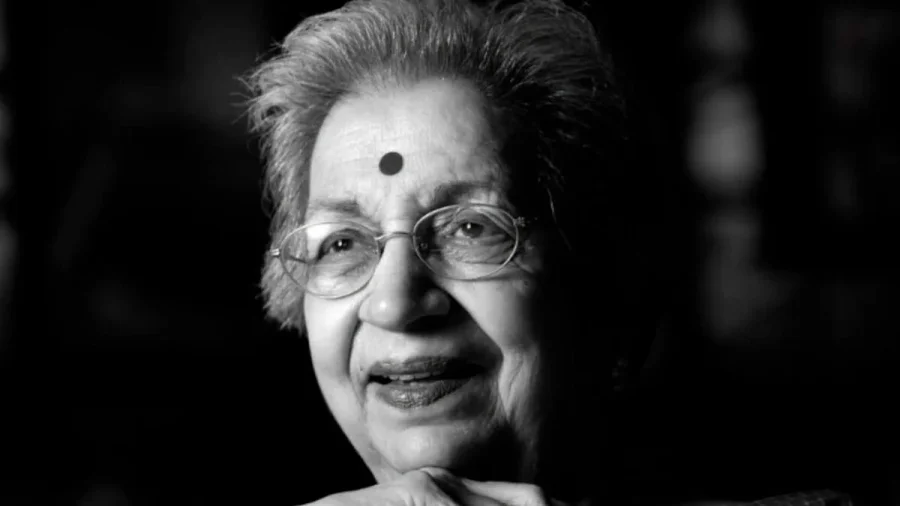
There are departures that feel less like the extinguishing of a life and more like the dimming of a lamp that had quietly illuminated entire generations. Vijaya Mehta’s passing on June 30, 2026, at the age of 91, is one such rare silence. Known affectionately as “Bai,” she belonged to a generation that regarded theatre not merely as a profession but as a way of life.
A life lived at the crossroads of traditions
Born Vijaya Jaywant, she began her artistic journey as a student in Bombay, where her early exposure to both Marathi folk traditions and Western dramatic forms would shape her unique vision. She carried that conviction with a rare blend of scholarship, warmth and relentless curiosity. Over six remarkable decades, she shaped a theatrical idiom that was deeply rooted in Marathi culture yet open to global influences, teaching generations of artists to think with rigour and feel with authenticity.
Why her passing marks the end of a theatrical era
For those who grew up watching Marathi theatre, Vijaya Mehta was not just a director or actor — she was the bridge between tradition and modernity. Her productions did not merely entertain; they challenged audiences to think, to question, to feel more deeply. In an age when theatre is increasingly competing with digital entertainment, her loss represents the fading of a generation that treated the stage as sacred ground.
From Bombay student to national icon: Her journey
Her artistic journey began in the classrooms and cultural circles of Bombay, where she absorbed influences from both Indian classical traditions and Western theatre pioneers. She went on to direct and act in productions that became benchmarks for Marathi theatre, earning respect not just for her craft but for the integrity with which she approached every project. Her work spanned theatre, film and television, but the stage remained her first love.
The generations she shaped: A legacy beyond the stage
What made Vijaya Mehta truly remarkable was not just her own work but the artists she nurtured. She taught generations of theatre practitioners to think with intellectual rigour while never losing emotional authenticity. Many of today’s leading Marathi theatre directors and actors trace their artistic foundations to her mentorship. Her home was often a classroom, her rehearsals a masterclass in both craft and life.
How the theatre community is remembering Bai
Those who knew her have described her passing as “the dimming of a light that guided generations.” The affection with which she was called “Bai” speaks to the maternal warmth she brought to her art. Colleagues and students remember her as someone who could be both demanding and deeply nurturing — a rare combination that produced some of the finest theatre India has seen.
What made her theatrical vision unique
Vijaya Mehta’s genius lay in her ability to synthesise. She drew from Marathi folk theatre, classical Sanskrit drama, and modern European techniques without ever losing her cultural anchor. Her productions felt both timeless and urgently contemporary. She understood that great theatre must speak to its time while drawing from deep cultural wells. This synthesis made her work accessible to audiences across generations and geographies.
Confirmed facts vs what remains unclear
It is confirmed that Vijaya Mehta passed away on June 30, 2026, at age 91, and that she was known as “Bai” to her colleagues and students. Her career spanned over six decades, beginning in Bombay. What remains unclear at this time are the specific circumstances of her passing, details of any memorial services, and the full list of surviving family members. Official statements from her family or theatre institutions are awaited.
Risks and balanced view: The fragility of theatre heritage
While Vijaya Mehta’s legacy is secure, her passing highlights a broader concern for Indian theatre: the gradual loss of living links to its golden era. As veteran artists age, the institutional memory of traditional performance practices risks fading. There is an urgent need for documentation, archiving, and mentorship programmes to ensure that the knowledge carried by artists like Mehta is not lost. Critics have also noted that Marathi theatre, despite its rich history, struggles for funding and mainstream visibility in an entertainment landscape dominated by cinema and OTT platforms.
The wider pattern: A generation of Indian theatre icons passing on
Vijaya Mehta’s death follows the loss of several other stalwarts of Indian theatre in recent years. This pattern reflects the natural passing of a generation that built modern Indian theatre from the 1950s onwards. It also underscores the importance of preserving their contributions through archives, academic study, and continued performance of their works. The challenge for the next generation is to honour this legacy while forging new paths.
What theatre lovers and students should do now
For those who wish to understand Vijaya Mehta’s contribution, the best tribute is to watch her productions, read about her methods, and support Marathi theatre. Students of theatre can study her approach to blending tradition with modernity. Institutions should prioritise archiving her work and making it accessible to new audiences. Attending live theatre, supporting local productions, and encouraging young artists are practical ways to keep her legacy alive.
What lies ahead for Marathi theatre
With Vijaya Mehta’s passing, Marathi theatre loses one of its most luminous figures. However, the foundation she built — in terms of both artistic standards and trained artists — provides a strong base for the future. The coming years will test whether the theatre community can sustain the rigour and authenticity she championed. Her students and admirers now carry the responsibility of continuing her work.
Our Take
Vijaya Mehta’s life reminds us that the most profound cultural contributions often happen quietly, away from the glare of celebrity. She did not seek fame; she sought truth in art. Her passing is not just a loss for Marathi theatre but for anyone who believes in the power of live performance to transform individuals and communities. In an age of distraction, her disciplined, passionate approach to her craft offers a lesson that transcends theatre: that excellence requires both rigour and heart. The lamp may have dimmed, but its light will continue to guide those who follow.
Frequently Asked Questions
Who was Vijaya Mehta?
Vijaya Mehta was a veteran Indian theatre director, actor and filmmaker, known affectionately as “Bai.” She spent over six decades shaping Marathi theatre, blending traditional Indian forms with global influences.
When did Vijaya Mehta die?
Vijaya Mehta passed away on June 30, 2026, at the age of 91.
What is Vijaya Mehta known for?
She is known for creating a theatrical idiom rooted in Marathi culture yet open to global influences. She taught generations of artists to combine intellectual rigour with emotional authenticity.
Why was Vijaya Mehta called “Bai”?
“Bai” is a term of affection and respect in Marathi, reflecting the maternal warmth and authority she brought to her role as a mentor and artist.