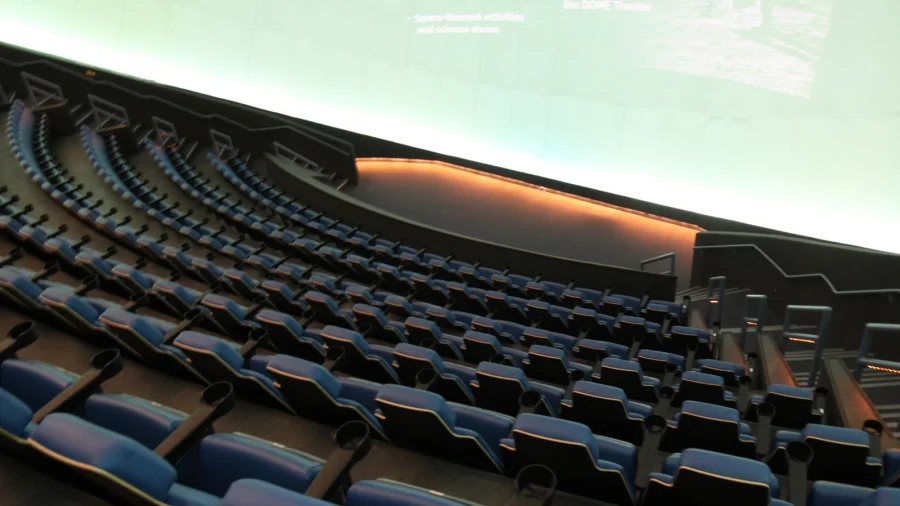
Ask ten film fans which IMAX theater is the biggest in the world and you will likely get ten different answers — each delivered with total confidence. The confusion isn't their fault. It's baked into the question itself.
The problem is that "biggest" has no fixed meaning in cinema. It can mean the widest screen, the tallest screen, the largest total screen area, the most seats, or simply the most impressive room. Change the definition and the winner changes with it.
Why "Biggest" Is a Moving Target in Large-Format Cinema
Screen size is usually quoted as a diagonal measurement, the same way televisions are sold. But a screen that is very wide and relatively short can have a longer diagonal than a taller, more immersive screen with a smaller diagonal but greater surface area.
That single technical detail is enough to hand the crown to different venues depending on who is doing the measuring — and which number sounds better in a press release.
The Format Question That Changes Everything
There is a second, more important distinction: not every screen branded IMAX is a true IMAX screen. Some auditoriums were purpose-built around the format, with the steep seating, huge canvas and projection setup the brand was originally known for.
Others are retrofits — existing multiplex screens upgraded with IMAX-certified projection and sound, but without the scale of a purpose-built room. Enthusiasts often call these "LieMAX," a nickname that captures how the experience can differ from expectations.
So a theater can legitimately claim to be the biggest IMAX in its city or country while offering a screen far smaller than a dedicated venue elsewhere.
Why This Debate Keeps Coming Back
The argument resurfaces every time a new large-format auditorium opens, or an existing one is renovated and re-announced with fresh size figures. Each claim is technically defensible under some measurement — and that is exactly why the disagreement never settles.
For audiences, the practical consequence is simple: a ticket labelled IMAX does not guarantee the same experience from one city to the next.
What This Means If You're Booking a Ticket
If the experience matters to you, the screen's brand name is a weak signal. What matters more is whether the venue was built for large-format projection or converted later, and how the room is shaped.
Checking the specific auditorium — not just the chain — is the only reliable way to know what you're paying for.
Confirmed Facts vs What Remains Unclear
Confirmed: IMAX-branded screens vary widely in physical size and configuration. Some are purpose-built; others are retrofitted into standard multiplex rooms.
Unclear: There is no universally accepted ranking that settles which single venue holds the title, because no agreed standard defines "biggest." Any claim to the crown should be read alongside the measurement being used.
Risks and the Balanced View
It would be unfair to frame retrofit screens as a rip-off. They often bring large-format presentation to cities that would never support a purpose-built venue, and many viewers are perfectly happy with them.
The real issue is transparency. When marketing language blurs the line between a genuine large-format auditorium and an upgraded standard screen, audiences lose the ability to make an informed choice.
The Wider Pattern
This is not unique to cinema. Premium labels across entertainment — from "4K" streaming to "stadium" concert seating — increasingly describe a tier of experience rather than a fixed physical standard.
Consumers are left to do their own homework, and the brands have little incentive to make that easier.
Practical Guidance for Moviegoers
Before booking a premium-format ticket, look up the specific auditorium rather than the chain. Check whether the venue was purpose-built or converted, and read recent audience accounts of the room itself.
If the format is the reason you're going, that five minutes of research is worth more than any label on the booking page.
Future Outlook
As more venues adopt premium large-format branding, the gap between what a ticket promises and what a room delivers is likely to widen. Whether the industry moves toward clearer labelling — or leaves audiences to figure it out — remains an open question.
Our Take
The "biggest IMAX in the world" question is entertaining precisely because it can't be answered cleanly. But underneath the trivia is a genuinely useful point: in premium cinema, the brand on the door tells you less than the room behind it. That's worth remembering the next time a ticket price makes you pause.
Frequently Asked Questions
What is the biggest IMAX theater in the world?
There is no single agreed answer. It depends on whether you measure screen width, height, total screen area, or seating capacity — and whether you count only purpose-built IMAX auditoriums or retrofitted ones as well.
What is the difference between true IMAX and "LieMAX"?
True IMAX venues are purpose-built around the format, with very large screens and steep seating. "LieMAX" is an informal term for standard multiplex screens retrofitted with IMAX-certified projection and sound, which are typically much smaller.
How can I tell if a theater has a real IMAX screen?
Look up the specific auditorium rather than the cinema chain. Purpose-built venues are usually described as such, and audience reviews often note the difference in screen size and room shape.
Does a bigger IMAX screen mean a better experience?
Not necessarily. Screen size matters, but so do seating position, projection quality, sound setup and the shape of the room. A well-configured smaller screen can outperform a poorly positioned larger one.