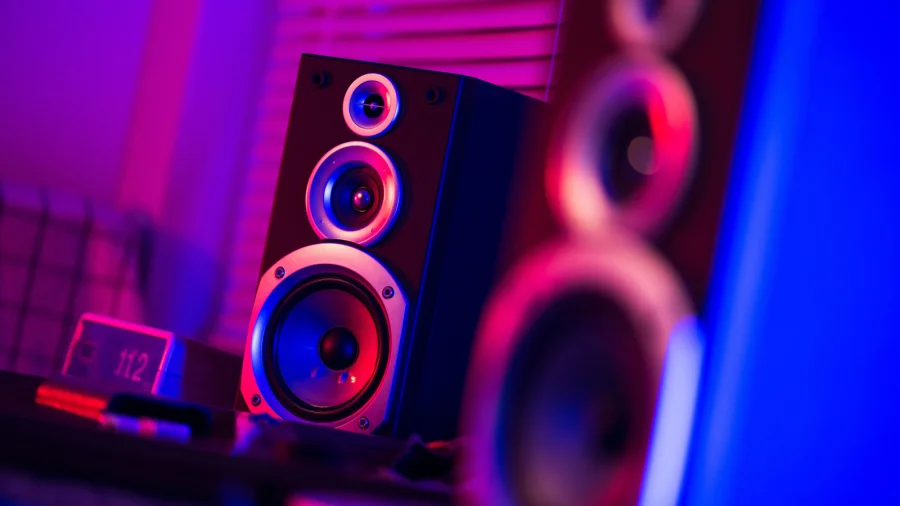
You've picked out a pair of speakers. The specs look great. But then someone asks: "What amp are you running?" — and you realize you haven't thought about it at all.
Here's the short version: an amplifier is what turns a faint electrical signal into something your speakers can actually push into a room as sound. Skip it, or get it wrong, and even excellent speakers can sound flat, quiet, or strained.
What an Amplifier Actually Does — In Plain Terms
Every audio source — a phone, a turntable, a streaming box — sends out a very weak electrical signal. That signal carries the music, but it has almost no power behind it.
An amplifier's job is simple: take that weak signal and make it bigger. It increases the voltage and current so the signal is strong enough to move a speaker's drivers and produce sound you can hear clearly.
Think of it like a water pipe. The source provides a trickle. The amplifier is the pump that turns that trickle into a flow strong enough to do real work.
Why Amplifier Quality Shapes What You Hear
Two amplifiers can have the same power rating and still sound noticeably different. That's because power is only one part of the story.
Key factors include distortion levels, signal-to-noise ratio, damping factor, and how cleanly the amp handles sudden dynamic swings — a quiet passage exploding into a drum hit, for example.
A clean, well-matched amplifier keeps the signal accurate. A poor one adds noise, muddies detail, or clips when pushed hard, which can both degrade sound and stress your speakers.
Do You Actually Need a Separate Amplifier?
Not always. Many modern devices — soundbars, Bluetooth speakers, powered studio monitors, and some turntables — have amplifiers built in.
You need a separate amplifier when your speakers are "passive," meaning they have no internal power. These are common in hi-fi setups, home theatre systems, and car audio builds.
If your speakers are "active" or "powered," they already contain amplification. Adding another amp isn't just unnecessary — it can cause problems.
Matching Amplifier Power to Your Speakers
This is where most beginners get tripped up. Too little power can be worse than too much.
An underpowered amplifier forced to play loudly will "clip" — distorting the signal and sending harsh energy to the tweeter. Over time, that can damage the speaker.
As a general guide, aim for an amplifier rated at or slightly above your speaker's recommended power range. Also check impedance (measured in ohms) — most home speakers are 4, 6, or 8 ohms, and the amp must be rated to handle that load.
Where Amplifiers Fit in Different Setups
In a home hi-fi system, the chain usually runs: source → preamplifier → power amplifier → speakers. Some units combine the preamp and power amp into one "integrated amplifier."
In car audio, amplifiers are often essential because head units alone rarely deliver enough clean power for aftermarket speakers and subwoofers.
In professional and live sound, amplifiers are sized to the venue and the speaker array — a completely different scale, but the same basic principle.
Common Misconceptions About Amplifiers
One persistent myth: a more powerful amplifier will automatically make your system louder and better. In reality, power must match the speakers and the room.
Another: "My speakers are 100W, so I need a 100W amp." Power ratings are not a strict one-to-one requirement — they describe a range, not a fixed target.
And a third: amplifiers "add" sound quality. They don't create quality — they preserve or degrade the signal they're given. A great amp can't fix a bad source.
How to Choose Without Overthinking It
Start with your speakers. Check their power handling and impedance. Then look for an amplifier that comfortably covers that range with low distortion.
For most home listeners, an integrated amplifier from a reputable brand in the 50–100W per channel range handles the majority of bookshelf and floorstanding speakers well.
If you're unsure, buying speakers and amplifier from the same brand or a recommended pairing removes much of the guesswork.
Frequently Asked Questions
What is an amplifier used for in a sound system?
An amplifier boosts a weak audio signal from a source so it has enough power to drive speakers and produce audible sound at usable volumes.
Can I use speakers without an amplifier?
Only if the speakers are powered or active, meaning they have a built-in amplifier. Passive speakers require an external amplifier to work.
Does a bigger amplifier mean better sound quality?
Not automatically. What matters is matching the amplifier's power and impedance to your speakers. A well-matched amp preserves clarity; a mismatched one can distort or damage.
What happens if my amplifier is too weak for my speakers?
An underpowered amp can clip when pushed, sending distorted signals that may damage speaker drivers — especially tweeters — over time.